
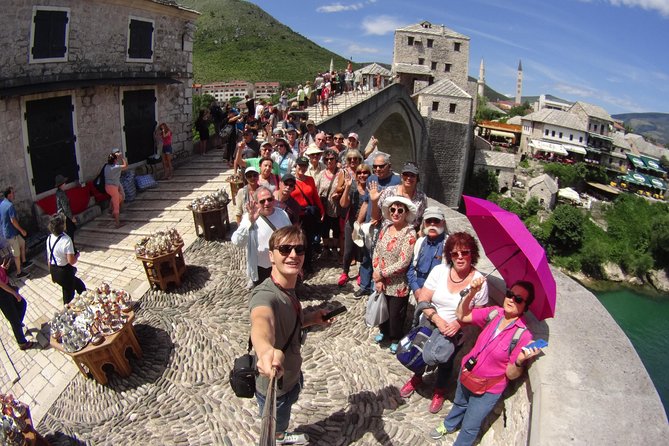
Reviewed · MOSTAR DAY TRIPS
Mostar city Tour
Mostar’s famous Old Bridge is only the opening chapter. This two-hour walking tour moves beyond the postcard view into the city’s Ottoman roots, Austro-Hungarian buildings, Yugoslav past, and war-damaged districts. You get a clearer sense of how Mostar was shaped by several very different eras.
I like the easy central meeting point, just 200 meters from the Old Bridge, and the way the tour connects monuments to real events instead of treating the Old Town as a pretty backdrop. I also like the local perspective offered by guides such as Marko, also named Marco in one account, who can explain the Bosnian War through personal experience. The main drawback is that two hours goes quickly, especially if you want long stops for photos or detailed visits inside buildings.
Key points to know before booking
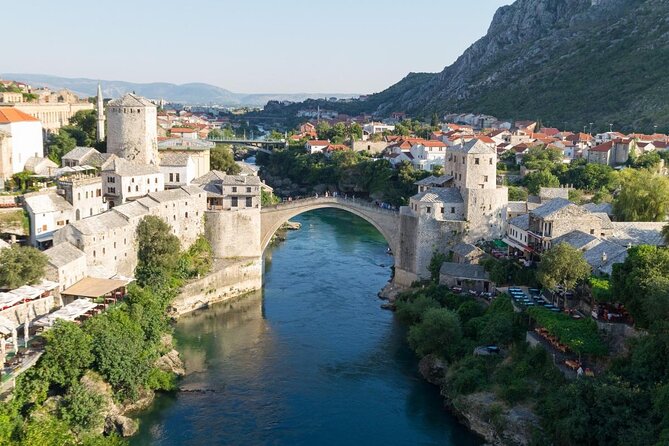
- The route reaches beyond the Old Town: You see Ottoman, Austro-Hungarian, Yugoslav, and wartime parts of Mostar.
- The Old Bridge anchors the experience: Expect strong views of Mostar’s UNESCO-listed bridge and the surrounding historic streets.
- A local guide adds needed context: Marko, also referred to as Marco, has been praised for explaining the city’s recent past with care.
- The meeting point is simple to find: iHouse Travel is on Onešćukova Street, about 200 meters from the bridge.
- The price is modest for a private introduction to the city: At $23.72 per person, it can be a useful first activity before exploring alone.
- Plan for a group setting: The tour requires at least two people and can include up to 55 participants.
Why Mostar needs more than an Old Bridge photo
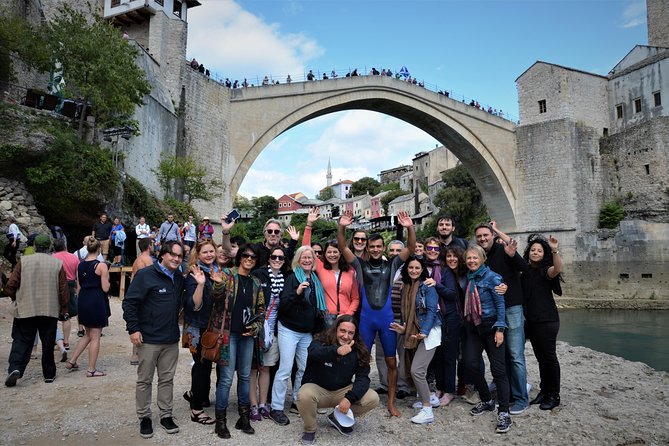
Mostar is easy to misunderstand if you stay only on the main cobblestone street. The Old Bridge is beautiful, but it does not explain how an Ottoman trading town became an Austro-Hungarian city, part of socialist Yugoslavia, and then a place marked by the war of the 1990s.
This tour is built around that timeline. You walk through the historic center, then connect its older monuments with later streets and buildings. The result is less a quick monument checklist and more a guided orientation to the forces that changed Mostar.
That matters because the city’s contrasts are close together. Ottoman-era structures sit near later European-style architecture. The shade of plane trees gives way to streets and buildings that still show the effects of war. Your guide helps you see those changes as part of one story rather than unrelated sights.
For a first visit, this approach is useful. You get the basic map of Mostar, learn which areas deserve a second look, and gain enough background to explore the Old Town with more purpose afterward.
More ways to reach Mostar:
- From Dubrovnik: Mostar and Kravica Waterfall Day Trip
★ 4.7 · 4,709 reviews - Dubrovnik: Kravica Waterfalls, Mostar and Pocitelj Day Trip
★ 4.5 · 3,045 reviews - Dubrovnik: Mostar & Kravica Waterfalls Day Trip
★ 4.8 · 1,970 reviews
Meeting at iHouse Travel near the Old Bridge
The tour begins at iHouse Travel, located at Onešćukova 25 in Mostar’s historic center. The agency is on the main cobblestone street, on the west side of the Neretva River, around 200 meters from the Old Bridge.
That is a practical location. You do not need to search for a distant pickup point or arrange a complicated transfer. The tour starts at 9:00 a.m., which gives you a cooler and quieter beginning than a late-morning walk might provide. After the tour, you return to the same place.
Bring a mobile ticket and arrive with enough time to locate the agency. Since the meeting point is in the historic center, the final approach is on foot through cobbled streets. Comfortable shoes are a sensible choice, even though the route is only about two hours.
The group can range from two people to as many as 55. That is an important detail. A very small group may allow more questions and a closer exchange with the guide, while a larger group may feel less personal. The price remains attractive, but you should not book this expecting a guaranteed private walk.
Following Mostar through four different eras
The tour’s strongest feature is its broad time span. It covers major monuments and parts of Mostar from the early 16th century through the late 20th century.
Ottoman Mostar and the old trading town
The first part of Mostar’s story is tied to the Ottoman Empire. The historic center, narrow streets, stone buildings, and bridge area reflect that period. Your guide places the Old Bridge within the city’s earlier life, rather than presenting it as an isolated sight.
This is where the walk should feel most familiar to anyone coming for Mostar’s classic views. You can expect cobblestones, old structures, shaded streets, and sightlines toward the bridge. The setting is photogenic, but the guide’s explanation gives it more weight.
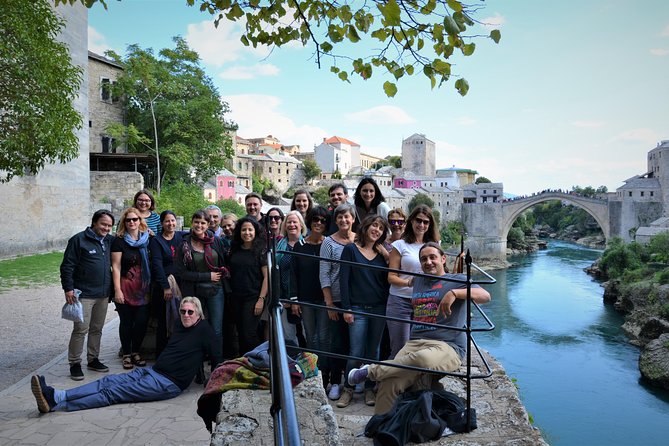
The bridge is also the natural visual high point. You will have opportunities to appreciate its position over the Neretva and understand why it has become Mostar’s defining symbol. The tour does not simply point out the view. It links the bridge and surrounding streets to the city’s older identity.
A limitation is that the tour does not list every monument in advance. If you want a precise schedule of every mosque, house, tower, or museum, this experience may feel less predictable. Its strength is the citywide story, not a detailed interior visit.
A few more Mostar day trips to weigh up
- Dubrovnik: Mostar and Kravice Waterfalls Small-Group Tour
★ 4.8 · 1,194 reviews - From Split or Trogir: Mostar & Kravica Waterfall Group Tour
★ 4.7 · 929 reviews - From Dubrovnik: Mostar and Medjugorje Full-Day Tour
★ 4.4 · 898 reviews - Discover Herzegovina Day Tour from Mostar: Kravice Waterfalls, Blagaj, Počitelj
★ 5.0 · 742 reviews
Austro-Hungarian Mostar and the European turn
The next shift is to the Austro-Hungarian period and the romantic fin de siècle atmosphere that followed. This part helps explain why Mostar does not look purely Ottoman.
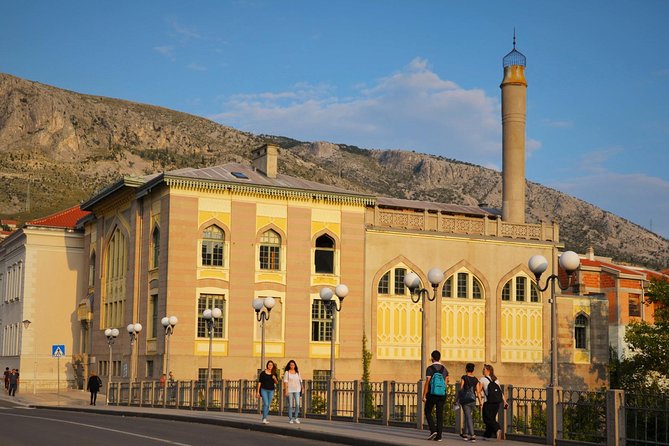
The guide draws attention to the changes in architecture and city life. You begin to see how administration, design, and urban planning altered the older town. The contrast between Ottoman structures and later European influences is one of the most useful things to notice on foot, since the changes appear in the streets themselves.
I like this section because it gives you a better eye for Mostar. Instead of labeling everything simply old, you learn to ask which era shaped a building or neighborhood. That is the kind of context that stays useful after the tour ends.
The route’s pace also matters here. Two hours is enough to introduce the transition, but not enough for a long architectural lecture at every stop. If you enjoy detailed building analysis, ask questions as you go. The guide is included specifically to make those connections clear.
Socialist Yugoslavia and the wider city
Mostar’s story did not end with the Ottoman or Austro-Hungarian periods. The walk also reaches the era of socialist Yugoslavia, including what the description calls socialist realism.
This section takes you beyond the narrow core of the Old Town. You get a sense of a city shaped by the 20th century, not just a preserved historic quarter. That wider view is one reason I would choose this tour over a short bridge-focused walk.
The contrast can be striking. One moment you are under plane trees or moving through old cobbled streets. Later, the architectural mood changes. The guide explains how political systems and public life affected Mostar, helping you place newer parts of the city in context.
You should keep your expectations realistic. This is an overview, not a full study of Yugoslav architecture or social history. Still, it gives you an important piece of Mostar that is easy to miss if you remain near the river.
Seeing the war-damaged financial district
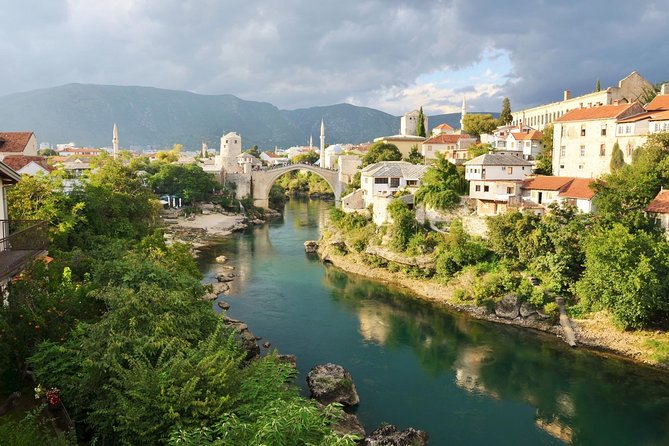
The most emotionally serious part of the route is the look at war-torn areas, including the financial district. The walk does not stop with attractive old buildings. It acknowledges the destruction that shaped modern Mostar.
For many people, this is the reason to take a guided walk rather than explore alone. Damage and reconstruction can be difficult to interpret without context. A guide can explain what you are seeing and connect the physical remains to the city’s recent past.
Marko, also referred to as Marco, is especially associated with this part of the experience. He was a teenager during the 1991 to 1993 war and has been described as giving an educational account of those years. That personal connection can make the discussion more direct, though the subject is understandably heavy.
You should not expect a light sightseeing loop from start to finish. Mostar’s wartime story is painful, and the tour treats it as part of the city rather than something to hide. If you prefer only architecture and scenic views, this section may feel difficult. If you want a more honest understanding of Mostar, it is essential.
The tour also helps explain why the city can feel divided between restored historic areas and places carrying visible scars. That contrast is not a flaw in the route. It is one of the key facts about Mostar.
What the local guide adds
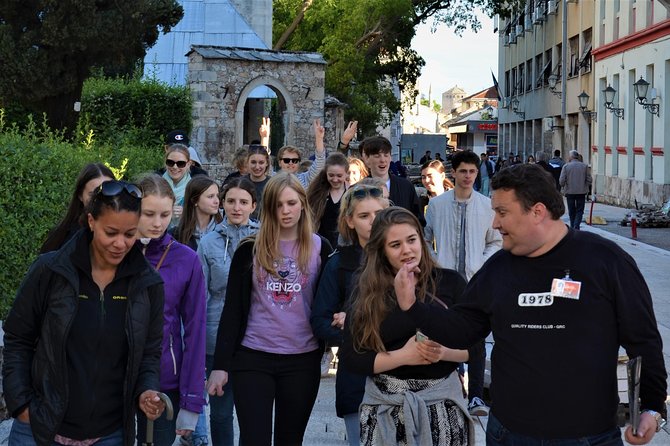
The guide is the main reason to book this walk instead of downloading a map and wandering by yourself. The route covers several centuries, and the connections between those periods are not always obvious from the buildings alone.
Marko, or Marco, is the only guide named in the supplied information. Accounts of his tours describe clear explanations, patience with questions, and an ability to show both the old and new parts of Mostar. One person enjoyed the walk enough to repeat the route in reverse afterward, which says something about how useful the orientation can be.
I would pay attention to how the guide handles the modern period. Many city tours are strongest when discussing old architecture and weakest when explaining recent conflict. Here, the wartime section appears to be a major strength, especially for visitors who want more than a surface-level look at Bosnia and Herzegovina.
The language offered is English. Children must be accompanied by an adult, and service animals are allowed. Most people can take part, but the walk uses historic streets and cobblestones, so you should judge your own comfort with walking accordingly.
Is $23.72 a fair price?
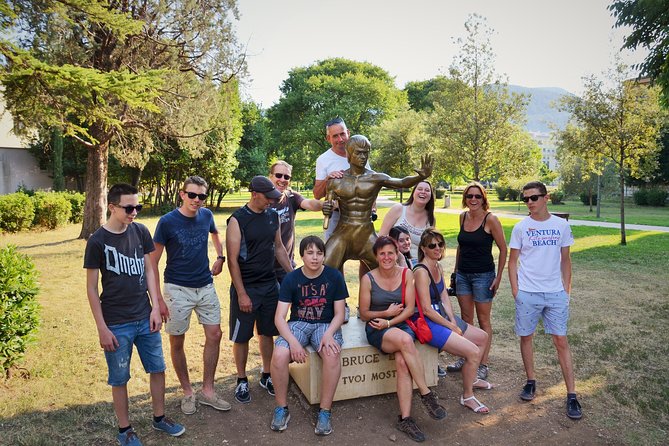
At $23.72 per person, the tour is priced as an affordable introduction to Mostar. You are paying for a professional local guide, a planned route, and the time saved by understanding the city in one organized walk.
The value is best if this is your first visit. You can use the tour to decide where to return later, which sights deserve more time, and how the Old Town connects with newer districts. In that sense, the tour can improve the rest of your stay.
The price does not include food or drinks. That is not a serious drawback for a two-hour morning activity, but plan to buy refreshments separately if you want them. The walk returns to iHouse Travel, so you can easily continue your own sightseeing afterward.
The main value question is group size. A group of two offers a different experience from a group approaching the maximum of 55. The tour may still cover the same ground, but the chance to ask personal questions and hear every explanation can vary.
I would consider the cost reasonable for a history-focused orientation, especially because it covers periods many short Old Town walks skip. If you already know Mostar well, the value is less certain.
Timing, pace, and what to bring
The tour begins at 9:00 a.m. and lasts about two hours. That gives you the rest of the day for the Old Bridge, meals, museums, or other excursions.
Morning timing is useful in Mostar. You can take photos before spending the hottest part of the day on the exposed streets, though the supplied information does not promise specific weather or crowd conditions. Wear shoes suited to cobblestones and bring what you normally need for a walking activity.
The route returns to its starting point, so you do not need to plan a separate ride back. The activity is offered in English and uses a mobile ticket, which keeps the booking process simple.
The tour requires a minimum of two people per booking. If you are alone, check the booking conditions before relying on this as your only planned activity. The maximum listed group size is 55, so those who want a quiet, highly personal walk should consider that possibility.
Who should book the Mostar City Tour?
I would recommend it most strongly to first-time visitors, especially those who want the city explained in clear historical sequence. It suits you if the Old Bridge is your starting point but not your entire reason for visiting.
It is also a good choice for anyone interested in Bosnia and Herzegovina’s recent past. The discussion of the 1991 to 1993 war, combined with the visible war-damaged financial district, gives the visit a serious local dimension.
Families can book, provided children are accompanied by an adult. The tour is also a practical option for visitors who prefer public transportation and walking, since the meeting point is central and near transit.
I would be less likely to choose it if I wanted a food tour, museum admission, or a long photography session. Food and drinks are not included, and the two-hour format favors explanation and orientation over extended stops.
Final booking advice
Book this tour if you want Mostar to make sense beyond its most famous bridge. The best parts are the movement through four major eras, the view of both old and new districts, and the local explanation of the war years.
Keep the group limit in mind, and treat the walk as an introduction rather than a complete Mostar itinerary. At $23.72, it offers solid value for a first morning, particularly if you plan to keep exploring after returning to Onešćukova Street.
FAQ
Where does the Mostar City Tour start?
The tour starts at iHouse Travel doo, Onešćukova 25, in Mostar’s historic center. The agency is about 200 meters from the Old Bridge on the west side of the Neretva River.
What time does the tour begin?
The scheduled start time is 9:00 a.m.
How long does the tour last?
The tour lasts approximately two hours.
Is the tour offered in English?
Yes. English is the listed tour language.
What is included in the price?
A professional guide and a local guide are included.
Are food and drinks included?
No. Food and drinks are not included.
Where does the tour finish?
The tour returns to the starting point at iHouse Travel doo.
How many people are required to book?
A minimum of two people per booking is required. The activity can include a maximum of 55 participants.
Can I cancel for a full refund?
Yes. You can cancel for a full refund if you do so at least 24 hours before the experience start time. Cancellations or changes made less than 24 hours before the start are not accepted for a refund.
Just added around Mostar
- Mystical Sutjeska National Park★ 5.0 · 3 reviews
- Mostar Guided Tour & Sweet Delights★ 5.0 · 3 reviews
- Private tour from Split to Dubrovnik via Mostar★ 5.0 · 3 reviews
- From Dubrovnik: Sarajevo and Mostar Private Full-Day Tour★ 4.7 · 3 reviews
- From Dubrovnik to Mostar and Kravice waterfalls★ 3.5 · 3 reviews
- Pocitelj City Tour★ 4.5 · 3 reviews
- All Inclusive Neretva Rafting, Day Tour from Mostar★ 5.0 · 4 reviews
- From Dubrovnik: Day Trip to Mostar and Kravica Waterfall★ 3.8 · 4 reviews
Mostar Day Trips, compared.
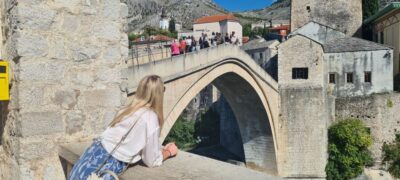
From Dubrovnik: Mostar and Kravica Waterfall Day Trip
Read our review →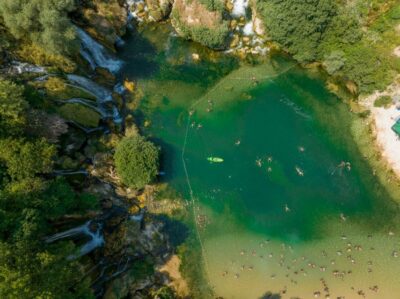
Dubrovnik: Kravica Waterfalls, Mostar and Pocitelj Day Trip
Read our review →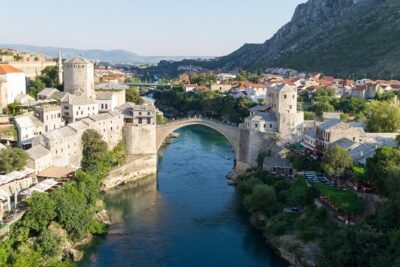
Sarajevo: Mostar, Konjic, Blagaj Tekke, Pocitelj & Waterfall
Read our review →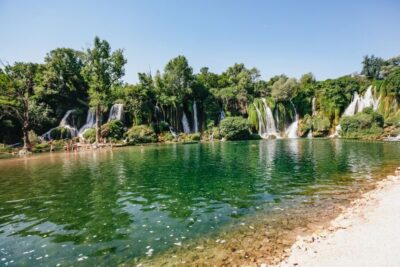
Dubrovnik: Mostar and Kravice Waterfalls Small-Group Tour
Read our review →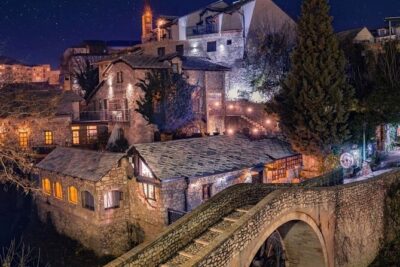
Sarajevo: Mostar, Konjic, Sufi House, Pocitelj & Kravice Falls
Read our review →From Split or Trogir: Mostar & Kravica Waterfall Group Tour
Read our review →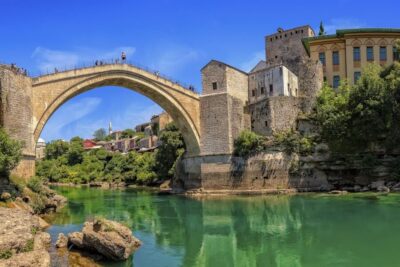
From Dubrovnik: Mostar and Medjugorje Full-Day Tour
Read our review →
Discover Herzegovina Day Tour from Mostar: Kravice Waterfalls, Blagaj, Počitelj
Read our review →Browse the lists this tour appears in