
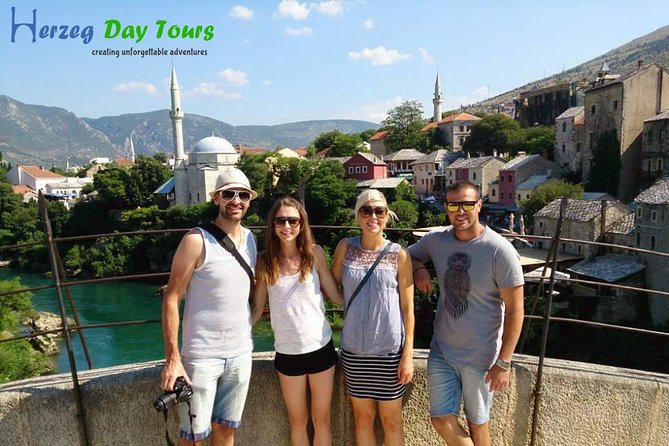
Reviewed · MOSTAR DAY TRIPS
Mostar Private Walking Tour – where East meets West
Mostar’s Old Bridge is more than a pretty crossing over the Neretva. It is a living stage, a symbol of the city, and the center of a centuries-old tradition of bridge jumping. This private walk adds useful context, including a visit to the local jumpers’ club and a frank account of Mostar’s wartime divisions.
I like the private format, since your guide can spend more time on the subjects that matter to you. I also like the route’s range: you get the bazaar, Ottoman monuments, Austro-Hungarian buildings, parks, and modern war memorials in about two hours.
The main consideration is that the walk is brisk and some optional entries cost extra. The tour details also mention hotel pickup and drop-off, while the stated meeting point and end point are both at Franjevačka Church, so confirm transport arrangements before booking.
Key points at a glance
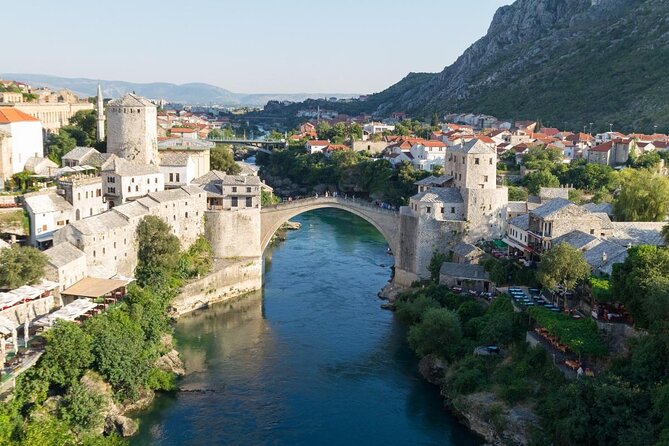
- Old Bridge and jumpers’ club: Learn about Mostar’s famous bridge-jumping tradition and visit the premises of the local club when possible.
- Seven distinct stops: The route moves from Ottoman-era streets to Austro-Hungarian architecture and reminders of the 1990s conflict.
- Best bridge photograph: The minaret of Koski-Mehmed Pasha Mosque offers a high view toward the Old Bridge, for an additional fee.
- Private English tour: Only your group takes part, with an experienced local guide leading the walk.
- Two-hour city introduction: The compact route suits a first look at Mostar, though you may want extra time afterward.
- A serious history lesson: The guide explains the former front line, the Spanish peacekeeping presence, and the use of parks as wartime cemeteries.
Why this two-hour Mostar walk works
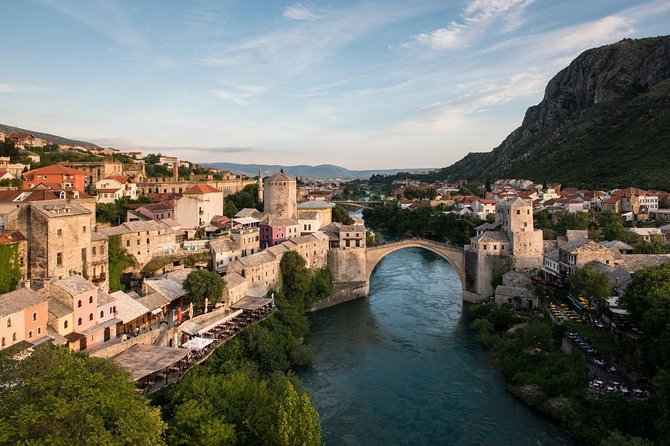
Mostar is easy to picture as one postcard: a graceful stone bridge, steep hills, and old Ottoman-style lanes. The city is more complicated than that. Its streets also show Austro-Hungarian planning, Christian and Muslim traditions, and the scars left by the 1990s war.
This tour handles those layers in a sensible order. It begins near the Franciscan Church and moves toward the Old Bridge, then through the old bazaar and across the river area. From there, you enter the western part of the city, where the architecture and public spaces tell a different story.
I like this arrangement because you do not spend two hours looking only at monuments. You see how Mostar’s sections fit together. The tone shifts from scenic and historical to personal and difficult, especially when the guide discusses the former front line and the conflict.
The format is also practical. You have an English-speaking local guide, a private group, and a stated duration of about two hours. A 4.9 rating from 15 published ratings, with every rating recommending the experience, suggests a strong early record. One four-star account gives special value to the guide’s first-hand explanation of the conflict, while a five-star account praises the broad historical coverage and comfortable pace.
No guide name is provided, so you cannot request a particular person in advance based on the information available. Still, the comments point to the guide’s ability to explain both the causes of the conflict and its effect on the city, which is exactly the kind of local perspective that a short walk needs.
More ways to reach Mostar:
- From Dubrovnik: Mostar and Kravica Waterfall Day Trip
★ 4.7 · 4,709 reviews - Dubrovnik: Kravica Waterfalls, Mostar and Pocitelj Day Trip
★ 4.5 · 3,045 reviews - Dubrovnik: Mostar & Kravica Waterfalls Day Trip
★ 4.8 · 1,970 reviews
The Old Bridge and the jumpers’ club
The walk’s main stop is Mostar Old Bridge, the city’s best-known monument and a UNESCO site. Your guide explains the bridge’s key stories and places it within Mostar’s past rather than treating it as a quick photo stop.
The special touch here is a visit to the premises and club of the famous bridge jumpers. The tour connects you with the centuries-old tradition of jumping from the bridge into the Neretva. That does not mean a jump is guaranteed during your visit, but it gives the tradition a human setting and helps explain why the bridge remains part of daily culture.
Allow about 20 minutes at the bridge. That is enough for an introduction and photographs, but not a long pause. I suggest paying close attention to the guide before taking pictures. The bridge’s shape, the height above the river, and the jumpers’ tradition make more sense once you know the story behind them.
The Old Bridge can be crowded and visually demanding, with people stopping for photographs in the same narrow area. A private guide helps by keeping the explanation focused, but you should not expect a quiet, slow visit at this central sight.
Crooked Bridge and the Radobolja
The five-minute stop at Kriva Cuprija, or Crooked Bridge, is brief but adds another layer to Mostar’s old town. This smaller bridge crosses the Radobolja, a tributary of the Neretva, and is linked with local stories about love.
There is not much time here for a long explanation. Think of it as a photo pause and a chance to see a quieter waterway beside the main river. The romantic setting makes a pleasant contrast with the scale and fame of the Old Bridge.
If you want detailed photographs or time beside the water, plan to return after the tour. The scheduled five minutes is enough to understand why the place matters, not enough to linger.
Kujundziluk Bazaar and old crafts
Kujundziluk is Mostar’s oldest bazaar and one of the most useful stops for understanding the character of the old town. The route takes you through streets where traditional crafts remain part of the local identity.
Your guide introduces old trades and speaks with members of families who have made authentic handicrafts for generations. That personal contact is valuable. Instead of seeing the bazaar as a row of shops, you get a sense of how craft skills and family businesses have shaped this part of Mostar.
The scheduled 20 minutes gives you a fair introduction, though it is not a shopping afternoon. You can look at the work, ask questions, and return later if something catches your eye. I would avoid treating this stop as a forced buying opportunity. Its real value is the context, and the private format lets you ask about materials, techniques, and local customs if your guide and shopkeepers have time.
The uneven old-town streets also call for sensible shoes. The supplied information does not promise accessibility details, so anyone concerned about steps, paving, or the climb at the mosque should check before booking.
More walking tours in Mostar:
- Mostar Private Walking Tour
★ 5.0 · 93 reviews - Charming Mostar: Private Mostar Walking Tour
★ 5.0 · 23 reviews - Best of Mostar – Private Walking Tour
★ 5.0 · 21 reviews - Mostar War Heritage Walking Tour
★ 5.0 · 6 reviews
Koski-Mehmed Pasha Mosque and the best bridge view
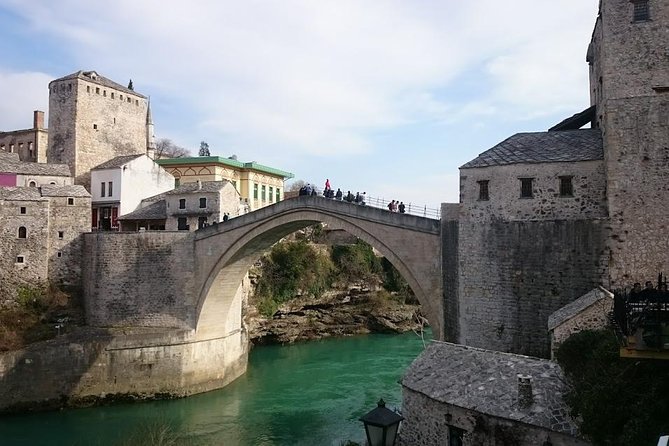
Koski-Mehmed Pasha Mosque is one of the tour’s most useful stops for both culture and photography. It sits on high ground above the Neretva, and tourists are allowed to enter. The visit may also include climbing the high minaret, which offers a striking view toward the Old Bridge.
The minaret climb is the key reason to budget extra time and money here. Admission is not included, and the listing also notes that fees for museums and monuments are separate. Ask your guide which charges apply on the day and decide based on your interest and comfort with the climb.
I like that the mosque is not treated only as a viewpoint. It gives you a chance to learn about one of Mostar’s important Islamic landmarks. The view then ties the city together: river, bridge, stone roofs, and the old streets below.
The scheduled stop lasts about 15 minutes. That is short if you enter, climb, take photographs, and listen to a full explanation. You may need to move efficiently, and the visit may feel compressed if the mosque or minaret is busy. If the view is a priority, tell your guide early.
Crossing into Mostar’s Austro-Hungarian side
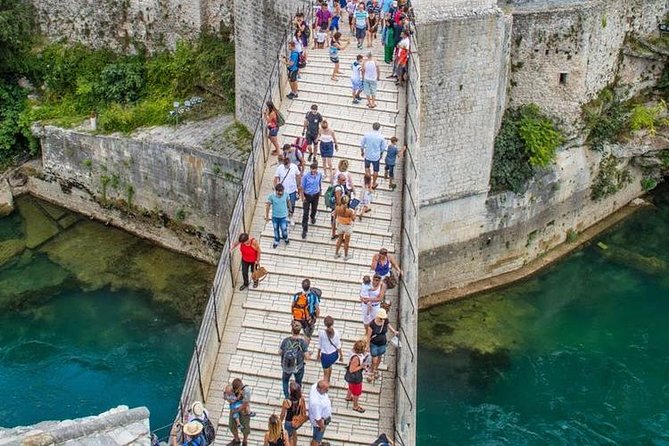
After the old-town section, the route crosses one of Mostar’s attractive Austro-Hungarian bridges toward a more spacious and romantic part of the city. This change is important. Mostar is not only Ottoman lanes and river views. Its later architecture reflects the period when Austro-Hungarian rule brought new building styles and urban planning.
The walk then reaches Spanish Square, across the Bulevar road. The boulevard served as the former front line during the last war, so the crossing marks a sharp change in subject.
Spanish Square honors Spanish members of the United Nations peacekeeping forces who died in Mostar. It was opened by Spain’s King Juan Carlos. The five-minute stop is short, but the site gives the guide a clear place to explain the international presence during the conflict.
This is not a cheerful section of the walk, and it should not be. A useful Mostar tour has to address the war without turning the subject into a spectacle. The first-hand account highlighted in the tour’s feedback is especially valuable here, since dates and monuments alone cannot explain how the conflict divided the city.
Park Zrinjevac and the city’s public face
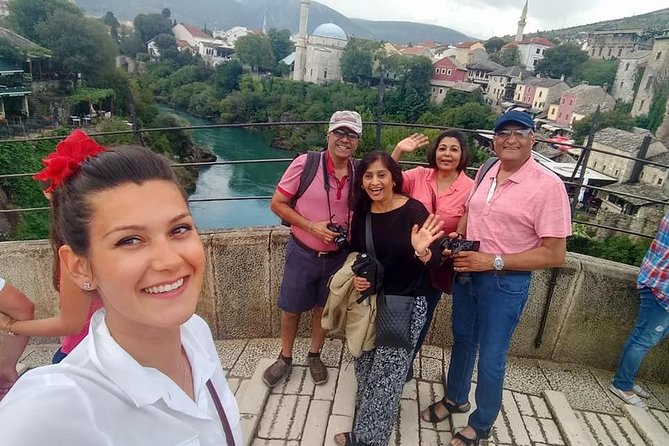
Park Zrinjevac offers a calmer setting after the discussion at Spanish Square. You walk along Stefania’s Promenade, a pedestrian area from the Austro-Hungarian period, and see villas and public buildings built in the pseudo-Moorish style.
The park is described as the largest and most beautiful in Mostar. More important, it carries a difficult wartime story: public parks were used as cemeteries during the conflict. That detail changes the way you see the lawns and paths. A public space can hold both ordinary city life and painful memory.
This 15-minute section gives the tour room to breathe. You get architecture, greenery, and a chance to connect the city’s design with its political past. The route is not just a march between famous sights. It shows how Mostar’s public spaces were made, damaged, and used over time.
The buildings here may appeal to anyone interested in urban design. If your main goal is only the Old Bridge, this part may feel less essential. I think it earns its place because it explains the western side of Mostar and prevents the city from being reduced to its Ottoman center.
The Peace Bell Tower finish
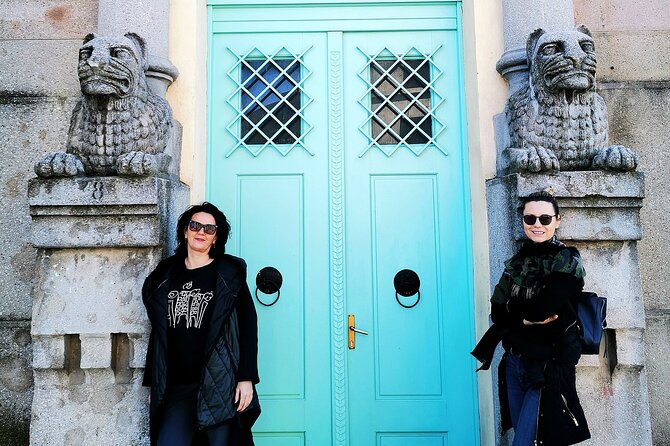
The walk closes at Mostar’s Peace Bell Tower, a fitting final stop for a route focused on coexistence, division, and the city’s mixed identity. The stop lasts about five minutes, and admission is not included.
The tower provides a place to discuss Mostar’s multicultural character after you have seen its religious buildings, old crafts, Austro-Hungarian streets, and war memorials. It is a compact ending rather than a major sightseeing visit, so do not expect a long climb or extended interior tour unless your guide confirms that access is available.
The activity ends back at the original meeting point. That makes it easy to continue exploring the old town, return to your accommodation, or stop for a meal nearby.
Pace, private guiding, and value
A private two-hour tour usually gives better value than a large group walk when your main need is orientation and explanation. You are paying for the guide’s time rather than for a long list of included admissions. Since the tour price is not supplied here, I cannot judge it against a specific figure, but the value depends on how much you want local interpretation.
The strongest value comes from four things:
- A guide who can explain Mostar’s conflict in personal and local terms
- Access to the jumpers’ club premises when available
- A route that covers both sides of the city
- The freedom to ask questions without a large group slowing the conversation
The weaker point is that several attractions have extra fees. Koski-Mehmed Pasha Mosque and the Peace Bell Tower list admission as not included, and museum or monument fees are generally separate. Bring some flexibility in your budget if you want to enter sites rather than view them from outside.
The tour is offered in English and requires at least two people per booking. Children must be accompanied by an adult, and most people can take part. The stated operating hours are 9:00 a.m. to 6:00 p.m., every day, for the listed period from December 19, 2025, through December 18, 2026.
The booking terms are strict: the experience is non-refundable and cannot be changed after booking. The tour information highlights hotel pickup and drop-off, but it also gives Franjevačka Church, Franjevačka 1, as both the start and finish. I would confirm this point with Herzeg Day Tours before paying, especially if you are relying on transport from a hotel outside the center.
Who should book this Mostar tour?
I would choose this walk if you want a first orientation to Mostar with more historical context than a quick old-town stroll provides. It suits couples, families with older children, and small groups who prefer a guide focused on their questions.
It is also a good fit if the 1990s conflict is an important part of your visit. The former front line, Spanish Square, wartime cemeteries, and Peace Bell Tower give the difficult material a proper place in the route.
I would not choose it as your only Mostar activity if you want long shopping time, museum interiors, or a slow photography walk. Two hours passes quickly, and extra entrance fees are not covered. Plan to return to the bazaar, bridge, or mosque afterward if one of those places interests you most.
The best approach is to use the tour as a framework. Listen closely, note the places you want to revisit, and then spend the rest of your day exploring at your own speed.
FAQ
How long does the Mostar private walking tour last?
The tour lasts approximately two hours.
What language is the tour offered in?
The tour is offered in English.
Is this a private activity?
Yes. Only your group participates in the private tour.
Where does the tour start?
The stated meeting point is Franjevačka Church, Franjevačka 1, Mostar 88000, Bosnia and Herzegovina.
Where does the tour end?
The activity ends back at the meeting point.
Is hotel pickup and drop-off included?
The tour highlights mention hassle-free hotel pickup and drop-off, but the meeting details list Franjevačka Church as the start and end point. Confirm the exact transport arrangement with Herzeg Day Tours before booking.
Are entrance fees included?
No. Fees for museums and monuments are not included. Admission is specifically listed as not included for Koski-Mehmed Pasha Mosque and the Mostar Peace Bell Tower.
Can children join the tour?
Yes. Children can participate, but they must be accompanied by an adult. A minimum of two people is required per booking.
Should you book it?
Book this tour if you want Mostar explained as a real city, not just photographed as a bridge. Its best features are the private guide, the visit connected with the bridge jumpers, the walk through Kujundziluk, and the honest treatment of the war years.
Skip it if you want a very slow walk or a ticketed sightseeing package with all admissions included. For most first-time visitors who value local context and have only a short window in Mostar, this is a well-shaped introduction. Just confirm the pickup point, ask about entrance costs, and leave yourself extra time afterward for the places that deserve a second look.
Just added around Mostar
- Mystical Sutjeska National Park★ 5.0 · 3 reviews
- Mostar Guided Tour & Sweet Delights★ 5.0 · 3 reviews
- Private tour from Split to Dubrovnik via Mostar★ 5.0 · 3 reviews
- From Dubrovnik: Sarajevo and Mostar Private Full-Day Tour★ 4.7 · 3 reviews
- From Dubrovnik to Mostar and Kravice waterfalls★ 3.5 · 3 reviews
- Pocitelj City Tour★ 4.5 · 3 reviews
- All Inclusive Neretva Rafting, Day Tour from Mostar★ 5.0 · 4 reviews
- From Dubrovnik: Day Trip to Mostar and Kravica Waterfall★ 3.8 · 4 reviews
Mostar Day Trips, compared.
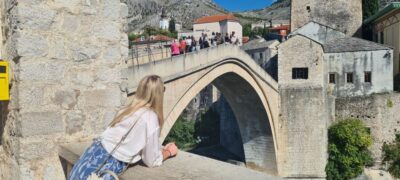
From Dubrovnik: Mostar and Kravica Waterfall Day Trip
Read our review →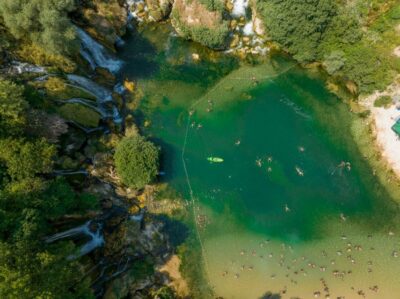
Dubrovnik: Kravica Waterfalls, Mostar and Pocitelj Day Trip
Read our review →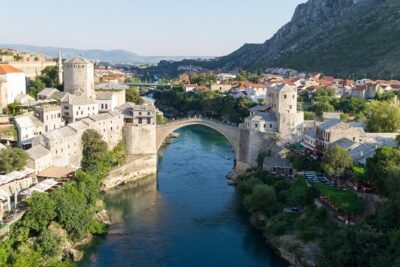
Sarajevo: Mostar, Konjic, Blagaj Tekke, Pocitelj & Waterfall
Read our review →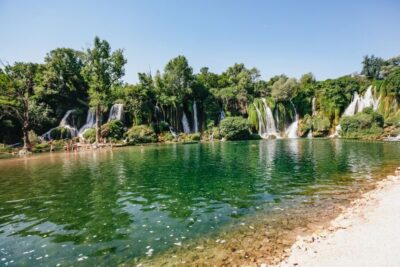
Dubrovnik: Mostar and Kravice Waterfalls Small-Group Tour
Read our review →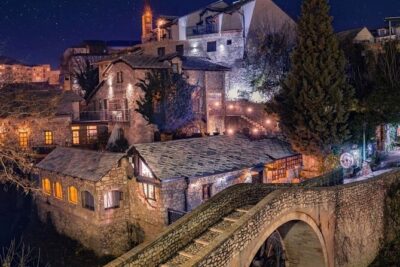
Sarajevo: Mostar, Konjic, Sufi House, Pocitelj & Kravice Falls
Read our review →From Split or Trogir: Mostar & Kravica Waterfall Group Tour
Read our review →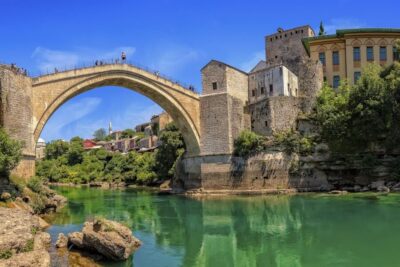
From Dubrovnik: Mostar and Medjugorje Full-Day Tour
Read our review →
Discover Herzegovina Day Tour from Mostar: Kravice Waterfalls, Blagaj, Počitelj
Read our review →Browse the lists this tour appears in