
Reviewed · MOSTAR DAY TRIPS
The Death of Yugoslavia Tour in Mostar
Mostar’s prettiest sights tell only part of its story. This 2.5-hour tour takes you away from the usual old-town route to abandoned military and political sites linked to Yugoslavia, the Cold War, and the war that broke the country apart. The locations are kept secret until you arrive, which gives the outing a sense of discovery without turning history into a polished museum display.
I like two things right away: the guide connects big political events to ordinary life, and the route reaches places you would be unlikely to find on your own. Guides such as Marko, Miran, Dario, and Marin are praised for clear storytelling, personal memories, humor, and carefully chosen music. The main drawback is also clear: the sites are rough, abandoned, and sometimes visually underwhelming if you expect grand monuments or restored attractions.
Key points to know before booking
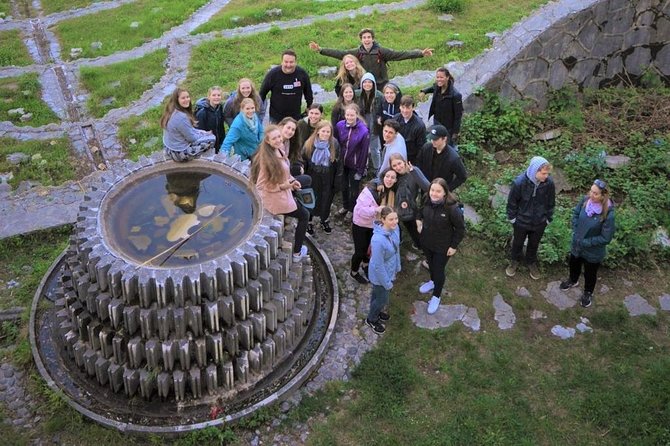
- Four secret sites: You visit locations around Mostar connected to Yugoslav politics, military planning, daily life, war, and modern Bosnia and Herzegovina.
- A guide-led history lesson: The tour explains Tito’s socialism, the break with the Soviet Union, the fall of Yugoslavia, and the 1990s war in plain language.
- Music is part of the program: Songs help show the mood and culture of different periods, from socialist Yugoslavia to its later years.
- Small group format: The maximum group size is 16 people, so the guide can usually keep the discussion personal and easy to follow.
- Round-trip by vehicle: You begin at iHouse Travel in central Mostar at 5:00 pm and return there at the end.
- Best for history-minded visitors: This suits you if you want context, difficult questions, and lesser-known places more than polished sightseeing.
Why this Mostar tour feels different
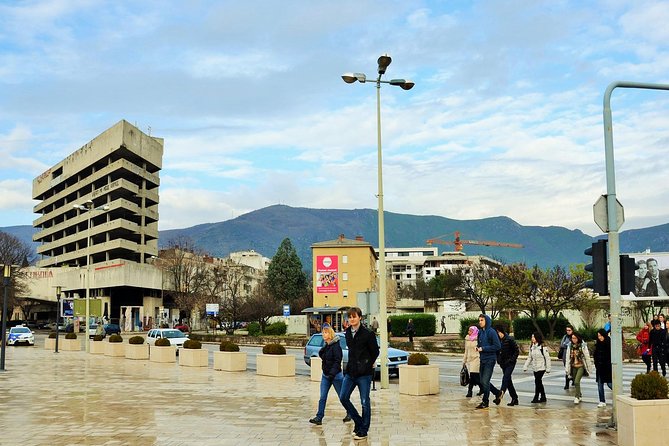
The Death of Yugoslavia Tour is not built around famous viewpoints. Its subject is a country that no longer exists, and its settings reflect that fact. You ride out from Mostar, following a four-part story that moves from postwar socialism to Cold War fear, everyday life under Tito, the breakup of Yugoslavia, and Bosnia and Herzegovina’s difficult present.
I find the structure useful because the tour does not begin with the 1990s war alone. You first learn how Yugoslavia was formed and how its political system worked. That background matters. Without it, the breakup can look like a sudden burst of ancient hatred. The guide instead traces the role of economic decline, political pressure, and rising nationalism.
The mood changes from stop to stop. Music adds another layer, giving you a feel for public culture and changing attitudes. The guides also bring in personal stories about growing up during Yugoslavia, which can make an enormous subject easier to grasp.
This is a storytelling tour with places attached, not a standard monument tour with a few dates added. You will spend much of the time in the vehicle listening, then get out at four locations for about 30 minutes each.
More ways to reach Mostar:
- From Dubrovnik: Mostar and Kravica Waterfall Day Trip
★ 4.7 · 4,709 reviews - Dubrovnik: Kravica Waterfalls, Mostar and Pocitelj Day Trip
★ 4.5 · 3,045 reviews - Dubrovnik: Mostar & Kravica Waterfalls Day Trip
★ 4.8 · 1,970 reviews
Meeting at iHouse Travel at 5:00 pm
The tour begins at iHouse Travel, Onešćukova 25, Mostar 88000. The published start time is 5:00 pm, and the activity ends back at the same meeting point.
That arrangement is practical. You do not need to arrange a separate taxi between scattered sites, and the round trip keeps the evening simple. Hotel pickup and drop-off are not included unless you select that option, so check your booking details rather than assuming someone will collect you.
The drive between locations is not dead time. Each journey introduces the next chapter. You may be listening to a discussion of World War II and the creation of socialist Yugoslavia, then arriving at a site that makes the subject more concrete.
The maximum group size is 16. That is large enough to give the tour energy but still small enough for questions and conversation. Children must be accompanied by an adult, and most people can take part according to the stated tour information.
Gornje Gnojnice and the fear of the Cold War
The first chapter is called The Yugoslav Paranoia. On the way to Gornje Gnojnice, the guide sets up the story of World War II and the emergence of socialist Yugoslavia.
The key subject here is Yugoslavia’s break with the Soviet Union. That split pushed the country into a tense position between the communist East and the Western powers. The result was a strong concern with secrecy, defense, internal loyalty, and possible attack.
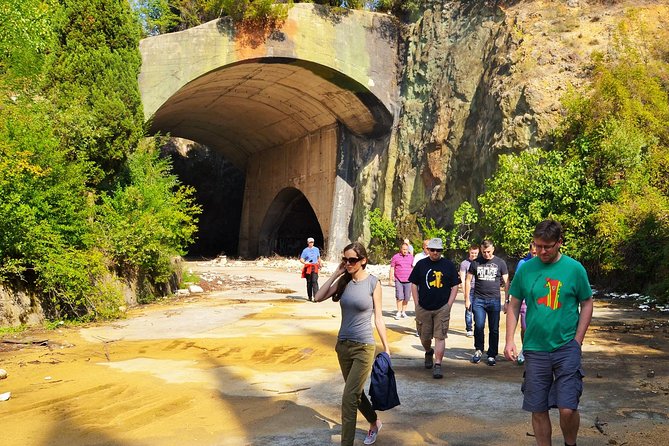
At the first site, you learn about the Informbiro period and the militarization of the 1950s. The location is secret before the tour, and that works well for this chapter. You are not simply told about hidden military thinking in a classroom. You are taken to a place chosen for its connection to secrecy and fear.
You should set your expectations correctly. This is not a restored Cold War bunker with exhibits, signs, and bright lighting. The sites are described as abandoned and decaying, and that raw condition is central to the experience. If you enjoy ruins and historical atmosphere, the setting may help the story sink in. If you need a polished attraction, you may find the stop disappointing.
The guide’s role is especially important here. A bare ruin cannot explain itself. The value comes from hearing why the place mattered and how the political climate shaped the country.
Rodoč and the ordinary life of Tito’s Yugoslavia
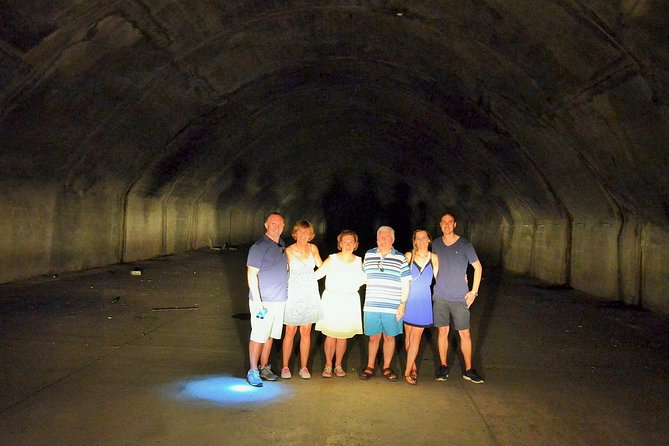
The second chapter, People’s Life, moves from state fear to daily expectations. During the drive to Rodoč, the guide discusses Josip Broz Tito, his personal life, his political achievements, and his effort to create a form of socialism suited to Yugoslavia.
This part helps prevent the tour from becoming only a story of decline. You hear about the ideals of Tito’s system and the way many people experienced it. The discussion includes Youth Work Actions, an important way of involving young people in collective building projects, and the heavy industrialization of the 1950s and 1960s.
The emphasis is on what ordinary people hoped for: work, education, housing, social stability, and a sense of belonging. The tour then moves into popular culture during the 1970s and 1980s, including brands, music, cars, and lifestyle.
I particularly like this chapter because political history can become too abstract. Talking about automobiles, songs, consumer goods, and youth culture gives you a more human picture of the period. It also explains why the end of Yugoslavia was not experienced simply as liberation by everyone. Many people had real memories of security and shared identity, even within a system that had serious limits.
The music presentation fits naturally here. Songs can show how a society saw itself, what its younger generation valued, and how the public mood changed over time. Guides including Marko and Miran have been praised for making complicated subjects understandable, while Dario is noted for adding humor without losing the seriousness of the material.
Again, the physical site may not be the star. The guide’s explanation does the heavy lifting. Come for the connection between place and story, not for a major architectural sight.
A few more Mostar day trips to weigh up
- Dubrovnik: Mostar and Kravice Waterfalls Small-Group Tour
★ 4.8 · 1,194 reviews - From Split or Trogir: Mostar & Kravica Waterfall Group Tour
★ 4.7 · 929 reviews - From Dubrovnik: Mostar and Medjugorje Full-Day Tour
★ 4.4 · 898 reviews - Discover Herzegovina Day Tour from Mostar: Kravice Waterfalls, Blagaj, Počitelj
★ 5.0 · 742 reviews
Španski trg and the breakup of Yugoslavia
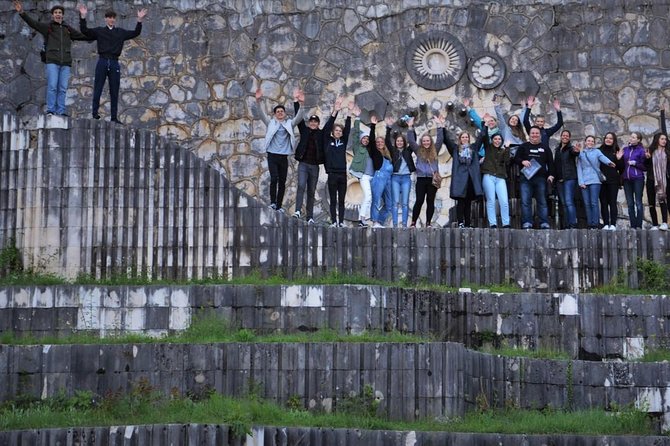
The third chapter takes you to Španski trg after a discussion of the 1980s. The guide covers the 1984 Sarajevo Winter Olympics and explains why this period is often remembered as a golden era of Yugoslav socialism.
That memory is important. The Olympics represented international recognition and a confident public identity. They also belong to a decade when the country still appeared stable to many people, even as economic and political problems were growing.
The explanation then turns to the fall of Yugoslavia. You hear how economic depression and rising nationalisms helped push the country toward war. The timeline covers the first fighting in Slovenia and Croatia, followed a year later by the conflict in Bosnia and Herzegovina, where the violence reached its most painful point.
The guide does not treat the war as a simple story with one cause. The goal is to connect economic stress, political change, nationalism, and the collapse of a shared state. You also look at the consequences: destruction, lost lives, and the dissolution of the Yugoslav idea.
For anyone who has seen Mostar’s damaged buildings or learned only the basic outline of the Bosnian War, this part can add much-needed context. It also gives you a chance to ask questions about how the conflict affected the city and country.
This is the most emotionally difficult portion of the route. The subject is recent, and local guides may have family memories from the period. That personal element can make the account more direct, but you should not expect a light sightseeing excursion. The tour is thoughtful and sometimes painful by design.
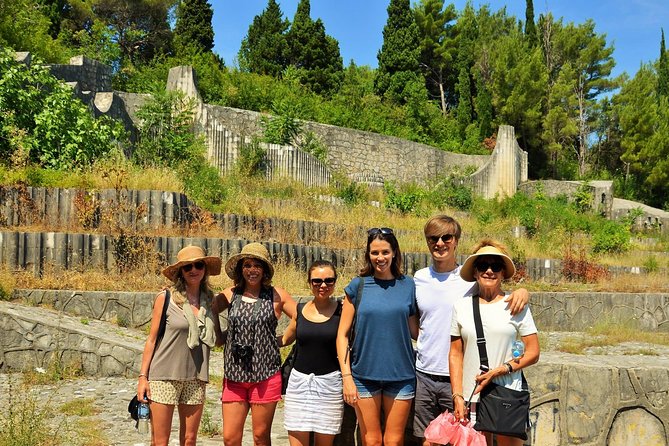
The Partisan Cemetery and Bosnia today
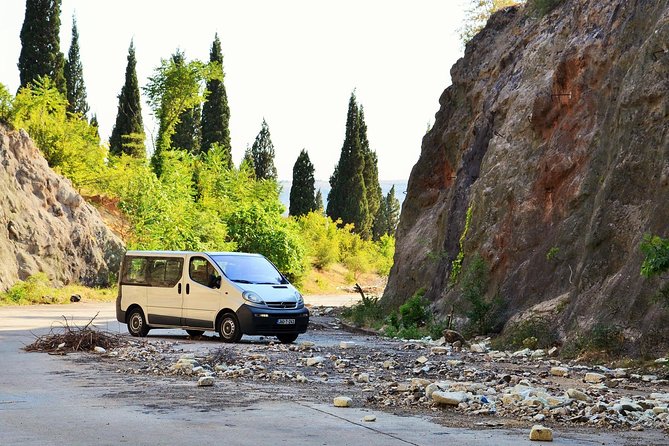
The last stop is the Partisan Cemetery, where the fourth chapter considers Bosnia and Herzegovina today. During the drive, the guide explains the country’s current political structure and the problems that continue to shape public life.
The discussion then places Bosnia and Herzegovina in the wider question of possible European Union membership. The tour considers the country’s need for economic, cultural, and political recovery, while returning to the relics of an older Yugoslav past.
The Partisan Cemetery is a fitting final stop because it links memory, ideology, war, and the present. It is not treated as a simple endpoint for photographs. Instead, the guide uses it to ask what remains of earlier ideals and what Bosnia needs now.
I appreciate that the tour does not pretend history ended with the war. A trip focused only on ruined buildings can leave you with a frozen image of Bosnia. This final chapter brings the country into the 21st century and shows why politics, identity, and recovery still matter.
The last half-hour also gives you room to pull the earlier chapters together. You have seen how Yugoslavia formed, how it tried to build a shared identity, how daily life worked under Tito, and how the system came apart. The final question is not simply what happened, but what people carried forward after the collapse.
What the guides add to the experience
The guide can make or break this tour. The physical sites are not self-explanatory, so a strong narrator is essential.
Several guides are specifically praised for different strengths. Marko, also referred to as Marco in some accounts, is described as warm, funny, and very clear when explaining Yugoslavia, the war, and ordinary life. He also shares useful advice about Bosnia beyond the tour and, at times, personal memories of growing up in the country.
Miran, sometimes written as Myran, is praised for connecting each location to the wider story and for using music to create the right mood. Dario is noted for enthusiasm and for making a difficult part of Balkan history easier to understand. Marin is described as especially passionate and relatable.
You may not receive a particular guide, so I would not book solely on the expectation of meeting one named person. Still, the repeated strengths of the guiding team are a real part of the tour’s value: clear explanations, personal perspective, humor, and a strong sense of place.
Is $47.17 a fair price?
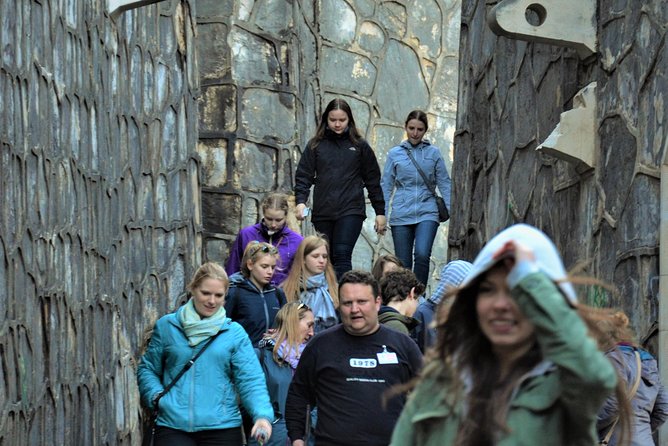
At $47.17 per person, the cost is higher than a simple walking tour, but the comparison is not quite fair. Your fee covers vehicle transport to four scattered locations, a driver-guide, local taxes, and the planning needed to create a route that would be hard to repeat independently.
You are paying mainly for access and interpretation. The secret sites are not standard Mostar stops, and the guide supplies the framework that turns abandoned places into historical evidence.
The value depends on your interests. If you want attractive buildings, famous views, or a relaxed photo outing, the price may feel high. One visitor felt the sites were poor value despite praising the guide. That criticism is worth taking seriously. The locations are not glamorous, and you should not expect admission halls, restored interiors, or impressive facilities.
If you are interested in Yugoslav history, Cold War politics, the Bosnian War, and local memory, the price makes more sense. The tour reaches places you would probably not know how to find and gives you 150 minutes of guided context. Group discounts may also be available, which can improve the cost for families or larger parties.
Who should book this tour?
I would choose this experience if you:
- Want to understand Mostar beyond the Old Bridge and historic center.
- Have an interest in Tito, socialism, the Cold War, or the breakup of Yugoslavia.
- Prefer local explanation and personal stories to a polished attraction.
- Are comfortable visiting abandoned or decaying sites.
- Want transport included between several locations.
- Can give serious recent history your full attention.
I would skip it if your Mostar schedule is very short and you want only the city’s major sights. I would also think twice if you dislike war history, political discussion, or places that may feel rough around the edges.
The 5:00 pm start is useful after a morning of sightseeing. You can spend the earlier part of the day in Mostar’s old town, then use the evening for a focused history program. Since the tour runs about two and a half hours, you return around the end of the day, though the exact finish may vary.
Booking details worth noting
Confirmation is provided at booking. The tour is offered in English and uses a mobile ticket.
Free cancellation is available if you cancel at least 24 hours before the local start time. Cancellations or changes made less than 24 hours before departure are not accepted for a refund.
The tour requires at least two people to operate. If you are booking alone, a single supplement may apply, so ask about the final price before committing. This is an important detail for solo visitors and should be clear at the time of booking.
Should you book the Death of Yugoslavia Tour?
Book it if you want the story behind the scenery. Mostar’s war damage, political divisions, and modern identity make more sense when placed within the larger history of Yugoslavia. This tour gives you that framework while taking you to places outside the normal sightseeing circuit.
Just know what you are buying. The sites are not beautiful attractions, and some may look neglected. The reward is the guide’s narrative, the music, the local perspective, and the chance to connect real places with a complicated past.
For a visitor with even a passing interest in Yugoslavia, Tito, the Cold War, or Bosnia and Herzegovina’s recent history, I consider this one of Mostar’s more worthwhile specialist tours. For everyone else, spend the money on a standard city walk or a scenic day trip instead.
FAQ
Where does the Death of Yugoslavia Tour begin?
The tour begins at iHouse Travel, Onešćukova 25, Mostar 88000, Bosnia and Herzegovina.
What time does the tour start?
The scheduled start time is 5:00 pm.
How long does the tour last?
The experience lasts approximately 2 hours and 30 minutes, with about 30 minutes planned at each of the four main stops.
Where does the tour end?
The activity ends back at the starting point at iHouse Travel.
Is hotel pickup included?
Hotel pickup and drop-off are not included unless you select that option when booking.
How many people can join the tour?
The maximum group size is 16 people.
Is the tour offered in English?
Yes. The tour is offered in English and includes a local driver-guide.
Just added around Mostar
- Mystical Sutjeska National Park★ 5.0 · 3 reviews
- Mostar Guided Tour & Sweet Delights★ 5.0 · 3 reviews
- Private tour from Split to Dubrovnik via Mostar★ 5.0 · 3 reviews
- From Dubrovnik: Sarajevo and Mostar Private Full-Day Tour★ 4.7 · 3 reviews
- From Dubrovnik to Mostar and Kravice waterfalls★ 3.5 · 3 reviews
- Pocitelj City Tour★ 4.5 · 3 reviews
- All Inclusive Neretva Rafting, Day Tour from Mostar★ 5.0 · 4 reviews
- From Dubrovnik: Day Trip to Mostar and Kravica Waterfall★ 3.8 · 4 reviews
Mostar Day Trips, compared.
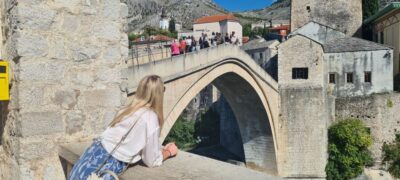
From Dubrovnik: Mostar and Kravica Waterfall Day Trip
Read our review →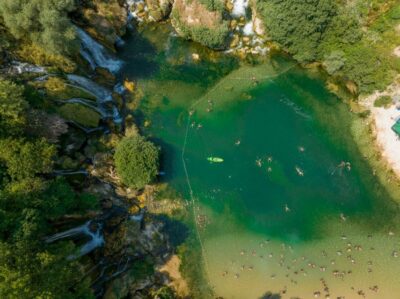
Dubrovnik: Kravica Waterfalls, Mostar and Pocitelj Day Trip
Read our review →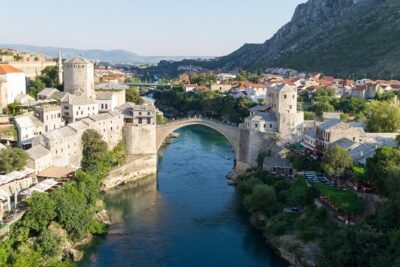
Sarajevo: Mostar, Konjic, Blagaj Tekke, Pocitelj & Waterfall
Read our review →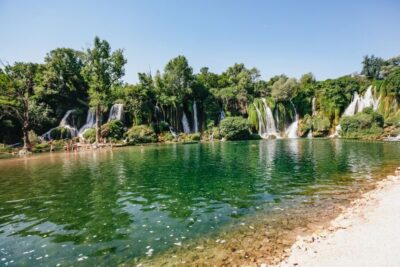
Dubrovnik: Mostar and Kravice Waterfalls Small-Group Tour
Read our review →
Sarajevo: Mostar, Konjic, Sufi House, Pocitelj & Kravice Falls
Read our review →From Split or Trogir: Mostar & Kravica Waterfall Group Tour
Read our review →
From Dubrovnik: Mostar and Medjugorje Full-Day Tour
Read our review →
Discover Herzegovina Day Tour from Mostar: Kravice Waterfalls, Blagaj, Počitelj
Read our review →Browse the lists this tour appears in