
Reviewed · BLAGAJ TEKKE & DERVISH HOUSE
Blagaj Tekija & Buna River Half-Day Tour from Mostar
The most unusual part of this Mostar experience is the meeting of Ottoman design and raw limestone scenery at Blagaj Tekija. The 16th-century Dervish monastery sits beside the Buna River spring, where powerful turquoise water bursts from a cavern beneath a high cliff. It is a short outing, but the setting gives it real weight.
I like the small maximum group of seven, which should make it easier to ask questions and hear the guide. I also like the human details: rose juice in an Ottoman house, thoughtful accounts of Mostar’s past, and guides such as Selmir and Armina, who are praised for clear explanations and warm help.
The main thing to check is transportation. It is not included, and the tour begins and ends at Španjolski trg in Mostar. The listed time is about two to three hours, so confirm how you will reach each stop before you pay.
Key points at a glance
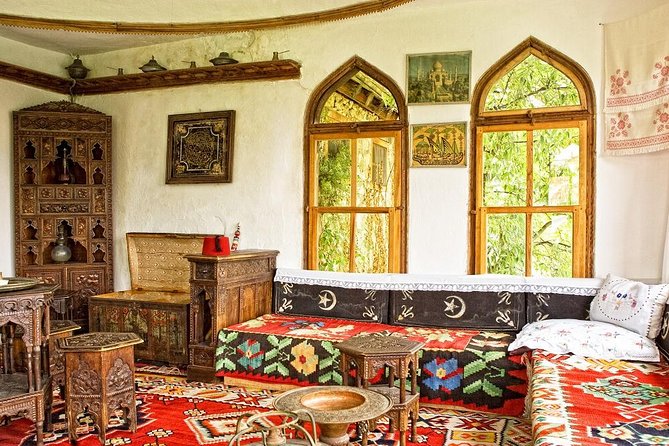
- Blagaj Tekija: Visit a 16th-century Dervish monastery beside the Buna River source, with admission included.
- Buna River spring: See one of Europe’s strongest karst springs as water pours from a cavern under a limestone cliff.
- Small group size: The maximum is seven people, a useful advantage for questions and personal attention.
- Mostar context: Your guide covers the city’s past, including the Ottoman period and, in some cases, personal memories linked to the 1990s war.
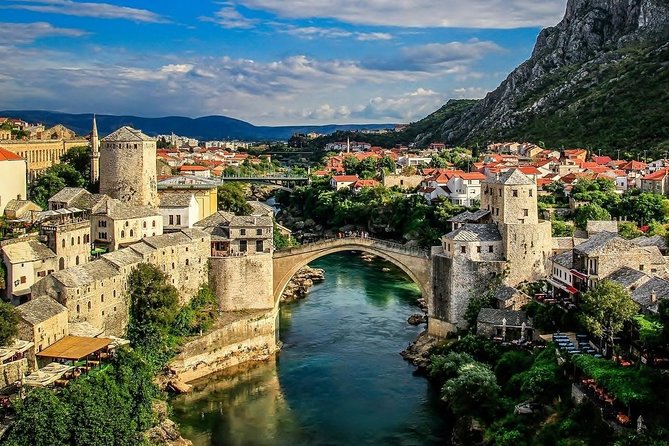
- Local tastes and streets: The experience includes a rose-juice sample at an Ottoman house and attention to Mostar’s old city, rebuilt Stone Bridge, and scenic lanes.
- Flexible booking: You receive confirmation at booking and can cancel for a full refund up to 24 hours before the start time.
Why Blagaj makes a strong half-day from Mostar
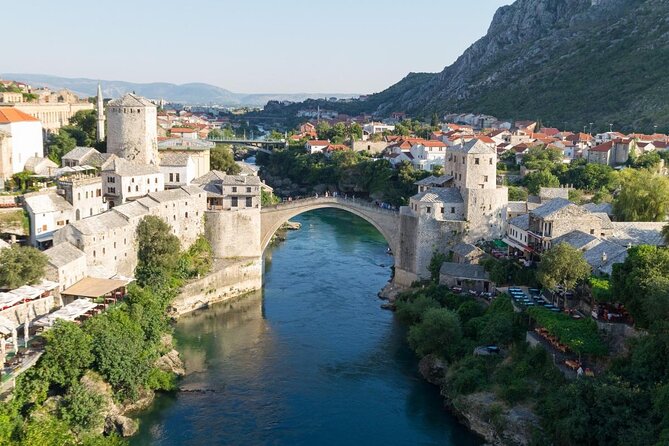
Mostar is famous for its Stone Bridge and old Ottoman streets, but Blagaj gives you a different view of the area. Here, the attraction is not a long list of monuments. It is the close relationship between faith, water, stone, and village life.
The Buna River spring is the reason Blagaj feels so special. Water rises from a cavern at the foot of a tall limestone wall, then forms the Buna River. The color is a striking turquoise, and the water’s force gives the place a sense of movement even when you are simply standing nearby.
For me, this is a good add-on if you have already seen Mostar’s central sights. It takes you beyond the city without asking for a full-day commitment. The stated duration is only two to three hours, with about 45 minutes at Blagaj Tekija and 30 minutes at the spring.
That short timing also means you should set your expectations correctly. This is not a slow village exploration with hours for lunch, shopping, or extended wandering. Lunch is not included, and the schedule is built around the monastery and spring.
More Blagaj Tekke Trips in Mostar
- Discover Herzegovina Day Tour from Mostar: Kravice Waterfalls, Blagaj, Počitelj
★ 5.0 · 742 reviews - Herzegovina Day Tour from Mostar: Blagaj, Pocitej, Kravice falls (Join Us! :D)
★ 5.0 · 372 reviews - Full-Day Tour in Herzegovina, Blagaj, Počitelj, and Kravice
★ 5.0 · 33 reviews
Inside the 16th-century Blagaj Tekija
Blagaj Tekija is a Dervish monastery, also called a tekke or tekija, dating from the 16th century. Its Ottoman-era architecture sits directly beside the spring, giving you an unusually strong sense of place. The building is not separated from nature by a large formal complex. The cliff, water, and monastery all appear together.
The guide is important here. Without context, you might simply see a picturesque building beside a river. With a good explanation, the site becomes a way to understand Dervish religious life and the Ottoman influence that shaped parts of Bosnia and Herzegovina.
Allow about 45 minutes for this stop. Admission is included, so you do not need to budget a separate entrance fee. The time should be enough to see the main site and ask questions, though it may feel brief if you want to linger over every architectural detail.
One practical point: the place can be busy at times. That does not erase its appeal, but it can affect the quiet mood you may expect from a religious site. Go with the idea of a popular cultural stop, not a private retreat.
The strongest praise for this experience centers on the guide’s explanation of the Dervish background. Selmir is described as thoughtful, thorough, and educational, while Armina is praised for explaining the sights clearly and offering attentive help when someone became separated from the group. Those details matter because Blagaj Tekija rewards questions and conversation more than a quick photo stop.
The Buna spring beneath the limestone cliff
After the tekija, the tour spends about 30 minutes at the River Buna spring. This is the visual centerpiece. The river rises from beneath a vertical limestone wall, and the force of the karst spring makes the water source easy to appreciate even in a short visit.
You are not just looking at a stream winding through the village. You are seeing the beginning of the river itself. That makes the stop especially useful for anyone who enjoys natural features with a clear story behind them.
The spring is free to visit, according to the tour details. The stop should work well for photography, although the exact conditions can change with crowds and light. Your guide can also connect the water to the reason people settled here and explain why this particular source helped make Blagaj an important place.
Thirty minutes is enough to take in the view, walk around the immediate area, and listen to the explanation. It is not enough for a long independent walk through every corner of Blagaj. If you like unhurried nature time, ask how much freedom you will have after the guide’s talk.
More than a nature stop: Mostar’s old city and Ottoman tastes
The tour highlights a stroll through Mostar’s scenic old streets, along with the rebuilt Stone Bridge. It also includes a taste of rose juice at an Ottoman house. These touches give the experience more cultural range than a simple transfer to Blagaj and back.
The Stone Bridge is central to Mostar’s identity, and its rebuilt architecture carries a difficult modern story. A guide can help you connect the bridge’s Ottoman origins with the damage it suffered and its later rebuilding. That context is more useful than another isolated photograph of the bridge.
The rose juice stop is a small detail, but I think it is one of the better features. A local drink served in an Ottoman house gives you a physical connection to the region’s past. It is also a welcome change from listening to dates and names while walking.
The available feedback points to guides who do not treat history as a dry lecture. Selmir is praised for humor as well as information, and one French-language experience included personal discussion connected to the 1990s war. The tour is listed as offered in English, so you should confirm the language arrangement if you need French or another language.
Because the supplied timing specifically assigns 45 minutes to Blagaj Tekija and 30 minutes to the spring, the old-city walk and Ottoman-house visit may be part of the wider experience rather than a separately timed stop. Ask for the exact order when booking if those details are especially important to you.
More ways to reach Mostar:
- From Dubrovnik: Mostar and Kravica Waterfall Day Trip
★ 4.7 · 4,709 reviews - Dubrovnik: Kravica Waterfalls, Mostar and Pocitelj Day Trip
★ 4.5 · 3,045 reviews - Dubrovnik: Mostar & Kravica Waterfalls Day Trip
★ 4.8 · 1,970 reviews - Dubrovnik: Mostar and Kravice Waterfalls Small-Group Tour
★ 4.8 · 1,194 reviews
What a small group changes
The maximum group size is seven. That is one of the best practical features here. A small party makes it easier for you to hear in narrow streets, stop for questions, and speak directly with the guide instead of waiting for a large crowd to gather.
It also creates room for a more personal conversation about Bosnia and Herzegovina. One guide is praised for sharing personal experience related to the war of the 1990s. That kind of firsthand perspective can add emotional depth, though it is also a reminder that the history may be serious at points.
Small groups do not guarantee a private tour. The experience can still be busy at Blagaj Tekija, and the listed maximum is seven, not one or two. Still, this is a much more manageable format than a large coach excursion.
The guide’s quality will shape much of your experience. Selmir and Armina are the named guides associated with especially positive feedback. Selmir is described as gracious, humorous, and careful in his explanations. Armina is described as attentive and willing to help when a participant lost the group. You cannot assume which guide you will receive, but these are useful names to keep in mind.
Is $72.09 a fair price?
At $72.09 per person, this is not the cheapest way to see Blagaj. The value depends on what you want from the outing. You are paying for an authorized professional guide, entrance to Blagaj Tekija, a small group, and interpretation that ties the sights to Mostar’s religious, Ottoman, and modern history.
You are not paying for lunch or transportation. That matters. Since the meeting point is Španjolski trg in Mostar and the activity ends back there, you should allow time and money to handle your own transport arrangements. The tour price is easier to justify if the operator’s transport plan is clear and convenient, but the supplied details specifically list transportation as excluded.
The admission fee is included, while the Buna spring has no entrance charge. So the main value is not the tickets. It is the guide’s time and the access to explanations, local stories, and the small-group format.
I would see this as a good value for a first visit to the area if you prefer a guided outing and want the history explained. It is less compelling if you already know Blagaj, can arrange transport cheaply, and mainly want to stand by the spring for a few minutes.
The tour is booked, on average, 13 days ahead. That suggests you should not leave it until the last minute if your Mostar dates are fixed, especially since the group is limited to seven people.
Timing, meeting point, and planning advice
The listed start time is 9:00 a.m. at Španjolski trg, Mostar. This early start gives you a useful part of the day afterward for lunch or more sightseeing, assuming the activity finishes within the stated two-to-three-hour window.
The activity ends at the same meeting point. That makes it simple for your day plan, but it also means you should not assume a hotel pickup or drop-off. Transportation is excluded, so check the exact arrangements for reaching Blagaj and returning to Mostar.
Confirmation arrives at the time of booking. The tour is offered in English, and it is near public transportation. Most people can participate, according to the provided information, but no detailed accessibility description is supplied. If you need step-free access or have mobility concerns, ask before booking rather than guessing.
Wear comfortable shoes for the old-city streets and the stops around the spring. That is ordinary good advice rather than a special equipment requirement. The most important preparation is simply to leave room in your morning schedule and clarify the transport question.
Free cancellation is available up to 24 hours before the local start time. Changes or cancellations made less than 24 hours before departure are not accepted for a refund.
Who will get the most from this experience?
I would recommend this tour to you if you want a compact introduction to an important site outside Mostar without spending a full day away. It suits first-time visitors who want a guide to explain the Dervish tradition, Ottoman architecture, the Stone Bridge, and the region’s more recent past.
It is also a good fit for people who prefer small groups. Seven participants is enough for company but small enough for questions. If you value conversation, humor, and personal stories more than a rigid sightseeing script, the guide can make a big difference.
The tour may suit families and older visitors because most people can participate, but the available information does not give detailed accessibility notes. Ask about the exact walking conditions if that affects your decision.
Independent explorers may find the price harder to defend. You still need to account for transportation, lunch is not included, and the scheduled visits are short. If you want several hours at the spring or a relaxed meal in Blagaj, you may prefer arranging your own visit.
Culture-minded visitors should pay attention to the religious setting. Blagaj Tekija is not simply a photogenic building. It is a Dervish site with spiritual meaning, and the guide’s explanation helps you approach it with respect.
Should you book the Blagaj Tekija and Buna River tour?
Book it if you want history, a striking natural setting, and a small group in one short outing. The strongest reasons are the 16th-century tekija, the Buna spring beneath the cliff, and the chance to hear clear explanations from guides such as Selmir or Armina.
Before booking, confirm how transportation is handled, since it is not included. Also ask how much of the two-to-three-hour schedule is devoted to the old city, rose juice, and the Stone Bridge if those are your main interests.
For a guided first look at Blagaj from Mostar, the $72.09 price can make sense. For a self-directed visit focused only on the spring, it may not. The decision comes down to whether the guide’s historical and personal insight is worth more to you than saving money and setting your own pace.
FAQ
How long does the Blagaj Tekija and Buna River tour last?
The experience lasts approximately two to three hours. The listed schedule includes about 45 minutes at Blagaj Tekija and 30 minutes at the Buna River spring.
What is included in the tour price?
The price includes a professional authorized guide and the entrance fee for Blagaj Tekija.
Is transportation included?
No. Transportation is not included. The tour starts and ends at Španjolski trg in Mostar, so confirm your transport arrangements before booking.
What time and where does the tour start?
The tour starts at 9:00 a.m. at Španjolski trg, Mostar 88000, Bosnia and Herzegovina.
How many people can join the tour?
The group has a maximum of seven participants.
Can I cancel for a full refund?
Yes. You can cancel for a full refund if you do so at least 24 hours before the local start time. Cancellations or changes made less than 24 hours before the start are not accepted for a refund.
More Half-Day Tours in Mostar
More Blagaj Tekke Visits
- Transfer Mostar to Dubrovnik with Kravice Waterfalls, Blagaj and Počitelj tour
★ 5.0 · 27 reviews - Private Tour: Kravice Waterfalls, Blagaj, Počitelj, Buna Channel, Skaywalk.
★ 5.0 · 25 reviews - Mostar & Beyond: Kravica Falls, Skywalk, Blagaj Tekke, Pocitelj
★ 5.0 · 15 reviews - Dubrovnik, Mostar, Kravica Waterfalls, & Blagaj Private Tour
★ 3.8 · 7 reviews
Just added around Mostar
- Mystical Sutjeska National Park★ 5.0 · 3 reviews
- Mostar Guided Tour & Sweet Delights★ 5.0 · 3 reviews
- Private tour from Split to Dubrovnik via Mostar★ 5.0 · 3 reviews
- From Dubrovnik: Sarajevo and Mostar Private Full-Day Tour★ 4.7 · 3 reviews
- From Dubrovnik to Mostar and Kravice waterfalls★ 3.5 · 3 reviews
- Pocitelj City Tour★ 4.5 · 3 reviews
- All Inclusive Neretva Rafting, Day Tour from Mostar★ 5.0 · 4 reviews
- From Dubrovnik: Day Trip to Mostar and Kravica Waterfall★ 3.8 · 4 reviews
Blagaj Tekke & Dervish House, compared.
Sarajevo: Mostar, Konjic, Blagaj Tekke, Pocitelj & Waterfall
Read our review →
Discover Herzegovina Day Tour from Mostar: Kravice Waterfalls, Blagaj, Počitelj
Read our review →
Sarajevo: Mostar, Konjic, Dervish House, Pocitelj & Kravica Falls
Read our review →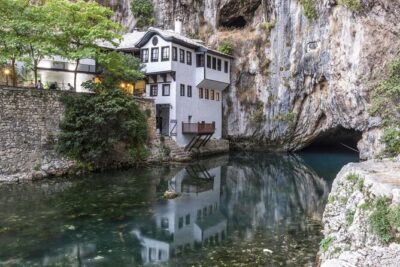
Mostar,Kravica Waterfall,Blagaj,Počitelj – Day Tour from Sarajevo
Read our review →
From Sarajevo: Private Mostar, Blagaj and Kravice Waterfalls Tour
Read our review →
Full-Day Tour in Herzegovina, Blagaj, Počitelj, and Kravice
Read our review →
Transfer Mostar to Dubrovnik with Kravice Waterfalls, Blagaj and Počitelj tour
Read our review →
Private Tour: Kravice Waterfalls, Blagaj, Počitelj, Buna Channel, Skaywalk.
Read our review →Browse the lists this tour appears in