
Reviewed · MOSTAR DAY TRIPS
Mostar Shelters tour in Mostar
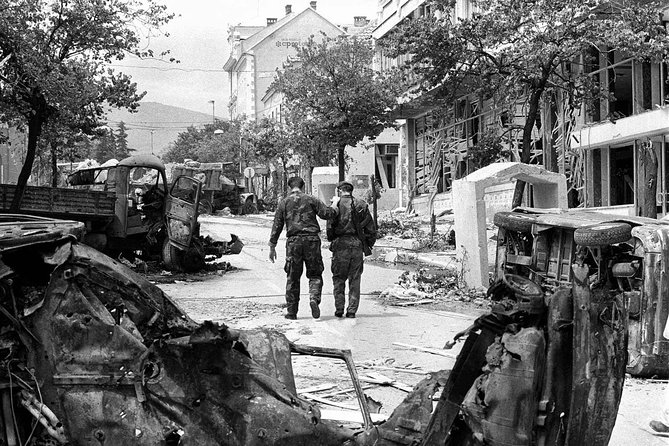
Mostar’s pretty Old Bridge is only part of the story. This tour takes you beyond the postcard view to artillery positions, trench lines, and wartime front lines, explaining why so many buildings still show bullet holes and fire damage. Guides Miran and Dario use photographs, film, and personal stories to make the 1992 to 1995 conflict easier to understand.
I like the small maximum group of 16 and the mix of van travel with short walks, which lets you cover more ground than a standard Old Town stroll. I also like the frank approach: difficult subjects are explained plainly, and you are encouraged to ask questions. The main consideration is the subject itself. This is a serious tour about war, loss, and a divided city, not a light sightseeing outing.
Key points at a glance
- A two to three hour look at wartime Mostar: The advertised duration is about two hours, though the route can run closer to three.
- Artillery sites, trenches, and front lines: You visit places that explain how the conflict shaped Mostar beyond its historic center.
- Guides Miran and Dario bring different personal voices: Both are praised for clear explanations, photographs, film, and firsthand stories.
- Van transport makes the route practical: Much of the tour is by car or van, with short walks at important locations.
- A hilltop cross offers a broad view of Mostar: One stop provides a different angle on the city and helps you understand its setting.
- Good value at $41.20 per person: Hotel pickup at selected hotels, live commentary, and a small group are included.
Why Mostar’s war story needs more than the Old Bridge
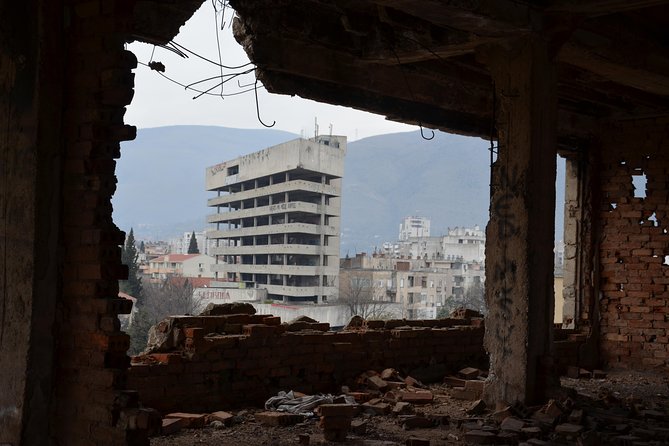
Mostar is easy to read as a romantic city of stone lanes, river water, and one famous bridge. That view is real, but incomplete. Bullet-scarred buildings and burned houses remain close to the tourist center, and you can see the damage without understanding who held which side, how the fighting reached the city, or what happened afterward.
Mostar Shelters fills in that missing context. The tour focuses on the Bosnian War from 1992 to 1995, with special attention to Mostar’s own siege and front lines. I find that local focus especially useful because a general account of the war can blur together Bosnia’s many battles and communities.
Your guide explains the locations as you see them. That matters. An artillery position is not just a scenic stop, and a trench is not simply an old military remnant. Each place helps you connect geography with the decisions made during the fighting.
More ways to reach Mostar:
- From Dubrovnik: Mostar and Kravica Waterfall Day Trip
★ 4.7 · 4,709 reviews - Dubrovnik: Kravica Waterfalls, Mostar and Pocitelj Day Trip
★ 4.5 · 3,045 reviews - Dubrovnik: Mostar & Kravica Waterfalls Day Trip
★ 4.8 · 1,970 reviews
A van route with short walks at important sites
The tour is described as half walking and half driving, though the detailed accounts suggest that much of the route is covered by car or van, with several short walks. That is a practical arrangement in Mostar. The sites are spread out, and driving lets you reach viewpoints and wartime positions that would take too long to cover on foot.
The group can include up to 16 people. That is not a private tour, but it is still small enough for a guide to handle questions and keep the commentary personal. The vehicle also gives you a place to sit while the guide explains the next section of the story.
You meet at Onešćukova 32 in Mostar at 5:00 pm, unless you arrange pickup from one of the selected hotels. The activity ends back at the meeting point. Since the start time is fixed in the supplied details, plan your Old Town sightseeing so you are not rushing across town at the last minute.
The tour is offered in English, with live commentary on board. Food and drinks are not included, so eat beforehand or carry water if you need it. The overall time is listed as about two hours, but you should allow two to three hours based on the way the tour is conducted.
Artillery positions and the shape of the fighting
One of the strongest parts of the route is its attention to where the weapons were placed. You are taken to prominent artillery positions and shown how they related to Mostar and its surrounding hills. This gives you a better sense of why certain parts of the city were exposed and why damage appears in particular patterns.
The value here is not military detail for its own sake. You can begin to see Mostar as a place shaped by height, roads, bridges, river crossings, and neighborhoods. The guide connects those physical features with the conflict, helping you read the city instead of merely looking at its scars.
Expect a direct discussion of the war. The tour is designed to answer questions raised by damaged buildings and burned homes, and the subject matter is not softened into a tidy tourist story. Guides use real footage and photographs, which can make the explanations more immediate than a standard spoken history talk.
That material may be hard to watch. If you prefer to keep your holiday light, this is probably not the right choice. If you want to understand what you are seeing in Mostar, the difficult material is part of the reason this tour works.
Trenches and the reality of the front line
The trench lines offer a different perspective. Artillery positions show the wider reach of the conflict, while trenches bring the fighting down to ground level. A short walk at one of these places can help you picture how close opposing positions could be and how ordinary movement through the city became dangerous.
Do not expect a polished museum setting. The appeal is that you are seeing real places connected to Mostar’s wartime story. That also means conditions may feel basic, and the walking portions are not the main event. Wear sensible shoes, but the supplied information does not describe a demanding hike.
The tour also visits an urban front line. This is where the distance between war and civilian life becomes clearest. The damaged buildings in central Mostar are not abstract reminders. They are part of the lived city, and the guide explains how people survived around them during the fighting and what happened to those people later.
I value that the tour asks what came after the shelling. Many war tours stop at battles and dates. Here, the guide also discusses how local residents lived through the period and what happened afterward, giving the story a human frame.
A few more Mostar day trips to weigh up
- Dubrovnik: Mostar and Kravice Waterfalls Small-Group Tour
★ 4.8 · 1,194 reviews - From Split or Trogir: Mostar & Kravica Waterfall Group Tour
★ 4.7 · 929 reviews - From Dubrovnik: Mostar and Medjugorje Full-Day Tour
★ 4.4 · 898 reviews - Discover Herzegovina Day Tour from Mostar: Kravice Waterfalls, Blagaj, Počitelj
★ 5.0 · 742 reviews
Miran and Dario: clear voices for a difficult subject
The guide can be Miran or Dario, and both are singled out for strong delivery. Miran is described as using photographs and real footage while taking time with questions. Dario is praised for explaining three hours of complicated material without making it heavy or dull, often bringing in personal stories.
Those details tell you what kind of guiding to expect. This is not a silent drive from one photo stop to the next. The guide talks throughout the route, explains the background, and invites you to ask about subjects that may be confusing or uncomfortable.
The personal approach is important in a tour about a recent war. Dates and political labels alone can leave you lost. A local guide can explain how the conflict affected Mostar in practical terms, from the damage visible in town to the ways people lived during and after it.
You should still remember that this is a guided interpretation of a painful and politically sensitive subject. Do not expect every question about the war in Bosnia and Herzegovina to have a simple answer. The benefit of the tour is that it gives you room to ask, listen, and connect the larger conflict with specific places.
The hilltop cross and a different view of Mostar
The route includes a climb by vehicle to a mountain viewpoint with a cross. From there, you get a broad view over Mostar, and the city looks different from the narrow streets around the Old Bridge.
The view is more than a scenic break. Looking down over the city helps you understand the relationship between the river, built-up areas, and surrounding slopes. It also gives you a clearer sense of why elevated positions mattered during the war.
This stop may be one of the tour’s most memorable visual moments, but it is worth keeping the purpose in mind. The viewpoint is tied to the conflict and to the city’s divided wartime experience. It is not simply a sunset photo stop.
You may also find the change in scale useful. On foot, you see bullet holes and damaged facades up close. From above, you see the city as a whole. Together, those views help turn separate facts into a clearer picture of Mostar.
What makes the $41.20 price worthwhile
At $41.20 per person, this is priced as an accessible small-group activity rather than a private guide. The cost includes a professional guide, live commentary, and hotel pickup from selected hotels. Those inclusions matter because the route covers several locations that would be awkward to connect using only public transport.
The value is strongest if you have limited time in Mostar. In roughly two to three hours, you cover wartime sites, viewpoints, and parts of the city beyond the Old Town. A self-guided attempt would require research, transport planning, and a careful understanding of where you are going.
The price is less compelling if your main goal is a relaxed city walk. You are paying for context and access to places outside the usual sightseeing loop, not for food, drinks, or a long list of classic monuments. You may also find the final cost harder to justify if you already have a detailed private history tour arranged.
I would pair it with time in the Old Town rather than treating it as a replacement. See the bridge and historic center first, then use this tour to understand the buildings and neighborhoods beyond the familiar view.
Who should book Mostar Shelters
This tour suits you if you want to understand modern Bosnia and Herzegovina rather than only photograph Mostar. It is especially useful for first-time visitors who see war damage but lack the local context to interpret it.
It also suits people who prefer a guide who welcomes questions. The route deals with difficult issues directly, and the commentary can include personal stories. That makes it a good fit for adults interested in recent European history, conflict, politics, and the human effects of war.
Families can participate, but children must be accompanied by an adult. Think carefully about whether the subject and real footage are suitable for your child. The tour data says most people can participate, but it does not give detailed information about vehicle access, walking surfaces, or mobility equipment.
This is not the best pick for someone seeking only architecture, food, or cheerful evening entertainment. The 5:00 pm start may work well after daytime sightseeing, but the tone remains serious from beginning to end.
Timing, pickup, and practical planning
The standard meeting point is Onešćukova 32, Mostar 88000. Hotel pickup is included at selected hotels, so check that option when booking rather than assuming every address qualifies.
The booking requires at least two people. That is important for solo visitors, who may need to find a companion before reserving. Confirmation is provided at booking, and the activity is offered several times throughout the day according to the tour information, although the listed meeting time for this departure is 5:00 pm.
The tour is near public transportation, which helps if you are not staying within the pickup area. The activity returns to the meeting point, so you can plan dinner or an evening walk in Mostar afterward.
Free cancellation is available if you cancel at least 24 hours before the start time. Cancellations or changes made inside that window are not refunded or accepted. The group limit is 16, so booking ahead is sensible, particularly since this experience is commonly booked well before the day of the tour.
The serious side of an authentic Mostar visit
The strongest reason to choose Mostar Shelters is that it refuses to separate the pretty city from its recent pain. You will still have your Old Bridge photos and your stroll through the stone lanes, but you will understand more about the bullet holes, burned homes, and rebuilt areas around them.
The tour also avoids turning the war into a simple tale with one villain, one victim, and a neat ending. The supplied details stress that no topic is taboo, while the guide explains what happened during the war and afterward. That openness can be valuable, though it also means you should arrive ready to listen carefully.
I particularly like the combination of personal explanation and physical evidence. A photograph or film clip gives the guide a way to show what changed, while the stops let you see the places directly. The result is more useful than dates alone and more responsible than treating war damage as a backdrop for photographs.
Should you book Mostar Shelters?
Book it if you want a frank, local explanation of Mostar’s wartime past and have at least two hours to spare. At $41.20, the van transport, small group, guide, and access to artillery sites, trenches, front lines, and a hilltop view make it a strong value.
Skip it if you want a carefree sightseeing tour or would find real wartime footage and personal stories upsetting. For the right visitor, this is one of the clearest ways to understand the city beyond the bridge, and guides such as Miran and Dario give the subject a human voice.
FAQ
Where does the Mostar Shelters tour start?
The tour starts at Onešćukova 32, Mostar 88000, Bosnia and Herzegovina.
What time does the tour start?
The listed start time is 5:00 pm.
Where does the tour end?
The activity ends back at the meeting point.
How long does the tour last?
The stated duration is approximately two hours. The tour may take between two and three hours depending on how the visit runs.
Is hotel pickup included?
Hotel pickup is included from selected hotels only. Check your accommodation when booking to confirm eligibility.
What language is the tour offered in?
The tour is offered in English.
How many people can join the tour?
The maximum group size is 16 people.
Are food and drinks included?
No. Food and drinks are not included in the price.
Can children join the tour?
Yes, children can participate, but they must be accompanied by an adult.
Just added around Mostar
- Mystical Sutjeska National Park★ 5.0 · 3 reviews
- Mostar Guided Tour & Sweet Delights★ 5.0 · 3 reviews
- Private tour from Split to Dubrovnik via Mostar★ 5.0 · 3 reviews
- From Dubrovnik: Sarajevo and Mostar Private Full-Day Tour★ 4.7 · 3 reviews
- From Dubrovnik to Mostar and Kravice waterfalls★ 3.5 · 3 reviews
- Pocitelj City Tour★ 4.5 · 3 reviews
- All Inclusive Neretva Rafting, Day Tour from Mostar★ 5.0 · 4 reviews
- From Dubrovnik: Day Trip to Mostar and Kravica Waterfall★ 3.8 · 4 reviews
Mostar Day Trips, compared.
From Dubrovnik: Mostar and Kravica Waterfall Day Trip
Read our review →
Dubrovnik: Kravica Waterfalls, Mostar and Pocitelj Day Trip
Read our review →
Sarajevo: Mostar, Konjic, Blagaj Tekke, Pocitelj & Waterfall
Read our review →
Dubrovnik: Mostar and Kravice Waterfalls Small-Group Tour
Read our review →
Sarajevo: Mostar, Konjic, Sufi House, Pocitelj & Kravice Falls
Read our review →From Split or Trogir: Mostar & Kravica Waterfall Group Tour
Read our review →
From Dubrovnik: Mostar and Medjugorje Full-Day Tour
Read our review →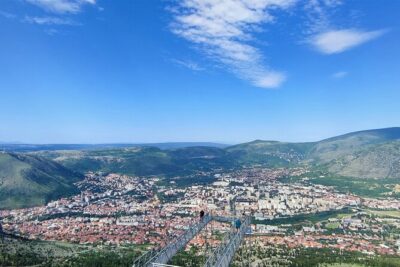
Discover Herzegovina Day Tour from Mostar: Kravice Waterfalls, Blagaj, Počitelj
Read our review →Browse the lists this tour appears in