
Reviewed · SREBRENICA GENOCIDE MEMORIAL
From Sarajevo: Srebrenica Genocide Memorial Study Tour
Srebrenica is not a sightseeing stop you squeeze between lunch and a castle. It is a place of mourning, evidence, and hard questions. This 10-hour study tour from Sarajevo gives you the setting and background needed to understand what happened in July 1995, rather than dropping you at a cemetery with no explanation.
I like two things here: the small group, limited to eight people, and the guides who bring lived experience to the long drive. Guides including Almir, Ago, Enis, and Edin have been praised for clear history lessons, personal war stories, and a calm sense of humor when appropriate. I also like the former UN base museum and its survivor testimony. The drawback is simple: this is a long, emotionally heavy day, with roughly five to six hours on the road.
Key points to know before booking
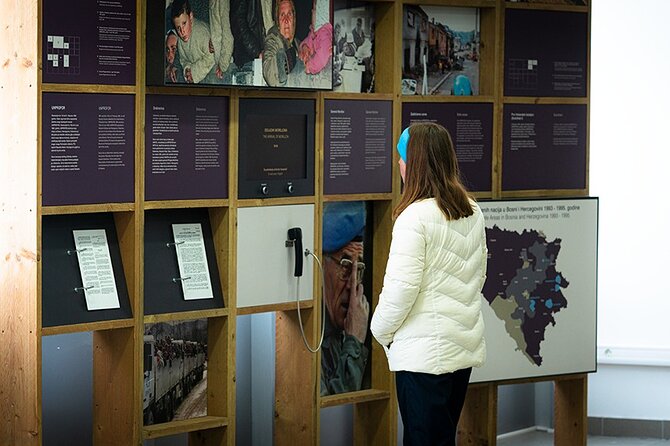
- The former UN Dutch Battalion base gives you a physical setting for the failure of international protection.
- Survivor testimony and films add personal detail to the historical account.
- The cemetery at Potočari is a quiet place to pay respects to identified victims, with burials continuing as remains are identified.
- Guides such as Almir and Ago add local war experience and explain the political background.
- A group of no more than eight keeps the day more personal than a large coach excursion.
- The $84.69 price includes transport and guides, but not lunch or drinks.
Why this day matters in Sarajevo
Sarajevo tells much of Bosnia and Herzegovina’s wartime story, but Srebrenica adds a different and essential chapter. The town lies in eastern Bosnia, far from the capital, and the trip takes you through mountain roads and rural areas where the scenery can feel almost peaceful. That contrast is part of the experience. Nothing about the countryside announces the crimes committed there.
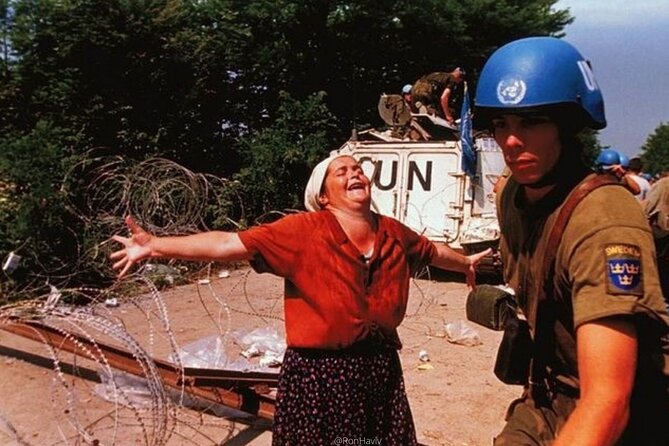
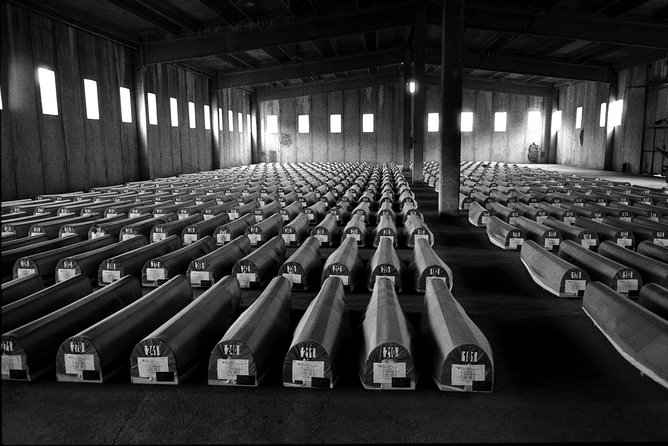
The 1995 Srebrenica genocide was the mass murder of more than 8,000 Bosniak men and boys. The cemetery and memorial at Potočari honor those killed, while the museum explains how the enclave fell and how people sought protection at the UN base. The supplied tour information lists 6,575 identified victims at the time of publication, with that number continuing to change as remains are recovered and identified.
You should come ready to listen. This is not a traditional day trip built around entertainment. The purpose is remembrance and understanding, and the guides treat that purpose seriously.
More visits to the Srebrenica memorial:
- Sarajevo to Srebrenica: Genocide Study Tour with War Veteran
★ 5.0 · 131 reviews - Understanding Srebrenica Genocide Tour + Lunch with Local Family Included
★ 5.0 · 123 reviews - Understanding Srebrenica Genocide – Day tour from Sarajevo
★ 5.0 · 35 reviews
Leaving Sarajevo at 8 a.m.
The standard start is 8 a.m. from Meet Bosnia Tours at Gazi Husrev begova 75, near the crossroads of Mula Mustafe Bašeskije. Hotel pickup can also be arranged, with the exact time and location sent after booking. That is useful in Sarajevo, where an early pickup saves you from finding the meeting point before breakfast.
The drive toward Srebrenica takes about two and a half hours each way, though some accounts describe a total driving time closer to six hours once stops are included. Plan on a full day. You return to Sarajevo at the meeting point, usually after a long ride back through eastern Bosnia.
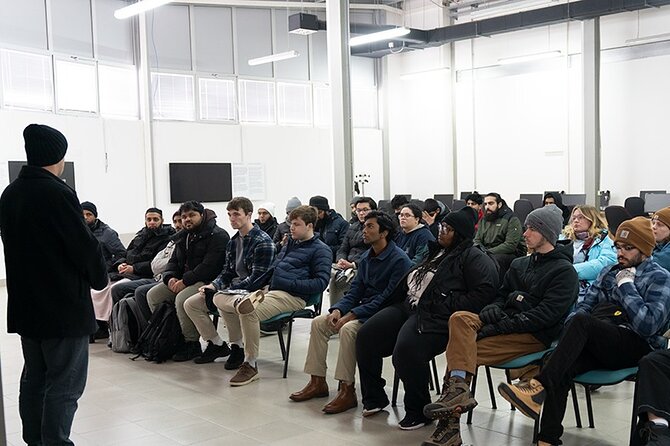
The vehicle is driven by your guide, and several guides have been praised for safe driving, bottled water, and stopping for photographs when time allows. The group limit of eight matters here. You are spending a large part of the day in a vehicle, so a small group makes questions and conversation easier.
Use the drive wisely. This is when Almir, Ago, Enis, Vedad, Senad, or another assigned guide may explain the breakup of Yugoslavia, the Bosnian War, the rise of nationalist politics, and the events that led to the fall of Srebrenica. The best part of this approach is that the history arrives before the memorial, so you have a framework for what you are about to see.
The mountain road and the story of the war
The road through eastern Bosnia is one of the day’s quieter rewards. You pass through mountainous countryside and the Republika Srpska entity, seeing parts of the country that feel different from Sarajevo and the Federation. The views are attractive, but the guide’s commentary gives them weight.
This section can also be the most demanding. You may spend several hours listening to difficult material before reaching the memorial. Some guides share their own experiences of the war, especially Almir, who has been described as a veteran with a detailed grasp of the conflict. That first-person element can make the past feel close, but it also means the tone is personal rather than purely academic.
Guides have been praised for answering questions openly and explaining present-day politics alongside wartime events. Appropriate humor sometimes appears during the journey, not to make light of the subject, but to give people a short mental break. You should still expect a serious conversation.
A coffee stop may be included, and guides may pause for photographs. These breaks help, especially on the long outward journey. They are not the main event, but they keep the day from becoming one uninterrupted block of grief.
Entering the former UN base at Potočari
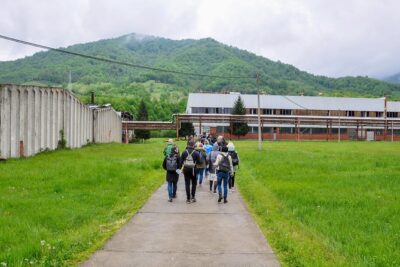
The first major stop is the battery factory at Potočari, used by UN forces during the war. Today it houses the Srebrenica Genocide Museum and related memorial displays. The location itself matters. You are not viewing the story in an abstract gallery. You are standing in the former base where refugees sought protection.
The museum is described as one of Bosnia and Herzegovina’s more modern museums, using films, photographs, documents, and multimedia displays. A curator may guide your group and share personal experience of surviving the Srebrenica enclave. That direct testimony is one of the strongest reasons to choose a guided visit instead of trying to reach the site independently.
Allow time to absorb the material slowly. The museum has several rooms and warehouse areas, and one visit may not be enough to see everything carefully. You will likely remember individual faces, voices, and details more than a long list of dates. That is exactly why the displays work.
Some films include authentic video footage. They are difficult to watch, but they help explain the sequence of events and the international failure surrounding the massacre. If you are sensitive to wartime images, ask your guide what to expect before entering the screening area.
A few more Sarajevo day trips to weigh up
- Sarajevo: Mostar, Konjic, Blagaj Tekke, Pocitelj & Waterfall
★ 4.9 · 1,335 reviews - Fall of Yugoslavia, Sarajevo War Tour with Tunnel of Hope Museum and Frontlines
★ 5.0 · 1,314 reviews - Sarajevo: Mostar, Konjic, Sufi House, Pocitelj & Kravice Falls
★ 5.0 · 1,179 reviews - ROSES OF SARAJEVO (Official WAR + CITY tour)- Story of a Survivor
★ 5.0 · 770 reviews
The Memorial Room and survivor testimony
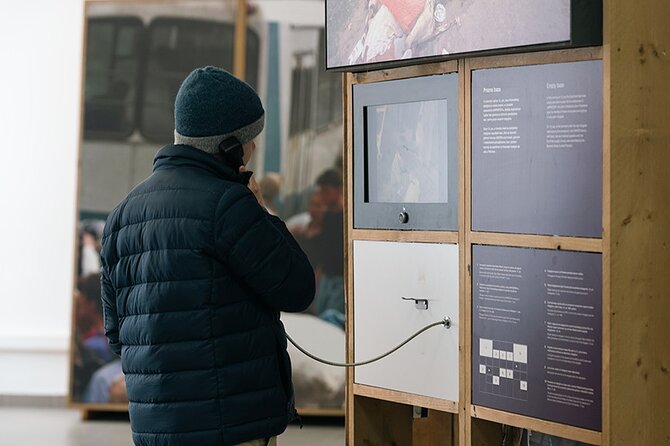
The Memorial Room is another part of the Potočari visit. A local journalist may present stories of the victims, while one section addresses the perpetrators. This is important because the site does not present only a general story of suffering. It also deals with responsibility.
The strongest guides give you time to ask questions without turning the visit into a political argument. Almir, Ago, Enis, and other guides have been praised for explaining facts while also discussing their own memories of the war. That combination can help you understand why Srebrenica remains present in Bosnia’s public life.
You should not expect a polished, tidy narrative. The story involves military decisions, international institutions, ethnic nationalism, displaced families, survivor testimony, and ongoing arguments about memory and denial. A guide cannot resolve all of that in one day. The value is that you leave with enough grounding to keep learning.
One practical warning: the local memorial guide may not be available every day. A separate group or scheduling issue can sometimes affect the guided museum portion, and political circumstances have also caused itinerary changes. The operator cannot control every part of access. If the memorial visit is the main reason you are booking, confirm the current arrangements close to your date.
Srebrenica town, once industrial and now quiet
After the museum, the route continues into Srebrenica itself. The town was once an industrial center and is also one of the oldest settlements in the area. Today, it is often described as a ghost town, with limited places to eat and fewer signs of its former economic life.
This stop gives the day a useful human scale. The museum explains the genocide, but the town helps you consider what came before and what remains afterward. Srebrenica is not only a name associated with one crime. It was a living place with work, homes, neighbors, and a long past.
Lunch is usually arranged in or near town because dining choices around the memorial are limited. Food and drinks are not included in the $84.69 price, so bring some cash and do not assume a meal is covered. Stops at a local bakery or restaurant have been part of the day for some groups.
The lunch stop is practical rather than culinary. You are there to eat, rest, and prepare for the cemetery. Still, supporting a local business adds a small connection to the present-day community.
Paying respects at the cemetery
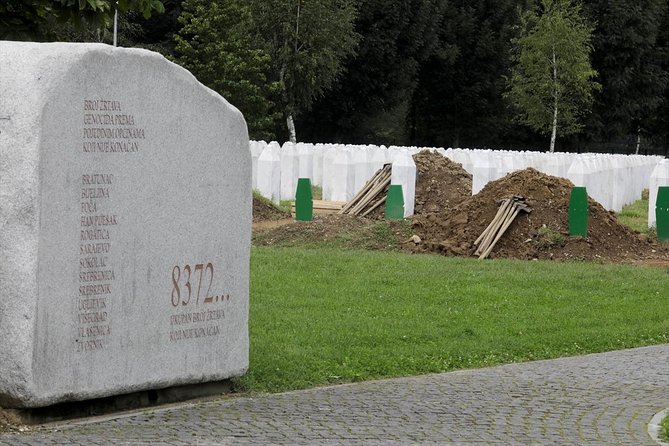
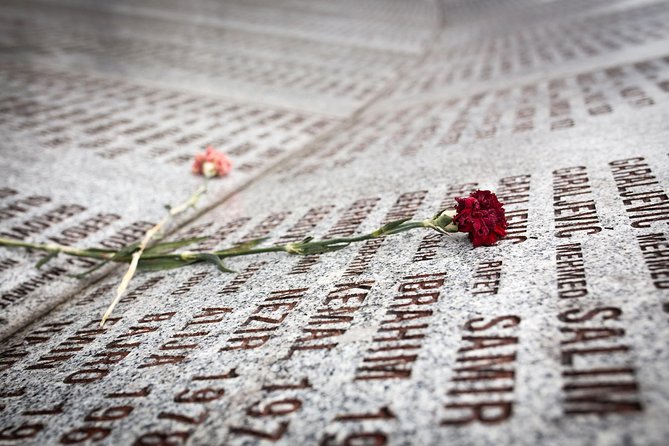
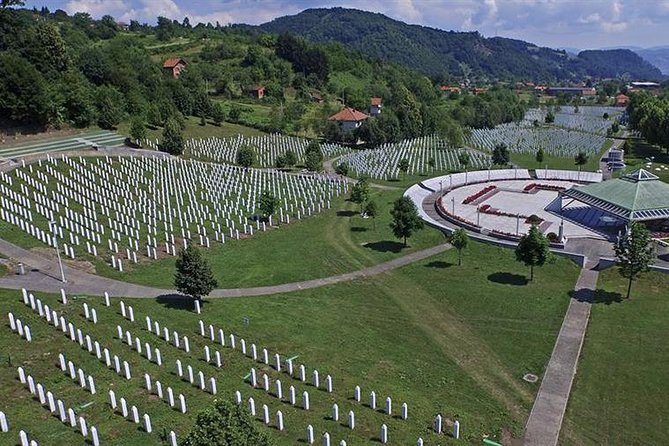
The Potočari Memorial Cemetery is the emotional center of the tour. Rows of white gravestones mark the identified victims, and additional burials take place as remains are recovered from mass graves and identified. The cemetery was officially opened in 2003 by former US President Bill Clinton.
Your visit here is shorter than the museum portion, listed at about 40 minutes. That is enough time to walk among the graves, read names, and stand quietly, but you may wish for more time. The site does not need a long speech. Its scale and silence do much of the work.
This is where the tour’s earlier explanations become real. You have heard about the enclave, the UN base, and the killings. Now you see the continuing process of burial and remembrance. The number of graves is not a finished statistic. It changes as families receive remains and funerals take place.
Show respect in simple ways. Keep your voice low, follow your guide’s instructions, and dress and behave as you would at any cemetery or place of worship. Photography may be possible, but this is not a backdrop for casual holiday pictures.
What makes the guides important
Transport alone does not justify a full day to Srebrenica. The guide is the reason this particular format works. The strongest accounts describe guides who explain the fall of Yugoslavia during the drive, point out places along the road, answer political questions, and share personal wartime experiences.
Almir receives especially strong praise for his openness, patience, and command of dates and facts. Ago is described as friendly, thoughtful, and able to discuss both history and present-day Bosnia. Enis is praised for making a dark subject accessible without stripping away its seriousness. Other named guides include Ejub, Elmir, Vedad, Senad, and Almis.
You cannot choose your guide with certainty unless the operator confirms it. That is worth understanding before you book. The quality of the day depends partly on who is assigned, but the repeated pattern is clear: the company uses local guides who can speak about the war in personal as well as historical terms.
Personal testimony is valuable, but it is also one reason to keep an open mind. Your guide’s experience is one perspective, not the entire academic record. Listen for the factual structure, ask respectful questions, and use the visit as a starting point for further reading.
Is $84.69 good value?
At $84.69 per person, the tour includes a driver-guide, a professional guide, and hotel pickup and drop-off. You are paying for a full day of transport to a remote site, a small group capped at eight, and guided interpretation at places that would be hard to understand on your own.
The price looks fair for the distance and time involved. A private taxi would not provide the museum explanation, survivor accounts, or historical discussion during the drive. A large bus tour might cost less, but it would likely feel less personal and offer less room for questions.
Lunch and drinks cost extra. Keep that in mind when comparing prices. The tour’s value is strongest for first-time visitors who want the practical work handled for them and who want an informed local guide beside them.
Free cancellation is available until 24 hours before the 8 a.m. start time. Changes or cancellations inside that window are not accepted for a refund.
Who should book this study tour?
I would choose this tour if you have at least one full day in Sarajevo and want to understand Bosnia beyond its old town, bridges, and mountain views. It suits adults and older children who can handle frank discussion of genocide, war, and mass murder. Children must be accompanied by an adult.
It is also a good fit if you value personal explanation over independent sightseeing. The small group, hotel pickup, and long drive make the day easy to manage. Most people can participate, and the meeting point is near public transportation.
I would hesitate if you have only a short time in Sarajevo, dislike long road journeys, or are looking for a light day out. You should also think carefully about the emotional timing. Do not schedule a demanding nightlife plan for the same evening.
Practical advice for a respectful visit
Wear comfortable clothes for a long day in the vehicle and walking around the museum and cemetery. Bring water even though bottled water may be provided, and budget separately for lunch and drinks.
Read a little about the breakup of Yugoslavia before departure if you can. You do not need to memorize names and dates, but basic background will help you follow the guide’s explanations. If you want more, ask about Sarajevo exhibitions that cover the war and Srebrenica.
Keep some flexibility in your expectations. Access, memorial staffing, and political conditions can cause last-minute changes. One reported itinerary change meant the cemetery could not be visited, so confirm what is operating before you leave.
Most important, treat the day as a memorial visit, not a standard excursion. Ask questions, listen carefully, and give yourself quiet time afterward.
Should you book it?
Yes, if you want a serious and well-supported visit to Srebrenica. The long drive is unavoidable, but the small group, included transport, local guides, museum access, survivor testimony, and cemetery visit make the day worthwhile. The strongest reason to book is the human context provided by guides such as Almir, Ago, and Enis.
Do not book it expecting entertainment or a quick photo stop. Book it because you believe understanding and remembrance are part of responsible travel. If the subject feels too heavy for you right now, choose another Sarajevo outing and return to Srebrenica when you can give it the attention it deserves.
FAQ
How long is the Srebrenica study tour from Sarajevo?
The tour lasts approximately 10 hours, beginning at 8 a.m. and ending back at the Sarajevo meeting point. The drive to Srebrenica takes about two and a half hours each way, with stops along the route.
What is included in the tour price?
The $84.69 price includes a driver-guide, professional guide, hotel pickup, and hotel drop-off. Food and drinks are not included.
Can I be picked up at my Sarajevo hotel?
Yes. Pickup can be arranged, and the exact pickup time and location are sent by email after booking.
What places do I visit in Srebrenica?
The itinerary includes the former UN battery factory, the Srebrenica Genocide Museum, the Memorial Room, Srebrenica town, and the Memorial Cemetery at Potočari.
Who guides the tour?
The assigned guide can vary. Guides named in the tour information and feedback include Almir, Ago, Enis, Edin, Ejub, Elmir, Vedad, Senad, and Almis.
How many people can join the tour?
The activity has a maximum of eight travelers, making it a small-group tour.
Can I cancel for a full refund?
Yes. You can cancel at least 24 hours before the local start time for a full refund. Cancellations or changes made less than 24 hours before the start are not accepted for a refund.
Just added around Sarajevo
- Strbacki Buk and Una Waterfalls: Day Trip from Sarajevo★ 5.0 · 3 reviews
- Bosnian Kingdom Capitals: Travnik & Jajce Tour from Sarajevo★ 5.0 · 3 reviews
- Walking Tour in Sarajevo★ 5.0 · 3 reviews
- MTB Bjelasnica – Lukomir★ 5.0 · 3 reviews
- Sarajevo Under Siege: A City’s Struggle & Survival Tour★ 5.0 · 3 reviews
- Herzegovina Tour from Sarajevo: Mostar, Počitelj, Blagaj, Kravice★ 5.0 · 3 reviews
- Travnik, Jajce, Pliva Lakes & Mills –Medieval & Ottoman Bosnia Full Day Tour★ 5.0 · 3 reviews
- Tour of Herzegovina – From Sarajevo★ 5.0 · 3 reviews
Srebrenica Genocide Memorial, compared.
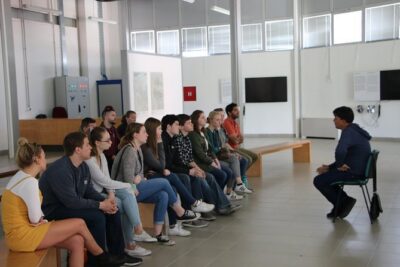
Sarajevo to Srebrenica: Genocide Study Tour with War Veteran
Read our review →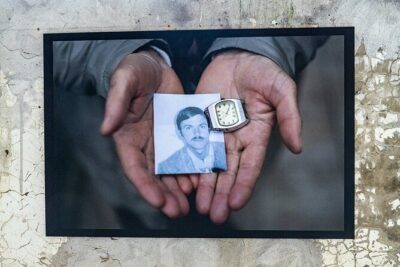
Understanding Srebrenica Genocide Tour + Lunch with Local Family Included
Read our review →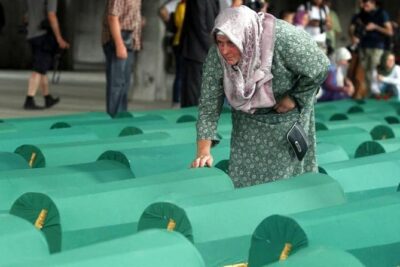
Understanding Srebrenica Genocide – Day tour from Sarajevo
Read our review →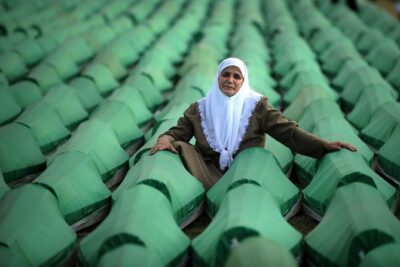
Browse the lists this tour appears in