
Reviewed · SARAJEVO TOURS
Fall of Yugoslavia, Sarajevo War Tour with Tunnel of Hope Museum and Frontlines
Sarajevo’s recent past is not locked away in a museum. It is visible on apartment walls, along the old frontlines, and in the hills above the city. This four-hour tour connects those places with the War Tunnel Museum, Sniper Alley, Olympic sites, and sobering cemeteries.
I like the way the tour combines hard history with clear city orientation. I also like the personal approach offered by guides such as Ayoub, Almir, Ago, Emin, Kristian, and Tarik, several of whom are praised for answering questions and sharing family or wartime memories. The main drawback is that the tunnel entrance costs extra, and the subject matter is heavy.
Key points to know before booking
- The War Tunnel is the tour’s emotional center: It was Sarajevo’s only connection with the outside world during the four-year siege and now operates as a museum.
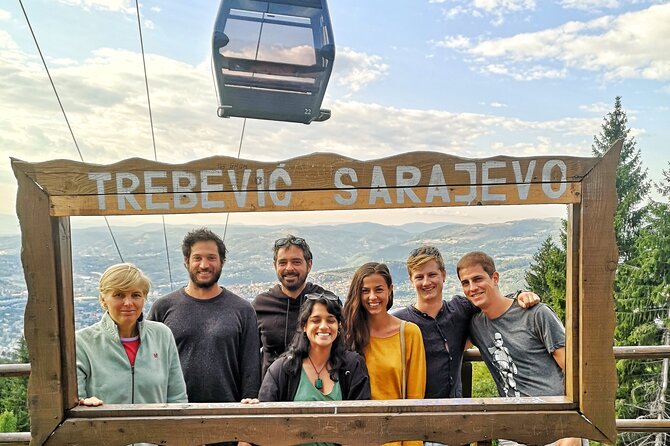
- You see Sarajevo from several angles: The Yellow Fortress, Trebević Vidikovac, cemeteries, and Olympic hills give you both city views and historical context.
- The Olympic sites tell a second story: The 1984 bobsleigh track is now a striking ruin and a reminder of Sarajevo before the war.
- Transport saves your legs: An air-conditioned vehicle links distant sites that would be awkward to cover on foot.
- The tour costs $36.28 per person: Fuel, bottled water, the vehicle, guide, and hotel pickup are included, but the tunnel museum fee is not.
- Plan this early in your stay: The drive gives you a useful map of Sarajevo and points out places you may want to revisit.
Why this tour helps explain Sarajevo
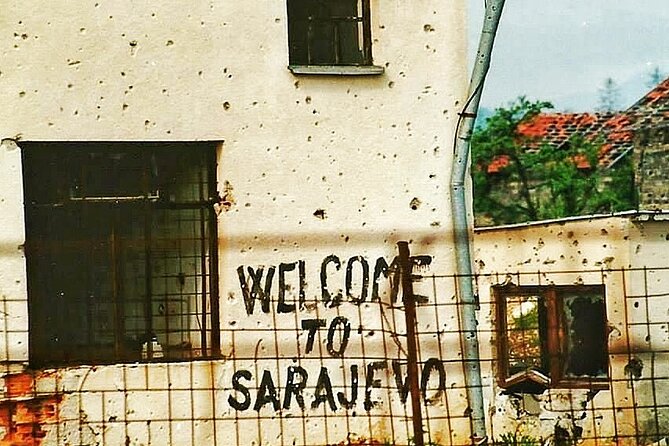
Sarajevo can be confusing at first. The old Ottoman center, Austro-Hungarian streets, Yugoslav-era apartment blocks, Olympic mountains, and wartime scars all sit close together. A standard city walk can show you the center, but it may not explain how the 1990s siege shaped the whole city.
This tour gives you that wider picture. You move from the old city toward the hills, across areas linked to the siege, and out to Trebević. Your guide explains the fall of Yugoslavia and the events that led to the siege in plain English, then connects those events to the buildings and roads outside the vehicle window.
That approach matters. You are not simply looking at a damaged building and being told that a war happened there. You are shown how Sarajevo was surrounded, how people moved through danger, and why certain roads and hills became so important.
The tone is serious, but the guides are described as friendly, patient, and open to questions. Several, including Almir and Tarik, bring personal or family memories into the story. That can make the past feel immediate, though it also means you should expect an emotional afternoon rather than a light sightseeing trip.
More Sarajevo war and siege history tours:
- Tunnel Museum: Bosnian & Yugoslav Wars Tour with War Veteran
★ 5.0 · 551 reviews - Sarajevo War Tour: A Veteran’s Story of the Siege (fees included)
★ 5.0 · 326 reviews - Sarajevo 1425 days under the siege – War Tour
★ 5.0 · 170 reviews
Yellow Fortress and the first view of the siege
The tour begins at the Yellow Fortress, where you spend about 25 minutes. From here, Sarajevo spreads below you in a long valley surrounded by steep hills. It is one of the best places to understand the city’s physical setting.
Your guide introduces the siege from this viewpoint. The defenders’ cemetery visible from the fortress adds a difficult but important detail to the panorama. Sarajevo’s beauty and vulnerability are both clear from the same spot. The hills are close, and the city below looks compact enough to grasp in a single glance.
This is a smart opening stop because it gives you a mental map before the driving begins. You can identify the valley, the surrounding slopes, and the dense neighborhoods that appear again later in the tour.
The ground at the fortress may not suit everyone, especially if you prefer a fully seated experience. The visit is short, though, and admission is included.
Olympic sites, the children’s hospital, and Sarajevo Romeo and Juliet
After the fortress, the vehicle passes through parts of Sarajevo’s Olympic complex. The city hosted the 1984 Winter Olympics, an event that put Sarajevo on the world stage for peaceful reasons. The tour then shows how several Olympic and city sites were later caught up in war.
You pass the destroyed children’s hospital and the grave of Sarajevo’s Romeo and Juliet. The latter refers to Admira Ismić and Boško Brkić, a young couple whose deaths became one of the most remembered stories of the siege. The stop is brief, but the guide’s explanation gives the location meaning.
You also pass the Stadium Cemetery. Cemeteries in Sarajevo are not tucked away at the edge of town. Many sit in visible spaces, including areas that once served another public purpose. Seeing them from the vehicle helps you understand the scale and closeness of the loss.
This part of the tour is not built around long walks. You spend much of it looking through the windows while the guide points out buildings and explains what happened. That makes the tour accessible to people who want to cover a lot of ground, but you should not expect to stop for extended photography at every location.
The War Tunnel Museum, Sarajevo’s wartime lifeline
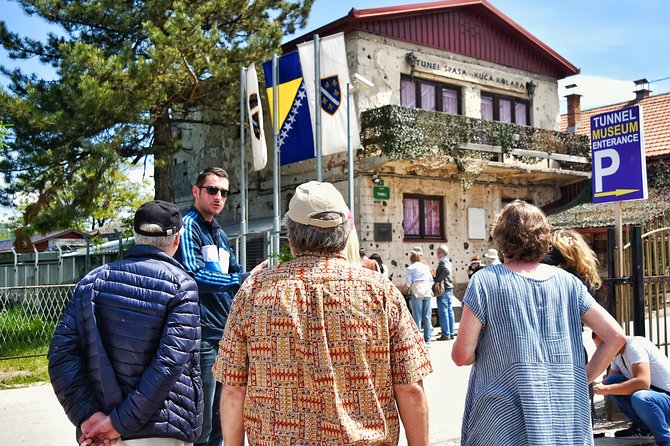
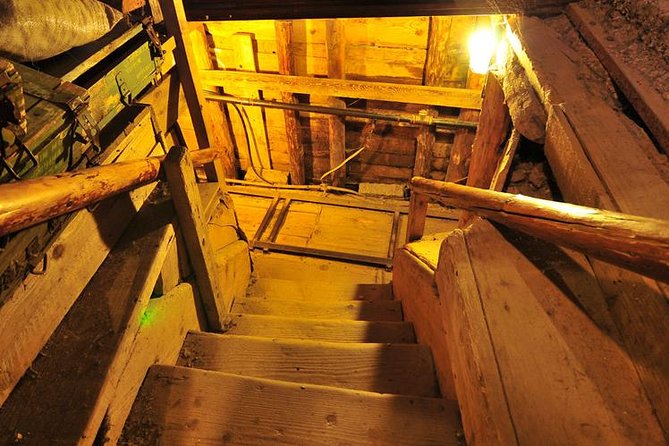
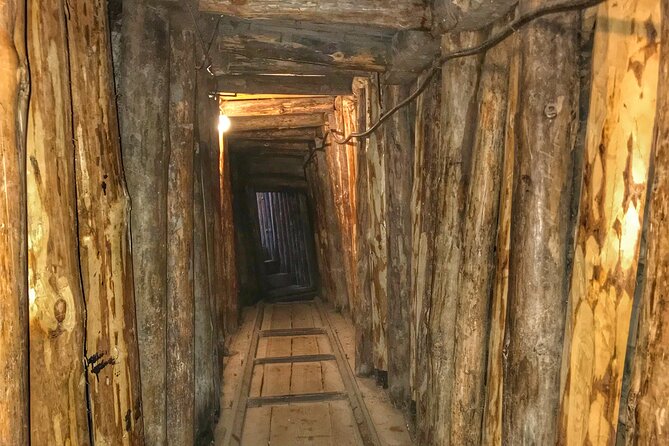
The War Tunnel is the most important stop, with about an hour set aside for the visit. During the four-year siege, the tunnel provided the only entrance into Sarajevo from the outside world. It was about 800 meters long and connected the surrounded city with the area beyond the airport.
Today, part of the tunnel functions as a museum. The entrance fee is separate from the tour price: 15 BAM for adults and 5 BAM for students with identification. Bring the appropriate student ID if you plan to use that rate.
The museum gives physical weight to the siege story. A tunnel is not an abstract map line. It is a confined passage built and used under extreme conditions, and walking through it helps you understand how limited Sarajevo’s connection to the outside world became.
You should allow time to listen carefully here. The stories are difficult, and the experience works best when you are willing to slow down and take in the details. The guides are praised for giving clear explanations rather than rushing through the history, and for making space for questions.
The one practical limitation is that the museum entrance is not included. At $36.28, the overall tour remains reasonably priced, but you need to add the 15 BAM adult charge to your budget. The tunnel is still the part I would least want to skip.
More museums in Sarajevo:
- Tunnel of Hope Museum Tour
★ 5.0 · 38 reviews - Cable Car Olympic Tour With Museum
★ 5.0 · 17 reviews - SARAJEVO CONCEPTUAL ART TOUR (galleries, art and arhitecture)
★ 5.0 · 7 reviews - Sarajevo: A City Under Siege – War Tour With Tunnel Museum
★ 5.0 · 4 reviews
Sniper Alley and the visible scars of war
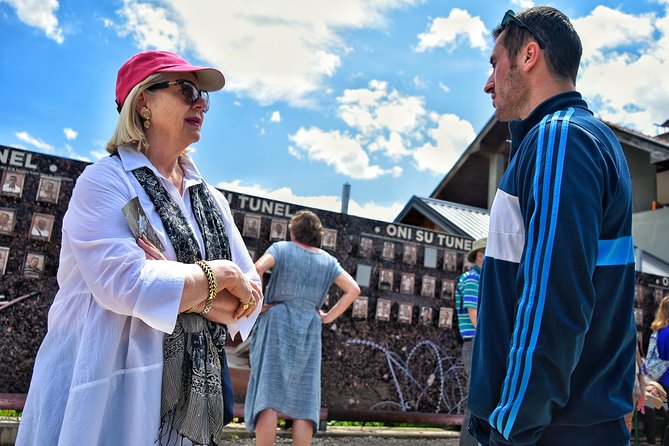
The vehicle then travels along Sniper Alley, the name given to a four-kilometer street where people faced sniper fire during the siege. The route includes the area around the former Holiday Inn, which served as a base for journalists and visiting United Nations peacekeepers.
You see buildings from the Yugoslav period that still show signs of the fighting. This is one of the tour’s strongest features because the war is not presented as a distant chapter. Bullet damage and damaged facades remain part of the city’s built environment.
The visit is mainly a drive-by explanation rather than a long walking stop. That has two advantages: you cover more ground and remain in the comfort of the air-conditioned vehicle. The tradeoff is that you may have limited time to study or photograph individual buildings.
Your guide’s commentary is especially useful here. Sniper Alley is a familiar phrase, but the street makes more sense when you know how ordinary movement through the city became dangerous. You can also compare the busy modern city with the same road’s wartime role.
Gavrilo Princip and the older roots of conflict
The tour passes the chapel of Gavrilo Princip, the man who assassinated Archduke Franz Ferdinand. That event in 1914 helped trigger the First World War, making the chapel a reminder that Sarajevo’s political importance did not begin in the 1990s.
This is a short pass-by rather than a major museum visit. Still, it adds useful context. The tour is not only about one war. It places the siege within Sarajevo’s longer role at the meeting point of different empires, religions, and political movements.
You will get the most from this stop if you ask questions. The tour’s guides are regularly praised for explaining complex subjects in an easy-to-follow way, and this is exactly the sort of location where a little extra context helps.
Trebević Vidikovac and the city from above
Trebević Vidikovac is a short stop of about 15 minutes. The viewpoint gives you another broad panorama of Sarajevo, this time from Trebević Mountain.
The view is valuable after the Sniper Alley drive and the War Tunnel. From above, you can see how the surrounding mountains shaped the siege and how exposed the city sat within the valley. The Yellow Fortress shows you Sarajevo from one direction; Trebević gives you a different sense of its size and position.
The stop is brief, so treat it as a viewpoint rather than a long mountain visit. Wear shoes you can manage on uneven ground, and keep your camera ready. The tour allows only about 15 minutes here.
One appealing feature is the change in pace. After several difficult wartime locations, the mountain air and open view give you a quieter moment to process what you have heard.
The 1984 bobsleigh track on Trebević

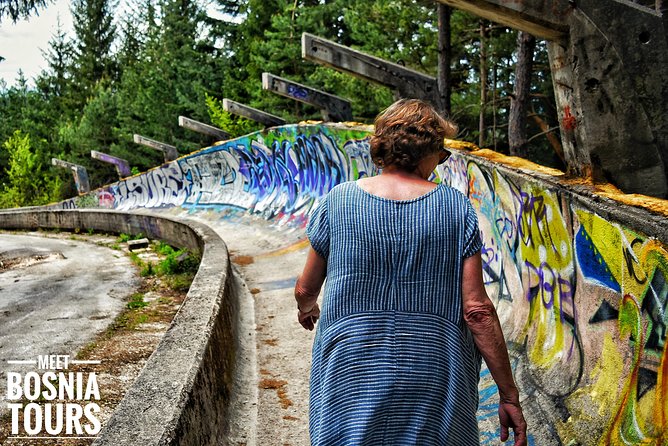
The final major stop is Sarajevo’s Olympic bobsleigh and luge track, where you spend about 20 minutes. Built for the 1984 Winter Olympics, the track is now one of Trebević’s most recognizable attractions.
Its weathered concrete curves offer a sharp contrast to the polished Olympic image Sarajevo presented in 1984. The site also carries wartime associations, which your guide explains as part of the wider story of Trebević and the siege.
This stop works well because it joins two periods that are often treated separately: Sarajevo as an Olympic host and Sarajevo under attack less than a decade later. You see how the same mountain played a role in both stories.
The track is free to visit as part of the tour. One past itinerary experience included taking the cable car down toward the old village afterward, but that is not listed as part of this tour’s included service. Do not assume a cable-car ride is covered. If you want to add one, ask the operator about current arrangements and cost.
Guides, group size, and the feel of the ride
The tour is offered in English and may include up to 50 people, although some departures are described as small-group experiences. That means the exact feel can vary. A small group should make questions and personal discussion easier, while a larger group may feel more like a shared city excursion.
The named guides associated with this experience include Ayoub, Almir, Ago, Emin, Kristian, Tarik, Zahmet, and Ejub. The strongest praise centers on their clear English, personal stories, friendly manner, and ability to explain the causes and effects of the siege without losing the group.
You ride in an air-conditioned vehicle, with fuel surcharge and bottled water included. That is a real advantage in Sarajevo, since the route covers the city, the airport area, and Trebević rather than a compact historic center.
Hotel pickup is included in the supplied details, but the stated meeting point is Meet Bosnia Tours at Gazi Husrev begova 75, near the junction with Mula Mustafe Bašeskije. The activity ends back at that meeting point, and hotel drop-off is not included. Confirm your pickup arrangement before the start so you know exactly where the vehicle will meet you.
Is $36.28 good value?
At $36.28 per person, the tour is good value if you want the War Tunnel, Sarajevo’s wartime streets, and Trebević in one half-day. A private taxi between these places would not provide the guide’s historical explanation, while a self-guided visit would leave you to connect the sites yourself.
The price includes the professional local guide, vehicle, fuel surcharge, bottled water, air conditioning, and hotel pickup. The main extra is the War Tunnel Museum entrance, priced at 15 BAM for adults or 5 BAM for students with ID. Food and drinks are not included, apart from water.
The value is strongest for a first visit. You see a broad slice of Sarajevo and learn where other places fit on the map. It is also useful for solo visitors, since the vehicle and guide provide structure without requiring you to arrange several separate trips.
You may find the value less convincing if you have already spent several days studying the siege or have visited the War Tunnel independently. In that case, the guide’s personal context and the Olympic stops may still interest you, but some locations are viewed from the vehicle and only briefly.
Who should book it?
I would choose this tour if you want a clear introduction to the Siege of Sarajevo, prefer seeing distant sites by vehicle, and are comfortable with serious subject matter. It suits history-minded visitors, first-time visitors who want a city overview, and anyone interested in the link between the 1984 Olympics and the war that followed.
I would think twice if you want a relaxed sightseeing outing or a tour filled with long stops and free time. The route is tightly timed, the material is painful, and several locations are pass-by views rather than full visits.
Book it early in your stay if you can. The route helps you understand Sarajevo’s shape, and the guide may point out places you want to return to later. Leave enough room in your day for the War Tunnel fee and for the emotional weight of the subject.
The cancellation terms are practical: you can receive a full refund if you cancel at least 24 hours before the start time. Changes or cancellations inside that window are not accepted for a refund.
FAQ
How long does the tour last?
The tour lasts approximately four hours.
How much does the tour cost?
The listed price is $36.28 per person.
Is the War Tunnel Museum entrance included?
No. The entrance fee is separate. Adults pay 15 BAM, while students with identification pay 5 BAM.
Is the tour offered in English?
Yes. The experience is offered in English.
What is included in the tour price?
A professional local guide, hotel pickup, vehicle transport, fuel surcharge, bottled water, and an air-conditioned vehicle are included.
Is hotel drop-off included?
No. Hotel drop-off is not included. The activity ends back at the stated meeting point.
Where does the tour meet?
The listed meeting point is Meet Bosnia Tours at Gazi Husrev begova 75, near the crossroad of Mula Mustafe Bašeskije in Sarajevo.
How many people can join the tour?
The tour can have a maximum of 50 participants.
Can I cancel for a full refund?
Yes, if you cancel at least 24 hours before the experience start time. Cancellations or changes made less than 24 hours in advance are not refunded or accepted.
Should you book the Sarajevo War Tour?
Yes, if you want to understand Sarajevo beyond its Ottoman streets and cafes. The War Tunnel, Sniper Alley, cemeteries, Olympic sites, and Trebević views form a thoughtful four-hour route, and the local guides add the human context that maps and museums alone cannot provide.
Add the tunnel fee to your budget, expect serious material, and confirm your pickup details. If those points suit you, this is a practical and meaningful way to begin learning Sarajevo’s modern story.
Just added around Sarajevo
- Strbacki Buk and Una Waterfalls: Day Trip from Sarajevo★ 5.0 · 3 reviews
- Bosnian Kingdom Capitals: Travnik & Jajce Tour from Sarajevo★ 5.0 · 3 reviews
- Walking Tour in Sarajevo★ 5.0 · 3 reviews
- MTB Bjelasnica – Lukomir★ 5.0 · 3 reviews
- Sarajevo Under Siege: A City’s Struggle & Survival Tour★ 5.0 · 3 reviews
- Herzegovina Tour from Sarajevo: Mostar, Počitelj, Blagaj, Kravice★ 5.0 · 3 reviews
- Travnik, Jajce, Pliva Lakes & Mills –Medieval & Ottoman Bosnia Full Day Tour★ 5.0 · 3 reviews
- Tour of Herzegovina – From Sarajevo★ 5.0 · 3 reviews
Sarajevo Tours, compared.
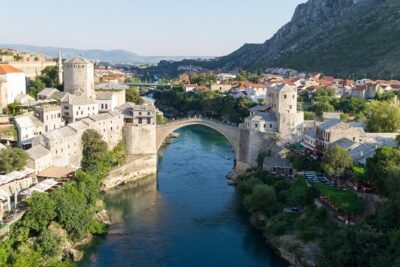
Sarajevo: Mostar, Konjic, Blagaj Tekke, Pocitelj & Waterfall
Read our review →
Sarajevo: Mostar, Konjic, Sufi House, Pocitelj & Kravice Falls
Read our review →
Sarajevo: 2 Hours Old Town Walking Tour With Local Guide
Read our review →
Sarajevo: Mostar, Konjic, Dervish House, Pocitelj & Kravica Falls
Read our review →
From Sarajevo: Srebrenica Genocide Memorial Study Tour
Read our review →
Mostar,Kravica Waterfall,Blagaj,Počitelj – Day Tour from Sarajevo
Read our review →
Sarajevo War Tour: A Veteran’s Story of the Siege (fees included)
Read our review →
Jajce, Travnik and Pliva watermills – Day Tour from Sarajevo
Read our review →Browse the lists this tour appears in