
Reviewed · WALKING TOURS IN SARAJEVO
Sarajevo: 2 Hours Old Town Walking Tour With Local Guide
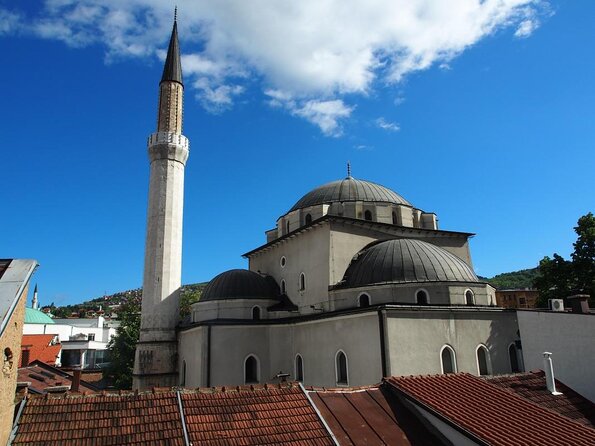
Sarajevo’s Old Town is a remarkable meeting place of Ottoman, Austro-Hungarian, Orthodox, Catholic, and Jewish traditions, all packed into a walkable central area. This tour makes that mix the main story, rather than treating the city as a list of monuments.
I like the quick orientation and the small maximum group of 10. I also like that guides such as Ahmed, Ilma, Hanan, Benjamin, Arna, and Cecilia have been praised for clear explanations, local advice, and a willingness to answer questions. The main consideration is pace: two hours covers a lot, but several sites are viewed from outside, and admission fees are not included.
Key points at a glance
- East meets West: See the Sarajevo Meeting of Cultures marker, then walk between mosques, churches, a synagogue, and Austro-Hungarian buildings.
- A strong first-day tour: The compact route helps you understand the Old Town before exploring it on your own.
- Small-group format: The group can include up to 10 people, making it easier to ask questions than on a large city walk.
- Major historical stops: The route includes City Hall, the Latin Bridge, Gazi Husrev-beg Mosque, and the site linked to the start of the First World War.
- Low price, useful coverage: At $14.51 per person, the tour offers a practical introduction for very little money.
- Mostly an outdoor walk: Optional or unpaid entries mean you should not expect a full museum or interior tour at every stop.
Why Sarajevo’s Old Town works so well on foot
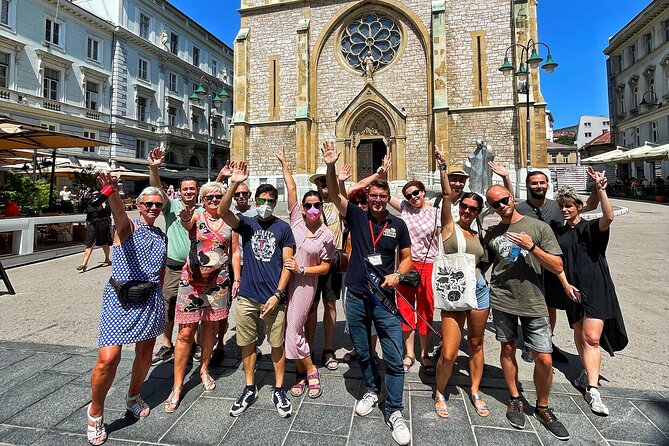
Sarajevo rewards walking because its central historic area is compact and layered. Within a short distance, the street pattern and buildings shift from Ottoman-era Baščaršija to Austro-Hungarian architecture, with religious landmarks from several communities along the way.
The tour begins at the Meet Bosnia Tours office on Gazi Husrev begova Street, near the crossroads of Mula Mustafe Bašeskije. That is a useful starting point because the guide can give you a basic timeline of Bosnia and Sarajevo before the monuments begin to compete for your attention.
I like this approach. Sarajevo’s past is not simple, and a few facts delivered without context can leave you confused. A guide can connect the Ottoman period, Austro-Hungarian rule, Jewish settlement, religious coexistence, and the political events that shaped modern Bosnia.
The route ends back at the same meeting point. That makes it easy to continue exploring the Old Town, return to your accommodation, or use the walk as a map for the rest of your stay.
More Walking Tours in Sarajevo
- Private Walking Tour, Food Tasting and Bosnian Coffee in Sarajevo
★ 5.0 · 255 reviews - Sarajevo Grand Walking Tour
★ 5.0 · 232 reviews - Sarajevo Essential Full Walking Tour
★ 5.0 · 198 reviews
From the oldest Orthodox church to Baščaršija
One of the first stops is the Church of the Holy Archangels Michael and Gabriel. The guide explains the age of the Orthodox church, along with its stories and legends, from outside.
That detail matters. You are not promised entry, so think of this as a historical introduction rather than a church visit. It also begins the tour’s main theme: Sarajevo has long been shaped by different religious and cultural communities living close together.
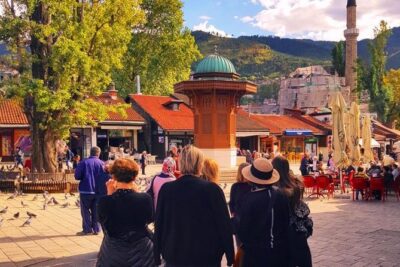
From there, the walk moves into Baščaršija, the Ottoman heart of the city. In Baščaršija Square, you see the Sebilj fountain, one of Sarajevo’s best-known symbols. The wooden fountain dates from the 18th century and gives the square a distinctly Ottoman character.
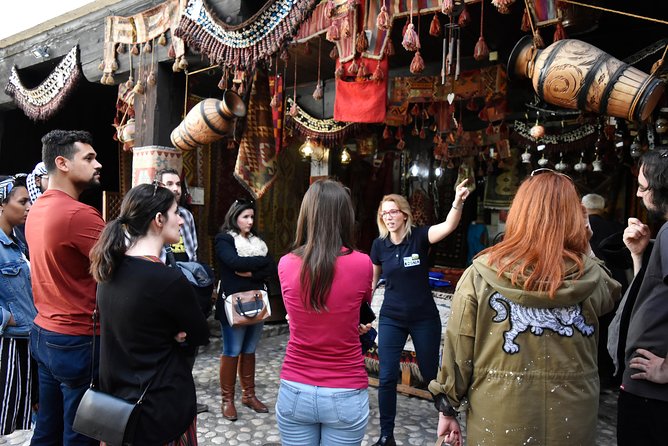
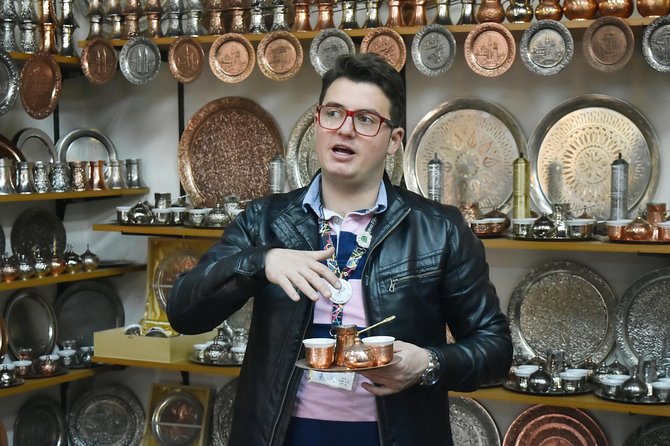
The guide also takes you along Kazandžiluk, known as Sarajevo’s oldest street. Its name reflects the copper-working trade, and the small shops display handmade copper goods. This is one of the more authentic parts of the route because it connects the city’s past to a craft that is still visible in daily life.
The Sebilj stop itself is brief, only about two minutes in the schedule, while the wider Baščaršija and Kazandžiluk section receives more explanation. If you want photographs, have your camera ready. The route does not pause for a long shopping session.
Morica Han and the Ottoman trading world
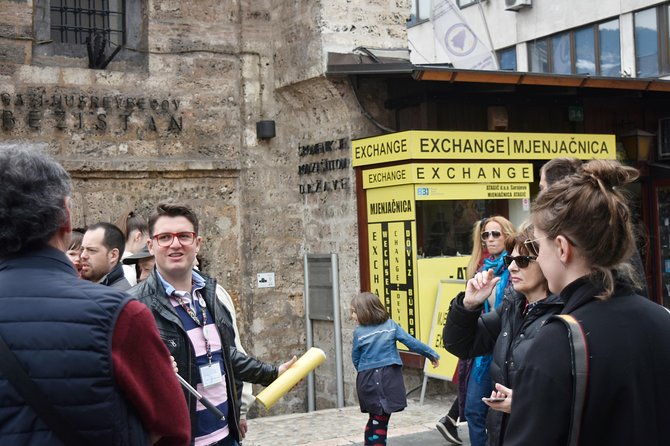
Morica Han offers a look at Sarajevo’s caravanserai tradition. It once served merchants and other people on the road, providing lodging during journeys through the region. Today it has a different function, but the building still helps explain how Sarajevo worked as a trading center.
This is a useful stop because it moves the story beyond mosques and fountains. The Old Town was not simply a ceremonial district. It was also a place where merchants arrived, goods changed hands, and people from different parts of the Ottoman world met.
The stop lasts about 10 minutes and admission is listed as free. As with several points along the route, the value comes mainly from the guide’s explanation and the chance to see the setting, not from an extended interior visit.
Gazi Husrev-beg Mosque and Sarajevo’s unusual clock
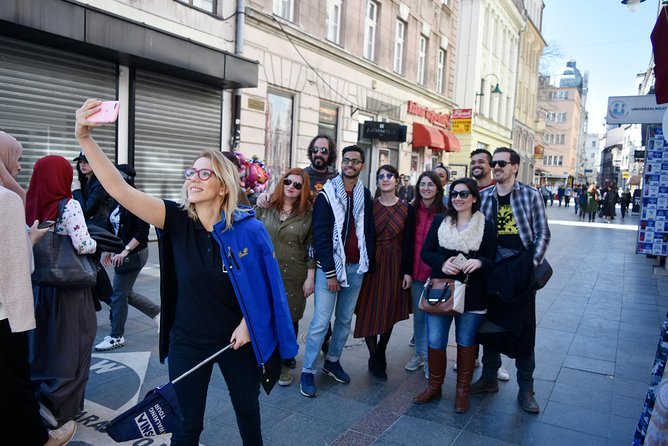
The Gazi Husrev-beg Mosque is one of the central landmarks of Sarajevo. The guide discusses its design and ornamentation, then points out the nearby clock tower.
The mosque is listed as an admission stop, but the tour price does not include entry. That means you should confirm the current visiting arrangements if entering the mosque matters to you. Dress and behavior should be respectful at any religious site, though the supplied tour details do not specify a dress code.
The Old Sarajevo Clock Tower adds a particularly local detail. Its clock shows the traditional lunar time used for Muslim prayer, rather than ordinary European clock time. That makes it unusual, and the guide explains why it is considered distinctive.
You only spend about five minutes at the clock tower, so do not expect a long technical presentation. Still, it is exactly the kind of detail that helps a city feel less like a collection of famous buildings and more like a place with its own habits.
Same base, a completely different day out:
- Sarajevo: Mostar, Konjic, Blagaj Tekke, Pocitelj & Waterfall
★ 4.9 · 1,335 reviews - Fall of Yugoslavia, Sarajevo War Tour with Tunnel of Hope Museum and Frontlines
★ 5.0 · 1,314 reviews - Sarajevo: Mostar, Konjic, Sufi House, Pocitelj & Kravice Falls
★ 5.0 · 1,179 reviews - ROSES OF SARAJEVO (Official WAR + CITY tour)- Story of a Survivor
★ 5.0 · 770 reviews
Jewish, Catholic, and Ottoman Sarajevo in one short stretch
The Jewish Museum of Bosnia and Herzegovina occupies a former Sephardic synagogue. The guide introduces the long presence and history of Jews in Bosnia and Herzegovina, while entry into the museum is optional and not included.
This is one of the most important stops for understanding Sarajevo’s cultural mix. The tour does not present the city as only Ottoman or only European. Instead, it gives you several religious and cultural reference points within a very small area.
The route then reaches the Sarajevo Meeting of Cultures marker. This spot is designed to show where the city’s eastern Ottoman character meets its western Austro-Hungarian side. It is a simple idea, but a useful one. Look around here and you can see how quickly the architectural mood changes.
The Cathedral of the Sacred Heart of Jesus follows. The guide discusses Sarajevo’s Catholic community and the cathedral’s role in the city. The cathedral is listed as a free stop, though the tour information does not promise a formal interior visit or a service-related arrangement.
I like this section because it gives you a better way to read Sarajevo. Instead of seeing separate attractions, you begin to notice how close the city’s religious buildings are to one another. That physical closeness is central to the city’s identity.
Sarajevo City Hall and the Austro-Hungarian chapter
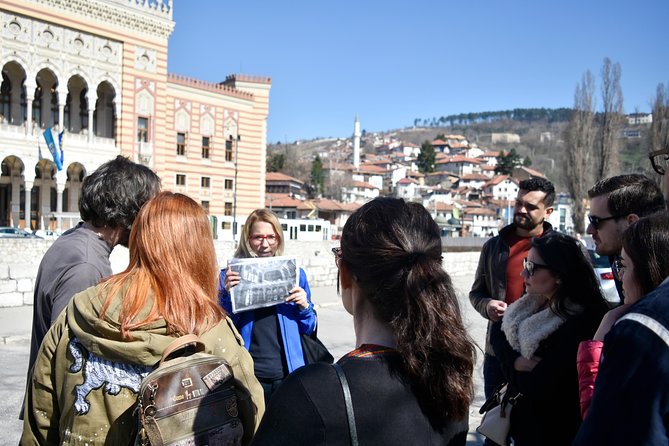
Sarajevo City Hall, also known as Vijećnica, is among the most striking buildings on the route. It was built during the Austro-Hungarian period and later served as a national library.
The guide explains the building’s past and its place in Sarajevo’s story. Admission is not included, so the standard experience focuses on the exterior and commentary. If you want to go inside, you will need to arrange and pay for that separately.
The City Hall stop is scheduled for about 15 minutes. That is enough time to understand why the building matters and take photographs, but not enough for an extensive architectural inspection.
For me, this is a useful counterpoint to Baščaršija. The Ottoman streets show one chapter of Sarajevo’s past, while City Hall shows the later imperial chapter. Seeing both on the same walk makes the city’s transitions easier to grasp.
Latin Bridge and the event that changed the world

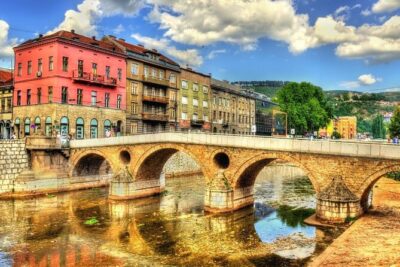
The final major historical stop is Latin Bridge. Here, the guide explains the assassination of Archduke Franz Ferdinand and his wife, Sophie, in 1914. The event helped trigger the First World War.
This is more than a quick photo stop if the guide handles the surrounding context well. The important question is not only what happened at the bridge, but why the assassination had such far-reaching consequences. The route allows about 20 minutes for this part of the story.
Several guides have been singled out for placing the event in a wider timeline. That is helpful because the assassination can otherwise seem like an isolated incident. The tour focuses on Sarajevo’s longer story, especially the Ottoman and Austro-Hungarian periods, rather than presenting itself as a dedicated 1990s war-sites tour.
That distinction is important. If your main purpose is to learn about the siege of Sarajevo and the Bosnian War, you should book a separate tour designed for that subject. This walk may mention modern history where it fits, but its main emphasis is older Sarajevo and the city’s cultural meeting points.
What the guides add to the walk
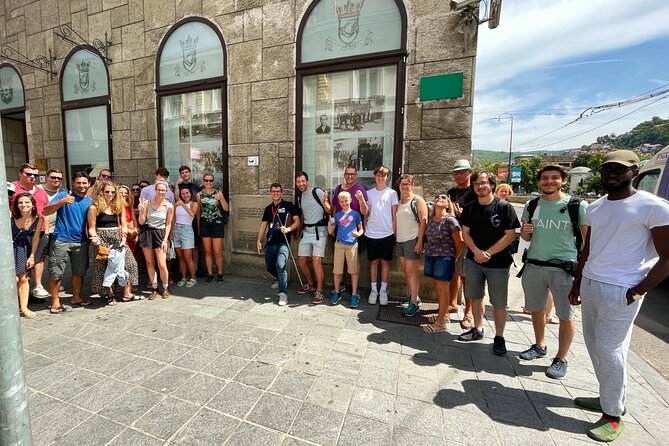
The guide is the main reason to choose this experience over wandering alone. Names and assignments can change, but the available guide team has included Ahmed, Ilma, Hanan, Benjamin, Azra, Sara, Arna, Alen, Cecilia, Viki, Amina, and others.
The strongest pattern is clear communication and personal attention. Ahmed was described as a history major with excellent English, while Hanan was appreciated for answering broad questions and adding personal stories. Arna has been praised for connecting historical sites with local food, shopping, and everyday life.
You should feel comfortable asking questions. The small group format makes that easier, particularly if your group is one of only two or three people. On some departures, a single booking has gone ahead rather than being canceled, creating what felt like a private walk.
That is not guaranteed, but the maximum of 10 is reassuring. A group of six still allows interaction, while a full group of 10 will naturally feel less personal than a one-to-one tour.
The guide may be multilingual, although the activity is offered in English. If clear English storytelling is essential to you, it is sensible to confirm the language arrangement when booking.
Pace, weather, and practical comfort
This is an outdoor walking tour lasting about two hours. You should wear comfortable shoes and plan for changing weather, since the walk continues in light rain and has operated during heavier rain as well.
There are no food or drinks included. That is not a serious drawback in Sarajevo, where you can easily continue afterward with coffee, ćevapi, pastries, or another local meal, but you should not expect a tasting stop built into the $14.51 price.
The route includes many short stops, and the stated stop times add up to more than two hours if treated as separate full visits. In practice, some points overlap. Sebilj is part of the Baščaršija section, and several nearby landmarks are covered from the street. Think of the schedule as a brisk guided circuit, not 13 separate attractions with long visits.
The tour is near public transportation, and service animals are allowed. Most people can take part, but the activity is still a walking route, so anyone concerned about mobility should ask the operator for current route details before booking.
Is $14.51 a good value?
At $14.51 per person, this is a low-cost way to get an organized introduction to Sarajevo. The price includes a local professional guide, and the route covers many of the city’s key historic markers in one outing.
The value is especially strong if this is your first day in Sarajevo. You get a basic mental map, learn which streets and buildings matter, and can then return on your own for museums, meals, shopping, or longer visits.
The price does not include food, drinks, or admission to places such as the Jewish Museum, City Hall, or the Gazi Husrev-beg Mosque. That keeps the starting price low, but you should budget separately if you want to go inside those sites.
I would not choose this tour as a substitute for a full-day history program. Its strength is breadth and orientation. You see many places, receive a useful framework, and decide what deserves a second visit.
Who should book this Sarajevo walking tour?
I would recommend it to first-time visitors, short-stay visitors, families, and anyone who wants a quick introduction before exploring alone. The route is compact, the group limit is modest, and the guides appear comfortable answering questions and adjusting the pace when the group is small.
It also suits people interested in how cultures meet. The Orthodox church, Ottoman market streets, mosque, clock tower, former Sephardic synagogue, Catholic cathedral, Austro-Hungarian City Hall, and Latin Bridge create a broad introduction to Sarajevo in a small area.
Families can benefit from the short duration. A family with a nine-year-old child completed the walk in a five-person group and found the smaller format easier than a large free walk. Still, keep in mind that this is a history-focused walk, not a children’s activity with games or special programming.
I would choose something else if you want extensive interior visits, a food tour, or a detailed account of the 1990s conflict. Those subjects require more time and a different route.
Free cancellation is available up to 24 hours before the start time for a full refund. Changes or cancellations inside that window are not accepted for a refund, and the tour requires a minimum number of participants. If the operator cancels because that minimum is not met, you are offered another date or experience, or a full refund.
My verdict: book it for your first look at Sarajevo
Book this tour if you want a concise, affordable introduction to Sarajevo’s Old Town and its many cultural layers. The best part is not any single monument. It is the sequence: Ottoman streets, Austro-Hungarian buildings, Orthodox, Muslim, Jewish, and Catholic landmarks, then the Latin Bridge and its global consequences.
The main tradeoff is limited time inside the attractions. You will see and hear a lot, but you may want to return later for City Hall, the Jewish Museum, or the mosque.
At $14.51, that is an easy trade for most people. Use the walk to get your bearings, listen closely to the guide’s local advice, and save the places that catch your interest for a slower visit afterward.
FAQ
How long does the Sarajevo Old Town walking tour last?
The tour lasts approximately two hours.
What language is the tour offered in?
The tour is offered in English. The guide may be multilingual.
Where does the tour start?
It starts at the Meet Bosnia Tours office at Gazi Husrev begova 75, near the crossroads of Mula Mustafe Bašeskije in Sarajevo.
Where does the tour end?
The walk ends back at the starting meeting point.
How much does the tour cost?
The listed price is $14.51 per person.
What is included in the price?
A local guide and professional guide service are included.
Are food and drinks included?
No. Food and drinks are not included.
Are museum and building admission fees included?
No. Admission fees are not included. Entry to the Jewish Museum is optional, and City Hall and Gazi Husrev-beg Mosque are also listed without included admission.
How many people can join the tour?
The activity has a maximum group size of 10 people.
Can I cancel for a full refund?
Yes. You can cancel at least 24 hours before the experience start time for a full refund. Cancellations or changes made less than 24 hours before the start time are not accepted for a refund.
Just added around Sarajevo
- Strbacki Buk and Una Waterfalls: Day Trip from Sarajevo★ 5.0 · 3 reviews
- Bosnian Kingdom Capitals: Travnik & Jajce Tour from Sarajevo★ 5.0 · 3 reviews
- Walking Tour in Sarajevo★ 5.0 · 3 reviews
- MTB Bjelasnica – Lukomir★ 5.0 · 3 reviews
- Sarajevo Under Siege: A City’s Struggle & Survival Tour★ 5.0 · 3 reviews
- Herzegovina Tour from Sarajevo: Mostar, Počitelj, Blagaj, Kravice★ 5.0 · 3 reviews
- Travnik, Jajce, Pliva Lakes & Mills –Medieval & Ottoman Bosnia Full Day Tour★ 5.0 · 3 reviews
- Tour of Herzegovina – From Sarajevo★ 5.0 · 3 reviews
Walking Tours in Sarajevo, compared.
Private Walking Tour, Food Tasting and Bosnian Coffee in Sarajevo
Read our review →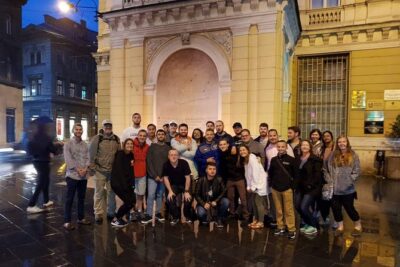
Delicious Sarajevo: Eat, Walk & Discover City Tour
Read our review →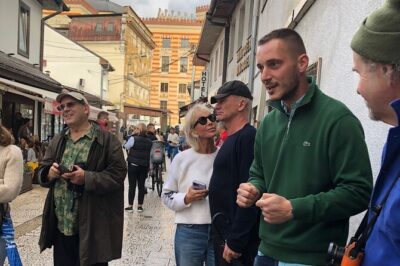
PROFESSIONAL SARAJEVO WALKING TOUR – With guide who guided STING!
Read our review →
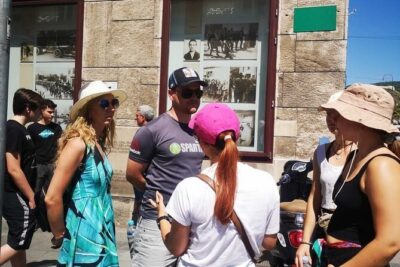
Sarajevo genuine walking tour: Steps through history
Read our review →
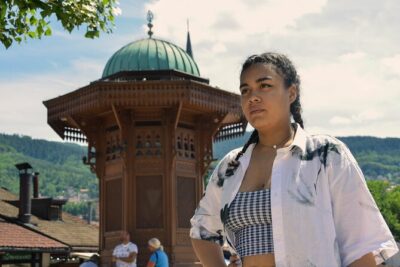
InstaSarajevo – Photography Walking Tour of Sarajevo
Read our review →Browse the lists this tour appears in