
Reviewed · SARAJEVO TOURS
Sarajevo City SIghtseeing / War Bike Tour
Sarajevo’s past is written into its streets, bridges, mosques, churches, and war-damaged buildings. This tour connects those places by bicycle, then carries you out to Vrelo Bosne and the Sarajevo War Tunnel, giving you a far broader view than a short walk through the old town.
I like two things right away: the small group limit of 10 keeps the ride personal, and the route joins ordinary sightseeing with serious wartime history. Guides such as Mustafa, Mirza, Said, and Arna are praised for explaining the city clearly and adding local suggestions for food and further exploring.
The main caution is physical: one participant described a route of just over 25 miles, so this is not a gentle spin around a compact old town. You should be comfortable cycling for much of a day, and you should remember that the tour requires good weather.
Key points to know before booking
- More than a walking tour: A bicycle lets you cover Sarajevo’s old center, newer districts, outskirts, and the Tunnel of Hope in one day.
- A serious history lesson: The Sarajevo War Tunnel museum explains how the tunnel connected Bosnian-held areas during the siege.
- Small groups matter: With no more than 10 people, you can hear the guide and ask questions without feeling lost in a crowd.
- Both major admissions are included: Your ticket covers the War Tunnel museum and Vrelo Bosne.
- Local guides shape the day: Mustafa, Mirza, Said, Kamer, and Arna are named in the tour feedback as engaging and helpful guides.
- Plan for a long ride: The advertised duration is about 6 to 7 hours, and the route has been described as longer than 25 miles.
Why the bicycle works so well in Sarajevo
Sarajevo is a city where several centuries sit close together. In Baščaršija, you can walk from an Ottoman market street to a Austro-Hungarian building in minutes. A bicycle makes it possible to go beyond the central lanes without spending the day waiting for transport.
I like this format because it gives you a first look at Sarajevo’s main sights while also showing how the city extends beyond its postcard center. You are not confined to a single square or museum. The route moves from old markets and religious buildings to modern government structures, green parkland, and one of the clearest places to understand the 1990s war.
The small group size is important here. Sarajevo’s central streets can be busy, and a guide needs to keep the pace steady while giving explanations at several stops. A group of 10 is small enough for direct conversation, especially if you want to ask about the siege, local customs, or places to eat after the tour.
The cycling distance deserves honest attention. This is sold as a city sightseeing and war bike tour, but it is not simply a short bicycle loop. One account puts the ride at a little over 25 miles. That suits an active visitor who wants to see a lot in one day, but it may feel demanding if you rarely cycle or hoped for a slow, mostly stationary history tour.
A few more Sarajevo day trips to weigh up
- Trebevic Mountain Biking Tour from Sarajevo – Bobsleigh Track
★ 5.0 · 16 reviews - Skakavac Waterfall Mountain Biking Tour from Sarajevo MTB
★ 5.0 · 11 reviews - Downhill Sarajevo MTB Mountain Biking Adventure on Trebevic – Half Day Tour
★ 5.0 · 3 reviews
Starting at Sebilj in Baščaršija
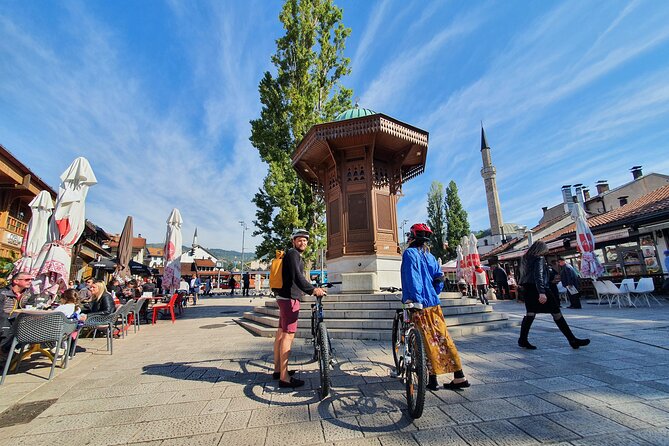
The tour begins at 9:00 a.m. at Obala Isa-bega Ishakovića 3 and first brings you into the old Ottoman quarter. The opening stop is Sebilj, the carved wooden fountain at the heart of Baščaršija.
Sebilj is more than a quick photo stop. It is one of Sarajevo’s best orientation points, surrounded by cobbled lanes, small shops, cafés, and the sounds of the old market district. Built in the 18th century, the fountain gives you an immediate sense of the city’s Ottoman character.
The listed stop lasts about five minutes and admission is free. That short timing suggests you should expect a guide’s introduction rather than a long formal visit. Use it to get your bearings, notice the architecture, and listen for the first clues about how Sarajevo developed as a meeting point between different cultures.
From here, the tour moves along Kazandžiluk, one of the oldest streets in Baščaršija. The lane is known for its coppersmiths, who make coffee pots, trays, jewelry, and other items by hand. You might find a useful souvenir here, but you should also pay attention to the craft itself. Copperware remains one of the clearest links between present-day Sarajevo and its Ottoman market traditions.
City Hall, the House of Spite, and Sarajevo’s layered past
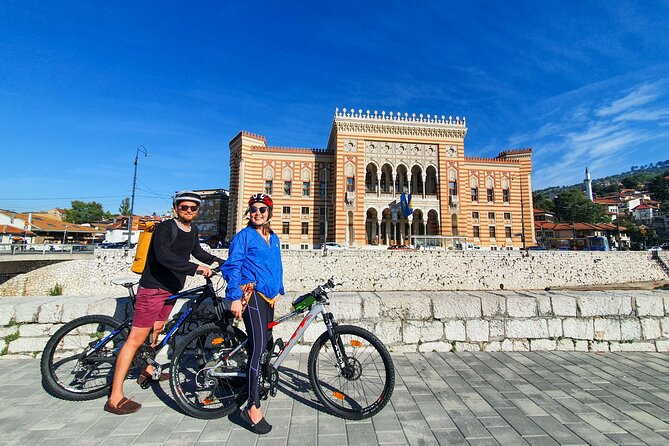
Vijećnica, Sarajevo’s City Hall, changes the architectural mood. Built in 1894 in the Moorish Revival style, it later housed the National Library. During the Siege of Sarajevo, the building was badly damaged, and its restoration took years. It reopened in 2014 as a national monument and cultural venue.
The building helps explain Sarajevo’s complicated identity. It is not only an attractive piece of architecture. Its damage during the war connects the city’s cultural life to the destruction of books, buildings, and public spaces. You will likely pause outside for a guide’s explanation and a closer look at the façade.
Across the river is Inat Kuća, or the House of Spite. The story is a memorable bit of Sarajevo character: when authorities wanted the site for City Hall, the owner refused to sell. The building was eventually moved brick by brick to the opposite bank.
Today, it operates as a restaurant serving Bosnian food. The tour does not list a meal here, so do not assume lunch is part of the price. Still, the building makes a useful stop because it turns urban planning into a human story, complete with stubbornness, pride, and a house that refused to disappear.
Latin Bridge and the event that changed Europe
Latin Bridge is a small Ottoman bridge with an enormous place in European history. It is associated with the 1914 assassination of Archduke Franz Ferdinand, an event that helped trigger World War I.
The stop is listed at about five minutes, so this is not a full museum visit. The value comes from standing at the site while your guide explains what happened and how Sarajevo became tied to a conflict that reshaped the continent.
I would pay close attention here rather than treating it as another quick photograph. Sarajevo’s history is often taught through major events, but the bridge gives those events a physical setting. You are looking at the river, the nearby streets, and the compact urban space where a global crisis began.
Same base, a completely different day out:
- Sarajevo: Mostar, Konjic, Blagaj Tekke, Pocitelj & Waterfall
★ 4.9 · 1,335 reviews - Fall of Yugoslavia, Sarajevo War Tour with Tunnel of Hope Museum and Frontlines
★ 5.0 · 1,314 reviews - Sarajevo: Mostar, Konjic, Sufi House, Pocitelj & Kravice Falls
★ 5.0 · 1,179 reviews - ROSES OF SARAJEVO (Official WAR + CITY tour)- Story of a Survivor
★ 5.0 · 770 reviews
Gazi Husrev-beg Mosque and the covered market
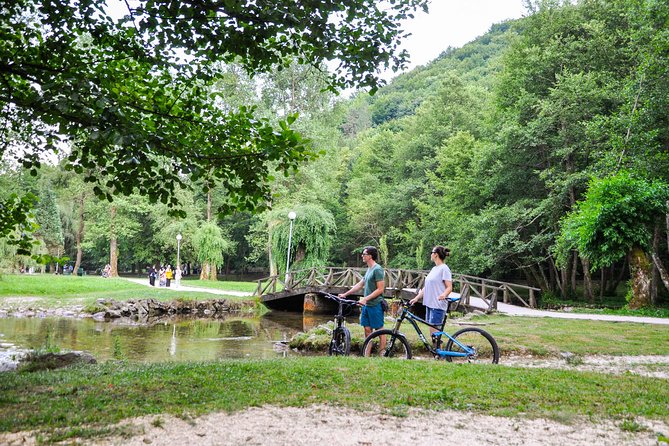
The Gazi Husrev-beg Mosque is the largest mosque in Sarajevo and dates from 1530. Its presence in Baščaršija reflects the city’s Ottoman foundations and its long Muslim tradition.
The scheduled five-minute stop is brief. Depending on the day and access conditions, you may mainly view the exterior and hear the guide’s explanation. The tour information does not promise an interior visit, so dress and plan with the expectation that this is a short sightseeing stop rather than a long religious-site tour.
Nearby, Gazi-Husrev Beg’s Bezistan offers a different view of the same era. This covered market, built in the 16th century, has shops arranged under arched arcades. It is a good place to notice how trade once worked in a city built around commerce, craft, and exchange.
Together, the mosque and Bezistan give the old town some structure. You see faith, shopping, architecture, and daily life close together. That combination is one reason a local guide adds value. Without context, the stops can look like a series of handsome buildings. With context, they begin to explain how Sarajevo functions as a city.
Sacred Heart Cathedral and a city of several faiths
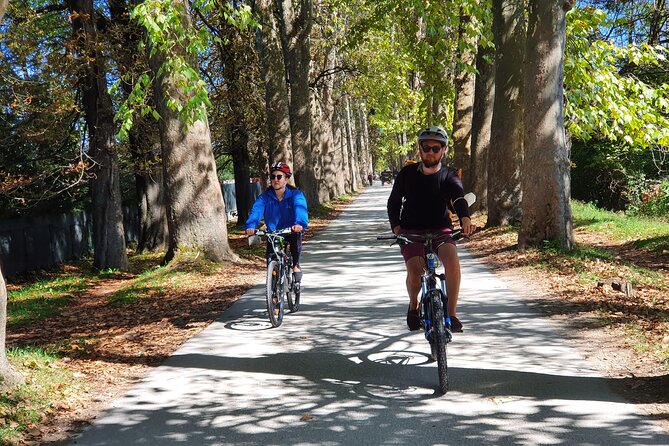
The Sacred Heart Cathedral brings you into Sarajevo’s Catholic story. Built in the late 19th century, it is the largest cathedral in Bosnia and Herzegovina, with a Neo-Gothic design that contrasts sharply with the Ottoman buildings nearby.
The contrast is the point. Within a short ride, the tour shows you Islamic, Catholic, and Austro-Hungarian influences, along with the city’s modern political buildings. This is not a tour that treats Sarajevo as a single-period destination.
Again, the listed visit is only about five minutes. You will not have much time for a full interior visit or quiet reflection. Think of it as a guided city portrait, with several carefully chosen landmarks rather than extended time at one site.
The Parliament Building and the road beyond the old town
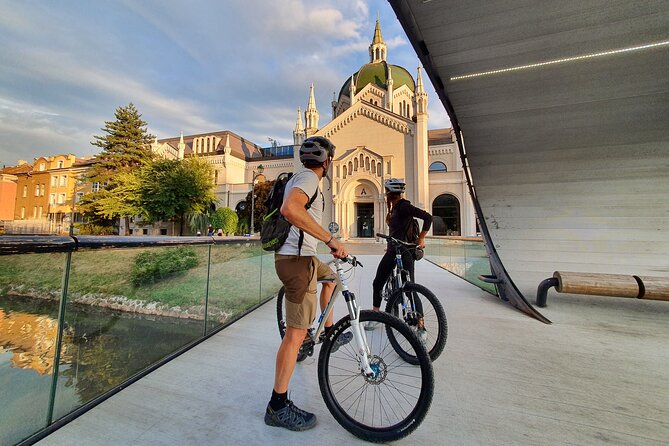
The Parliamentary Assembly of Bosnia and Herzegovina occupies a modernist building designed by architect Juraj Neidhardt and completed in 1982. Its design is a sharp change from the market streets and religious buildings of the center.
The structure was heavily damaged during the Siege of Sarajevo and later restored. That detail makes the stop more than a look at a government office. It shows how the war affected not only historic monuments but also the institutions of everyday public life.
This part of the ride is useful for understanding Sarajevo as a modern capital, not just an old Ottoman town. You see the city’s 20th-century planning and its postwar recovery before heading toward Vrelo Bosne on the outskirts.
An hour at Vrelo Bosne
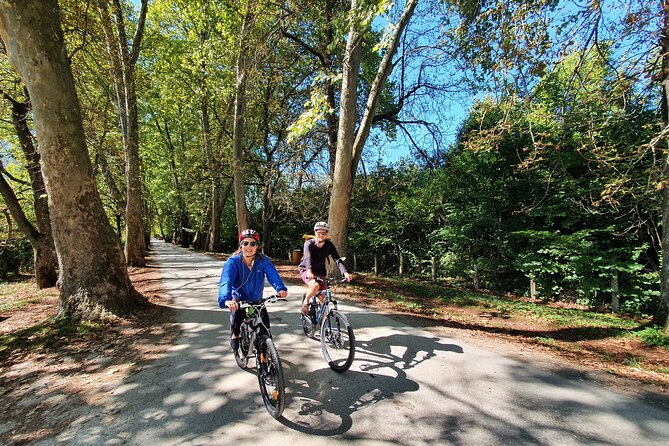
Vrelo Bosne is the park at the source of the River Bosna, near the foothills of Mount Igman. The tour allows about an hour here, making it the longest stop before the War Tunnel.
The spring and park provide a change of pace after the city streets. You can expect a greener setting and a chance to pause rather than move from one five-minute landmark to the next. Admission is included, so there is no separate park fee to arrange.
The hour matters because the ride is long. This is a natural break in the schedule, not just another name on a list. You can take in the source of the river, enjoy the park, and recover before the final major history stop.
The supplied details do not specify whether the hour includes a meal or a particular activity, so plan only on the included admission and time in the park. If you need lunch, ask the tour provider about the day’s arrangements before setting out.
The Sarajevo War Tunnel and the Siege of Sarajevo
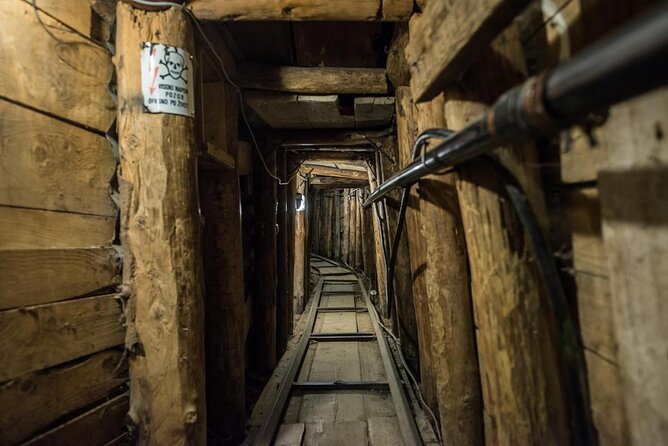
The Sarajevo War Tunnel is the emotional center of the tour. During the Bosnian War, it linked two areas held by Bosnian forces after the city had been cut off by the Army of Republika Srpska.
The tunnel was a lifeline. It helped people and supplies move between territory that had been isolated during the siege. The museum places that experience in a physical setting, which can be more affecting than reading a short account in a city guide.
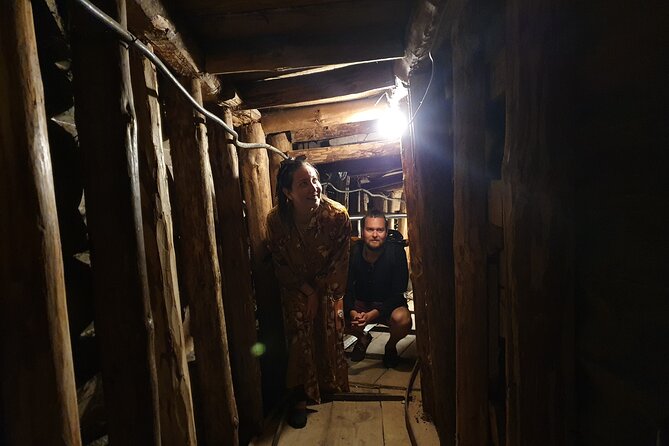
The visit lasts about an hour and admission is included. That is enough time for a meaningful look rather than a rushed stop. The guide’s role is especially important here, and the named guides are repeatedly praised for combining clear historical explanations with a friendly manner.
Approach this part with respect. The tunnel is not a novelty attraction, and the subject is painful. You are being asked to understand how ordinary people lived through a long blockade, not simply to collect another photograph. The best part of this tour is the connection between the city sights and this final wartime site. The damaged City Hall and Parliament Building, the city streets, and the Tunnel of Hope become parts of one story.
The guides make or break the day
The strongest element of this experience is the guide. Mustafa is described as someone who takes time with the main sights and adds less obvious places. Mirza is praised for keeping the ride entertaining while explaining the city’s past. Said is noted for being charming and accommodating, while Arna is described as passionate about Bosnian culture and able to suggest places to eat, shop, and visit afterward.
Those details matter more than a polished list of stops. A bicycle tour moves quickly, and the guide has to judge when to pause, when to explain, and when to keep the group moving. You want someone who can handle both the practical side of the ride and the sensitive subject of the war.
The guide lineup may vary, so you should not book on the assumption that one specific person will lead your date. Still, the consistent strength of the named guides is a good sign. You can expect the experience to depend heavily on local storytelling rather than audio equipment or a rigid script.
Price, inclusions, and practical value
At $138.34 per person, this is not the cheapest way to see Sarajevo. The price makes more sense when you count the length of the day, the bicycle and helmet, the small group format, the Vrelo Bosne admission, and the War Tunnel museum ticket.
You are also paying for the route design. Seeing Baščaršija, the city landmarks, the park, and the tunnel in a single 6 to 7 hour outing would be difficult on foot. The bicycle gives you range, while the guide supplies the context that connects the stops.
There are no listed exclusions for the tour, though the supplied details do not mention meals. I would budget separately for food unless the provider confirms that a meal is arranged.
The tour is offered in English and uses mobile tickets. Confirmation is sent within 48 hours, subject to availability. It begins and ends at the stated meeting point, and the location is near public transportation.
Free cancellation is available if you cancel at least 24 hours before the 9:00 a.m. start. Bad weather can cancel the ride, in which case you are offered another date or a full refund. The tour also requires a minimum number of participants, so a cancellation for that reason comes with the same choices.
Who should book the Sarajevo War Bike Tour?
I would choose this for an active first-time visitor who wants orientation, local history, and the War Tunnel in one well-packed day. It suits you especially well if you like asking questions, covering ground, and learning through places rather than spending hours in formal museums.
It is also a good fit if you have only a short stay in Sarajevo. The tour reaches the city’s key old-town landmarks, then adds two locations that are harder to combine independently: Vrelo Bosne and the Tunnel of Hope.
I would think twice if you want a slow walking tour, have limited cycling stamina, or prefer long visits inside individual buildings. The five-minute stops are useful introductions, but they do not allow much time for detailed exploration. The 25-plus-mile distance mentioned in the feedback is the most important practical warning.
Should you book it?
Book this tour if you want to see Sarajevo by moving through it, not just standing in its central square. The mix of Ottoman streets, European architecture, religious landmarks, parkland, and wartime history gives you a strong first picture of the city.
The value comes from the combination. A short old-town tour will show you Baščaršija, while a separate war tour may focus only on the siege. This ride links the two and adds the city’s outer areas. Just come ready for a long day in the saddle, and you will get far more than a basic sightseeing loop.
FAQ
How long does the Sarajevo City Sightseeing and War Bike Tour last?
The tour lasts approximately 6 to 7 hours, beginning at 9:00 a.m. and ending back at the meeting point.
How far does the bike ride go?
One account describes the cycle as just over 25 miles. You should be comfortable riding for much of the day before booking.
What is included in the tour price?
The price includes use of a bicycle, use of a helmet, admission to the Sarajevo War Tunnel museum, and admission to Vrelo Bosne. The tour is offered in English.
Is the Sarajevo War Tunnel ticket included?
Yes. Admission to the War Tunnel museum is included, with about one hour scheduled for the visit.
How large is the group?
The tour has a maximum group size of 10 people.
What happens if the weather is poor?
The experience requires good weather. If the provider cancels because of poor weather, you are offered a different date or a full refund.
Just added around Sarajevo
- Strbacki Buk and Una Waterfalls: Day Trip from Sarajevo★ 5.0 · 3 reviews
- Bosnian Kingdom Capitals: Travnik & Jajce Tour from Sarajevo★ 5.0 · 3 reviews
- Walking Tour in Sarajevo★ 5.0 · 3 reviews
- MTB Bjelasnica – Lukomir★ 5.0 · 3 reviews
- Sarajevo Under Siege: A City’s Struggle & Survival Tour★ 5.0 · 3 reviews
- Herzegovina Tour from Sarajevo: Mostar, Počitelj, Blagaj, Kravice★ 5.0 · 3 reviews
- Travnik, Jajce, Pliva Lakes & Mills –Medieval & Ottoman Bosnia Full Day Tour★ 5.0 · 3 reviews
- Tour of Herzegovina – From Sarajevo★ 5.0 · 3 reviews
Sarajevo Tours, compared.
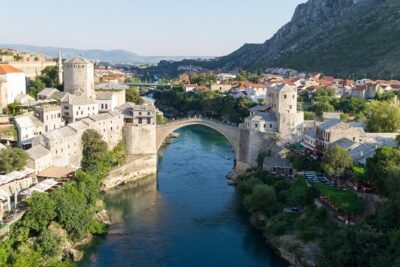
Sarajevo: Mostar, Konjic, Blagaj Tekke, Pocitelj & Waterfall
Read our review →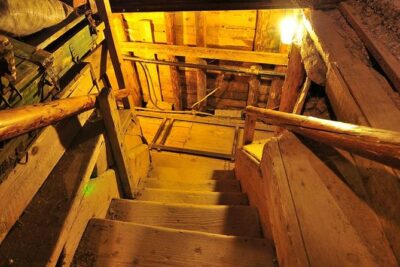
Fall of Yugoslavia, Sarajevo War Tour with Tunnel of Hope Museum and Frontlines
Read our review →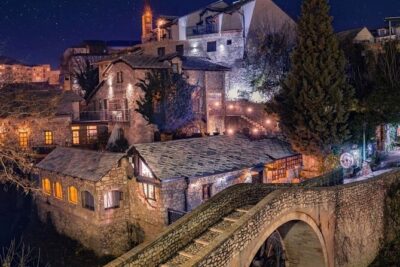
Sarajevo: Mostar, Konjic, Sufi House, Pocitelj & Kravice Falls
Read our review →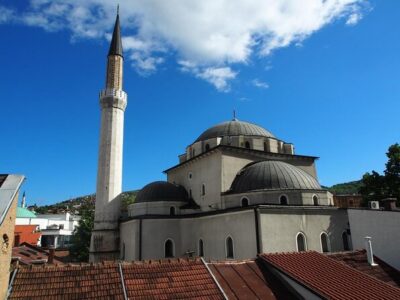
Sarajevo: 2 Hours Old Town Walking Tour With Local Guide
Read our review →
Sarajevo: Mostar, Konjic, Dervish House, Pocitelj & Kravica Falls
Read our review →
From Sarajevo: Srebrenica Genocide Memorial Study Tour
Read our review →
Mostar,Kravica Waterfall,Blagaj,Počitelj – Day Tour from Sarajevo
Read our review →
Sarajevo War Tour: A Veteran’s Story of the Siege (fees included)
Read our review →Browse the lists this tour appears in