
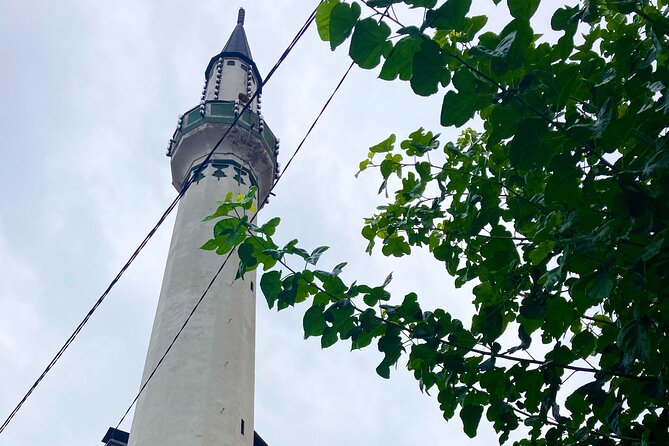
Reviewed · SARAJEVO TOURS
Sarajevo: Islamic Traditions and Daily Life Tour
Sarajevo’s Islamic story is best understood on foot, where mosques, Ottoman homes, markets, cemeteries, and a lunar clock sit within a compact old city. This two-hour tour links those places with everyday customs, architecture, and the role Islam has played in Bosnia and Herzegovina.
I like the clear historical route, from the city’s founding site to its old bazaar. I also like the chance to see Svrzo’s House and the Gazi Husrev-beg Mosque, two places that show both private life and public faith.
The main drawback is the pace. You cover many stops in about two hours, and part of the walk goes uphill, so comfortable shoes matter. Two key entrances also cost extra.
Key points at a glance
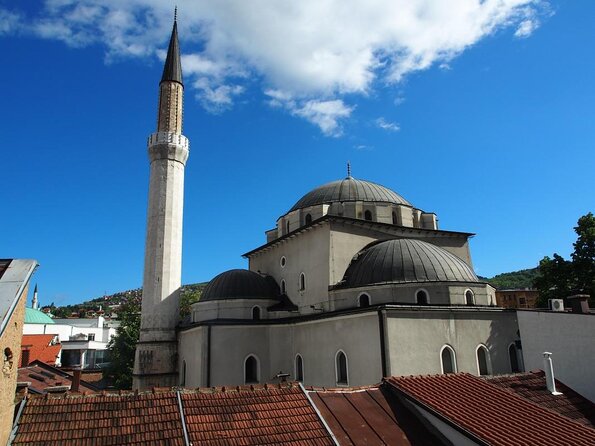
- A walking route through Sarajevo’s Islamic past: The tour connects Mejdan Park, major mosques, a madrasa, an Ottoman home, the bazaar, and an old inn.
- A useful introduction for Muslim and non-Muslim visitors: You can ask about religious customs, architecture, and daily life without needing prior knowledge.
- The best interior visits cost extra: Gazi Husrev Bey’s Mosque and Museum costs 8 BAM, while Svrzo’s House costs 5 BAM per person.
- Expect some uphill walking: The route is manageable for most people, but you should wear supportive shoes.
- Guides add a personal layer: Suad and Fuad are named in the tour feedback as friendly, thoughtful guides who welcome questions.
- Small-group format: The maximum group size is 25, though the actual number can be much lower.
Sarajevo’s Islamic story begins at Mejdan Park
The meeting point is Sarajevo Insider at Zelenih beretki 30, with the tour starting at 10:00 a.m. From there, you head toward Mejdan Park, a historic place linked to the official establishment of Sarajevo.
This first stop is brief, only about five minutes, but it gives the walk a useful starting point. The guide can explain how the city grew as a place of trade, worship, and social contact. The park also introduces a theme that continues throughout the morning: Sarajevo’s public spaces were not only for business or government. They were places where people met, talked, rested, and took part in community life.
There is no admission charge here. I like this opening because it puts the religious sites into a citywide setting instead of treating each mosque as an isolated monument.
A few more Sarajevo day trips to weigh up
- Sarajevo: Mostar, Konjic, Blagaj Tekke, Pocitelj & Waterfall
★ 4.9 · 1,335 reviews - Fall of Yugoslavia, Sarajevo War Tour with Tunnel of Hope Museum and Frontlines
★ 5.0 · 1,314 reviews - Sarajevo: Mostar, Konjic, Sufi House, Pocitelj & Kravice Falls
★ 5.0 · 1,179 reviews
Jedileri Sanctuary and the role of sacred places
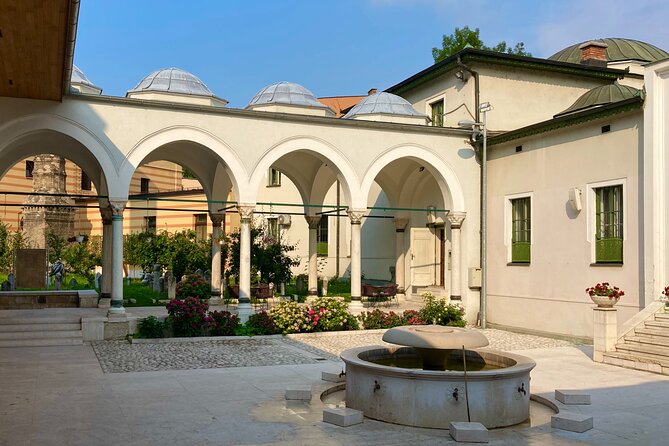
The next stop is Turbe sedam braće, also called the Jedileri Sanctuary. This sacred Islamic site is connected with the spiritual life of Muslims in Bosnia and Herzegovina.
You spend only around five minutes here, so this is more of an introduction than a long visit. That short timing makes the guide’s explanation especially important. You can ask about the site’s meaning, the place of shrines in local Muslim life, and how religious traditions can continue within an urban neighborhood.
This is one of the more unusual stops on the route. Many city walks focus only on famous buildings. Here, you get a look at a place valued for its spiritual meaning, not simply its architectural appearance.
The Emperor’s Mosque and Sarajevo’s Ottoman foundations
The Emperor’s Mosque is presented as Sarajevo’s oldest mosque. It also offers a chance to hear how the city’s Islamic heritage helped shape its name and identity.
The visit lasts about three minutes, so do not expect a long architectural study. Instead, treat it as a compact historical marker before the longer stop at the Gazi Husrev-beg Mosque.
The mosque helps explain why Sarajevo cannot be understood through its Austro-Hungarian buildings alone. Its story also includes Ottoman urban planning, Islamic education, charitable foundations, and the daily routines of Muslim communities. The guide’s job here is to connect the building to that wider story.
Gazi Husrev-beg Mosque, Sarajevo’s religious center
The Gazi Husrev-beg Mosque is the centerpiece of the tour. You spend around 30 minutes in this area, giving you time to consider the mosque’s role as both a place of worship and a center of cultural life.
The mosque is one of Sarajevo’s best-known Islamic landmarks. Its importance goes beyond its appearance. It represents the network of religious, educational, and charitable institutions that helped shape the old city.
Admission to the mosque and museum is not included. The listed entrance price is 8 BAM, or about 4.50 euros, per person. I recommend budgeting for it because this is one of the tour’s most substantial stops. If you are trying to keep the total cost as low as possible, you should confirm exactly what the fee covers before entering.
A guide such as Fuad can make this stop more useful by explaining details you might miss on your own. The experience is designed for questions, so ask about the mosque’s place in Sarajevo’s Muslim community, its architecture, and how religious buildings functioned as part of urban life.
Same base, a completely different day out:
- ROSES OF SARAJEVO (Official WAR + CITY tour)- Story of a Survivor
★ 5.0 · 770 reviews - Sarajevo: Mostar, Konjic, Počitelj, Sufi House, & Waterfalls
★ 4.9 · 572 reviews - Tunnel Museum: Bosnian & Yugoslav Wars Tour with War Veteran
★ 5.0 · 551 reviews - Sarajevo: 2 Hours Old Town Walking Tour With Local Guide
★ 5.0 · 505 reviews
Sarajevo’s lunar clock and the Gazi Husrev Bey madrasa
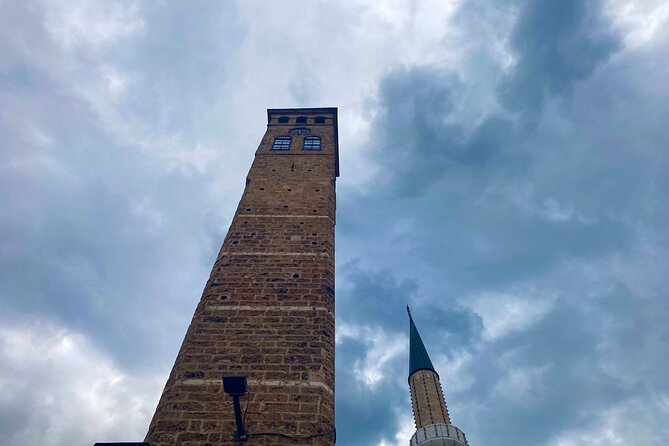
Near the mosque, you see Sarajevo’s historic Clock Tower, a rare lunar clock. It marks time according to the Islamic lunar calendar, offering a small but memorable example of how religious practice shaped everyday systems.
The clock is easy to pass without understanding its purpose. A short explanation turns it into something more than a photogenic old structure. It shows how timekeeping, worship, and city life could work together.
The route then continues to Gazi Husrev Begova Medresa, Sarajevo’s first Islamic high school. The madrasa dates to 1537 and is linked with Gazi Husrev-beg, one of the city’s major benefactors.
You spend about ten minutes here. This stop adds an important educational side to the tour. Mosques are places of prayer, but institutions such as the madrasa show how Islamic life also included formal learning and the training of religious scholars.
The entrance fee is not included. The supplied information does not give a separate admission price for the madrasa, so ask your guide about access on the day.
Svrzo’s House and 18th-century Muslim home life
Svrzo’s House is one of the most rewarding stops if you want to understand ordinary domestic life. This well-preserved Ottoman house presents how Muslim families in Bosnia lived during the 18th century.
You spend about 20 minutes here, which is enough for a focused look but not a full museum visit. The house helps balance the grand mosques and public monuments with rooms, household arrangements, and domestic customs.
This is a place where the tour’s subject becomes personal. Instead of hearing only about rulers, benefactors, and institutions, you get a sense of how Islamic traditions shaped the home.
Admission costs 5 BAM, listed as about 3 euros per person, and is not included. I consider this a worthwhile extra if you want more than exterior views. If you have only a short time in Sarajevo and must choose between paid stops, Svrzo’s House gives you the clearest window into daily life.
One practical point: the walk includes some uphill sections. The route is not a bus tour, and old streets can be uneven. Wear shoes that you can comfortably use for two hours.
The Faculty of Islamic Studies and modern Sarajevo
The Faculty of Islamic Studies at the University of Sarajevo offers a change in architectural mood. Its design combines Neo-Moorish-inspired features with modern elements.
You spend only about a minute here, so the stop is mainly for a quick look and explanation. It shows that Islamic architecture in Sarajevo is not limited to the Ottoman period. Islamic education and identity continue in modern institutions, too.
Because this is a short exterior stop, you should not expect a tour of the faculty itself. Its value comes from the contrast it creates with the older mosques, madrasa, and Ottoman house.
Baščaršija, where faith and trade meet
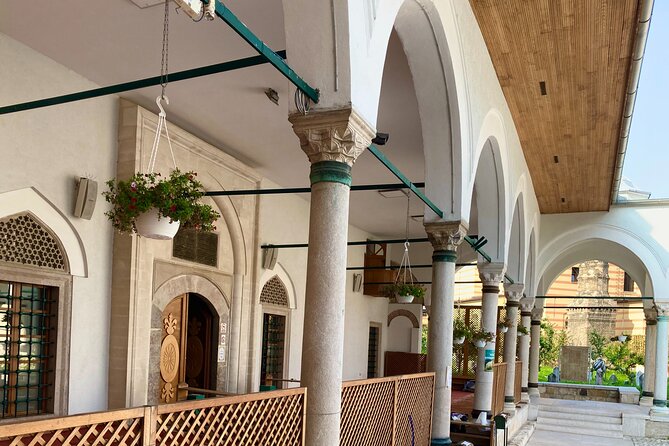
The tour then enters Baščaršija, Sarajevo’s old bazaar. You spend around 20 minutes walking through its streets, where Ottoman-era trade, crafts, food, and religious life come together.
Baščaršija is one of the easiest places in Sarajevo to understand through movement. You see how a mosque, market street, fountain, food stalls, and historic buildings can form one connected urban setting.
I like this part of the walk because it moves beyond formal history. You can watch the city’s old commercial center function as a social place, not just a collection of preserved buildings. The guide can also point out how Muslim customs and Ottoman traditions appear in food, craftsmanship, and public life.
The tour includes a stop at Sebilj Brunnen, the famous fountain at the heart of Baščaršija. You can drink its water, and the fountain is treated as an important symbol within Muslim traditions in Sarajevo.
The stop lasts only about a minute, but it is a good pause for photographs and orientation. From here, you are well placed to explore Baščaršija on your own after the tour.
Bravadžiluk Street and Sarajevo’s Muslim food traditions
Bravadžiluk Street adds a culinary angle. The route spends about 20 minutes exploring the flavors of Muslim food traditions and local craft activity.
The tour does not list a meal or tasting as included, so think of this as a guided introduction rather than a food tour. You can ask the guide what to try later, and one guide, Suad, has been described as suggesting places to eat after the tour.
That sort of practical advice can be useful because food streets often offer more choices than you can judge at a glance. If you plan to eat in the old town afterward, save room in your schedule and budget.
This stop also helps explain how traditions survive through routine. Recipes, shops, market streets, and shared meals can tell you as much about a community as a museum display.
Alifakovac Cemetery and Morica Han
Alifakovac Cemetery is an optional stop. You spend only around two minutes there, but the cemetery offers a quiet place to reflect on Sarajevo’s Muslim past and the notable Muslims buried in Bosnia.
Because it is optional and brief, it may appeal most if you want a more reflective part of the walk. If you prefer to keep moving through the old town, you can skip it without losing the main structure of the experience.
The final listed stop is Morica Han, the best-preserved Ottoman inn in Sarajevo. It was a historical gathering point for Muslim travelers and merchants. Again, the visit lasts only about three minutes, so the guide’s context matters more than the amount of time spent inside.
Morica Han completes the tour’s picture of Sarajevo as a city connected to wider trade and movement. The route begins with the city’s founding and ends with a place that served people passing through it.
What the guide adds to the walk
The certified guide is the main reason to book this rather than follow a map alone. The tour is not simply a sequence of buildings. It asks how Islam shaped Sarajevo’s name, schools, homes, markets, clocks, food, and community spaces.
Suad is specifically praised for being friendly and welcoming, with time given to individual questions and suggestions for places to eat. Fuad is also named as an intelligent and friendly guide who presents Sarajevo’s Islamic history in a clear way.
The wording used to describe the guides points to a relaxed atmosphere. One booking was effectively a private experience because only one person attended. You should not assume every departure will be private, since the stated maximum is 25 people, but the group can be smaller.
The tour is designed for Muslims and non-Muslims alike. You do not need a religious background to follow it. If you are Muslim, you may appreciate the focus on Islamic traditions and sacred places. If you are not, the guide gives you a respectful way to ask questions about beliefs and customs without treating the subject as a side note.
Price, extra fees, and overall value
The listed price is $30.04 per person for roughly two hours. That is a fair price for a guided walk that includes a certified guide and a city map, especially if you want a focused introduction to Sarajevo’s Islamic identity.
The two paid entrances are separate:
- Svrzo’s House: 5 BAM, about 3 euros per person
- Gazi Husrev Bey’s Mosque and Museum: 8 BAM, about 4.50 euros per person
That adds 13 BAM if you visit both. The listed prices should be treated as a planning guide, since admission charges can change.
The value depends on your interests. If you only want a general old-town walk, the tour may cover more religious detail than you need. If you want to understand Sarajevo as one of Europe’s Muslim-majority cities, the price is easier to justify because the route connects architecture with daily life and education.
I would budget for both paid sites. They provide the strongest contrast in the tour: one shows a major public religious institution, and the other presents a private Ottoman home.
Who should book this Sarajevo walking tour?
I would choose this tour at the start of a Sarajevo visit if you want a framework for the old city. It can help you understand later visits to mosques, museums, food streets, and Ottoman buildings.
It suits you best if you:
- Want a focused introduction to Islamic life in Bosnia and Herzegovina
- Enjoy walking tours with historical explanation
- Are curious about Ottoman architecture and urban life
- Want to visit Svrzo’s House with added context
- Prefer a small or potentially personal tour
- Are comfortable walking uphill for part of the route
You may want a different activity if you dislike religious or architectural history, need a completely flat route, or want a tour centered mainly on food. Bravadžiluk Street appears on the route, but meals are not included.
The tour is offered in English. It starts at 10:00 a.m. and returns to the meeting point. Mobile tickets are accepted, public transportation is nearby, and most people can take part. The stated group limit is 25.
Free cancellation is available up to 24 hours before the start time. The experience requires good weather and a minimum number of participants. If poor weather or low enrollment cancels the tour, you are offered another date or experience, or a full refund.
My verdict on the Sarajevo Islamic Traditions and Daily Life Tour
Book it if you want more than pretty old-town streets. The route gives you Sarajevo’s Islamic story through mosques, schools, homes, markets, food traditions, and public spaces.
The best reasons to go are the strong historical focus, the chance to see Svrzo’s House, and the personal touch that guides such as Suad and Fuad bring to the walk. The main cautions are the short timing at several stops, uphill walking, and extra admission costs.
For a modest base price, this is a useful, focused introduction to a side of Sarajevo that is easy to miss when you look only at its Austro-Hungarian buildings or war history. Wear good shoes, bring questions, and allow a little extra time afterward for Baščaršija and lunch.
FAQ
How long does the Sarajevo Islamic Traditions and Daily Life Tour last?
The tour lasts approximately two hours.
Where does the tour start?
It starts at Sarajevo Insider, Zelenih beretki 30, Sarajevo 71000, Bosnia and Herzegovina.
What time does the tour begin?
The stated start time is 10:00 a.m.
Where does the tour end?
The activity ends back at the meeting point.
Is the tour offered in English?
Yes. The tour is offered in English.
Are entrance fees included?
No. Entrance to Svrzo’s House costs 5 BAM per person, and entrance to Gazi Husrev Bey’s Mosque and Museum costs 8 BAM per person. These fees are not included.
Is this a private tour?
Not necessarily. The maximum group size is 25 people, but group size can vary. One recorded departure had only one participant.
Does the tour require a lot of walking?
Yes. It is a walking tour, and part of the route goes uphill. Comfortable shoes are recommended.
Can I cancel for a full refund?
Yes, if you cancel at least 24 hours before the experience starts. Cancellations or changes made less than 24 hours before the start time are not accepted for a refund.
Just added around Sarajevo
- Strbacki Buk and Una Waterfalls: Day Trip from Sarajevo★ 5.0 · 3 reviews
- Bosnian Kingdom Capitals: Travnik & Jajce Tour from Sarajevo★ 5.0 · 3 reviews
- Walking Tour in Sarajevo★ 5.0 · 3 reviews
- MTB Bjelasnica – Lukomir★ 5.0 · 3 reviews
- Sarajevo Under Siege: A City’s Struggle & Survival Tour★ 5.0 · 3 reviews
- Herzegovina Tour from Sarajevo: Mostar, Počitelj, Blagaj, Kravice★ 5.0 · 3 reviews
- Travnik, Jajce, Pliva Lakes & Mills –Medieval & Ottoman Bosnia Full Day Tour★ 5.0 · 3 reviews
- Tour of Herzegovina – From Sarajevo★ 5.0 · 3 reviews
Sarajevo Tours, compared.
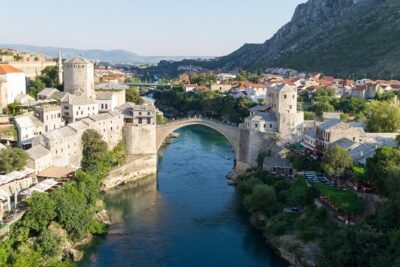
Sarajevo: Mostar, Konjic, Blagaj Tekke, Pocitelj & Waterfall
Read our review →
Fall of Yugoslavia, Sarajevo War Tour with Tunnel of Hope Museum and Frontlines
Read our review →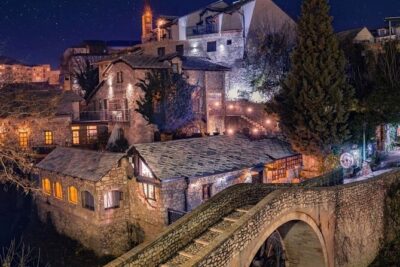
Sarajevo: Mostar, Konjic, Sufi House, Pocitelj & Kravice Falls
Read our review →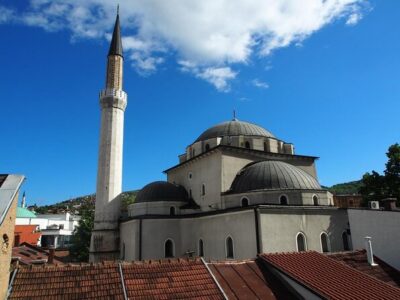
Sarajevo: 2 Hours Old Town Walking Tour With Local Guide
Read our review →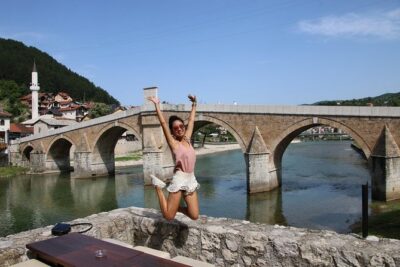
Sarajevo: Mostar, Konjic, Dervish House, Pocitelj & Kravica Falls
Read our review →
From Sarajevo: Srebrenica Genocide Memorial Study Tour
Read our review →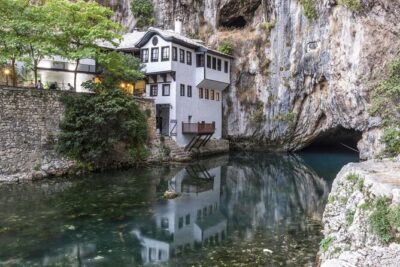
Mostar,Kravica Waterfall,Blagaj,Počitelj – Day Tour from Sarajevo
Read our review →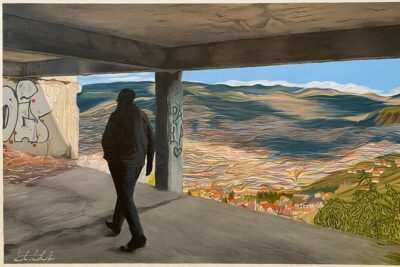
Sarajevo War Tour: A Veteran’s Story of the Siege (fees included)
Read our review →Browse the lists this tour appears in