
Reviewed · SARAJEVO TOURS
SARAJEVO SIEGE TIMES ’92-’95 / Sarajevo Roses & Tunnel of Hope /
Sarajevo’s siege becomes easier to understand when you see the city from the hills that once surrounded it. This private tour links the Yellow Fortress, Tunnel of Hope, sniper positions, Trebević viewpoints, and the Olympic bobsled track into one clear story of how Sarajevo was cut off and how people kept the city alive. I especially like the personal account from Faruk, who lived through the war as a young teenager, and the way the tour uses actual viewpoints to explain the city’s geography. I also like that it includes both major sites and quieter places, including the Jewish Cemetery.
The main drawback is the extra €10 entrance charge for the Tunnel of Hope, which is not covered by the advertised tour price. The schedule is also fairly full for three to four hours, so this is a serious historical outing rather than a slow city tour with lots of free time.
Key points to know before booking
- Faruk’s first-hand perspective: He experienced the war as a young teenager and can connect the places you see with personal memories.
- Five powerful locations: The tour covers the Yellow Fortress, Tunnel of Hope, Trebević Vidikovac, the Olympic bobsled track, and the Jewish Cemetery.
- The city’s geography is central: Hilltop views show how Sarajevo was surrounded and why certain roads and crossings were so dangerous.
- A private English-language tour: Only your group participates, with pickup from a hotel or private accommodation.
- Budget for the tunnel fee: The Tunnel of Hope entrance costs €10 per person in addition to the tour price.
- A useful half-day format: At roughly three to four hours, it fits well into a Sarajevo stay without taking the entire day.
Why Sarajevo’s hills explain the siege
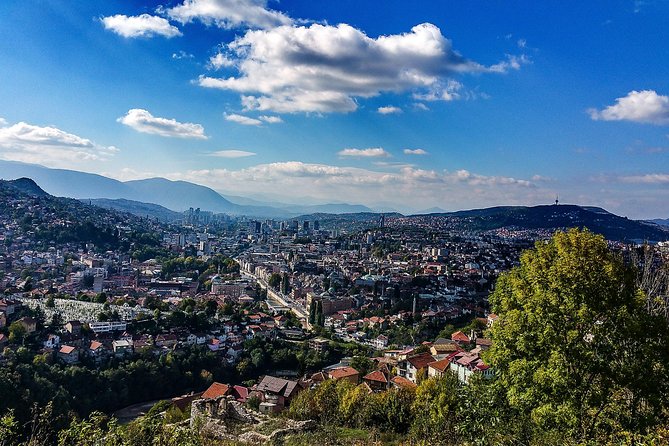
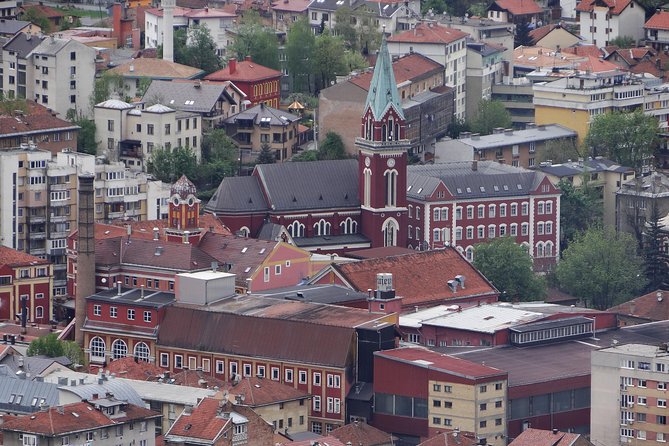
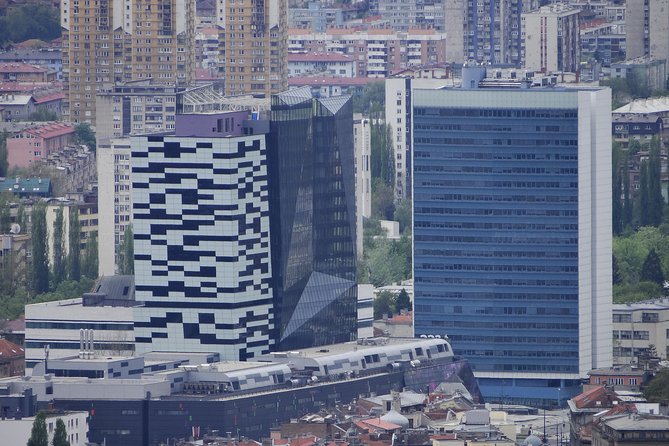
Begin at the Yellow Fortress, where you get a broad view across the Sarajevo valley. This opening stop lasts about 20 minutes, but it does an important job: it gives you the map in your head before the tour moves into the details.
From up here, the city’s position becomes clear. Sarajevo lies in a long valley, with steep hills around it. During the siege, those heights were not just scenic viewpoints. They were military positions, and they helped explain how the city could be surrounded and exposed to fire.
I find this kind of opening far more useful than starting with a list of dates. Once you can see the valley, the later stops make more sense. You can picture the roads, slopes, neighborhoods, and exposed crossings that shaped daily life.
The introduction also covers the breakup of Yugoslavia, the first attacks on Sarajevo, and the wider war in Bosnia and Herzegovina. The guide explains the early days of the city’s attack, the sniper-street crossings, and the long civilian protests against the war.
One supplied description refers to around 4,500 days of civilian protesting during the war period in Bosnia and Yugoslavia. The wording is unusual, so I would treat this as a broad reference to the long-running public resistance rather than a precise figure. The larger point is clear: civilians were not passive figures in the story. They protested, adapted, and tried to keep ordinary life going under extreme conditions.
More Sarajevo war and siege history tours:
- Fall of Yugoslavia, Sarajevo War Tour with Tunnel of Hope Museum and Frontlines
★ 5.0 · 1,314 reviews - Tunnel Museum: Bosnian & Yugoslav Wars Tour with War Veteran
★ 5.0 · 551 reviews - Sarajevo War Tour: A Veteran’s Story of the Siege (fees included)
★ 5.0 · 326 reviews
Seeing the siege through Faruk’s memories
Faruk is one of the most important parts of this experience. He lived through the war as a young teenager, so his explanations are not limited to military movements or political events. He can speak about what the siege meant to people living inside the city.
That personal element changes the tone. You are not simply looking at a former military line or a damaged structure. You are listening to someone explain the human effect of being trapped, exposed, and cut off.
Faruk is also described as friendly, humorous, and thoughtful. That balance matters. A tour about Sarajevo’s war years should be serious, but it does not need to be grim every minute. A guide who can handle painful material with warmth and restraint makes the experience easier to absorb.
Because this is a private tour, you can ask questions without worrying about holding up a large group. You can also spend more time on a subject that matters to you, though the listed schedule means the guide still has to keep the morning moving.
The Tunnel of Hope and Sarajevo’s only lifeline
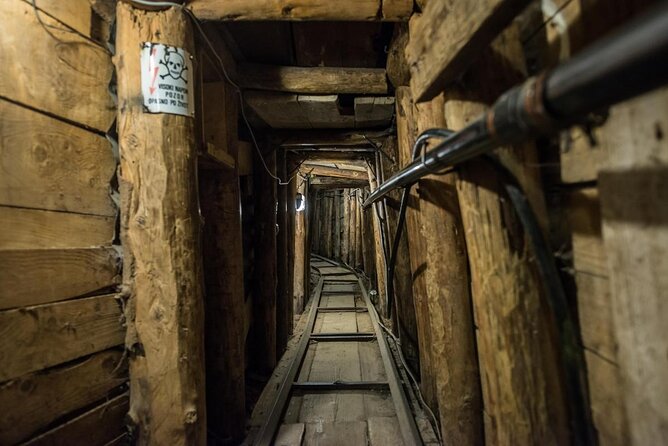
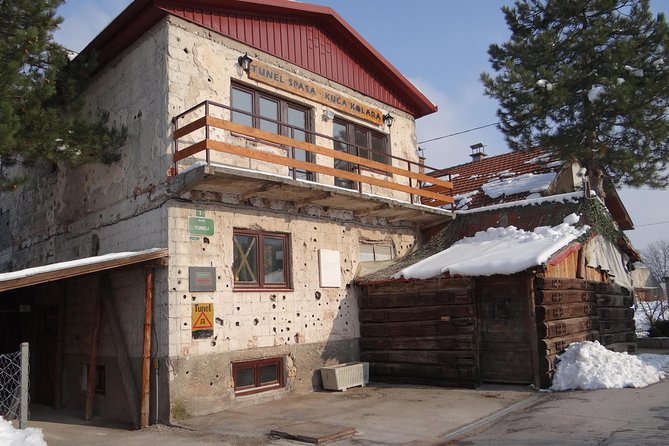
The Sarajevo War Tunnel is the central stop. You spend about an hour here, including the entrance visit and the explanation of how the tunnel functioned during the siege from 1993 to 1995.
The tunnel was described as Sarajevo’s only blood line during the siege. It provided the city’s only connection out toward the rest of Bosnia and the wider world. That makes this stop more than a museum visit. It helps you understand the practical problem of isolation.
A city under siege needs food, medicine, communication, and a way to move people and supplies. The tunnel offered a narrow route when the normal roads were blocked or dangerous. Even without adding details not provided by the tour, the basic significance is plain: this passage was a vital link for a city cut off from normal movement.
You should budget for the separate entrance fee of €10 per person. The tour price is $47.66 per person, but the tunnel admission is listed as an additional cost. That changes the final amount, especially if you are booking for several people.
The hour here is a sensible allocation. You need time for the site itself and for the guide’s explanation of why it mattered. If you rush through the tunnel, you miss the point. If you want a broad overview of Sarajevo rather than a single-site visit, the combination of the tunnel and the hilltop viewpoints gives you much more context.
Trebević Vidikovac and the view from the war line
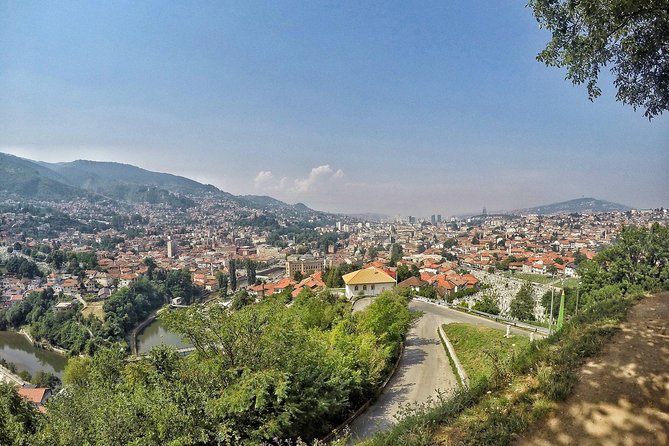
Trebević Vidikovac provides another high viewpoint over Sarajevo. The listed stop lasts about 15 minutes, so expect a short pause rather than a long walk or extended lookout visit.
The value of this stop is visual. From the viewpoint, the city’s position within the valley becomes clear again, but from another angle. The tour uses the site as a former war-line viewpoint, allowing Faruk to explain how the surrounding heights related to the city below.
I like having two elevated stops in the same morning because one view can never explain the full shape of Sarajevo. The Yellow Fortress introduces the valley, while Trebević helps reinforce the sense of enclosure and distance.
The trade-off is time. Fifteen minutes is enough for orientation and photographs, but not enough for a relaxed visit. If you are hoping for a long mountain outing, this tour is not designed for that. You are here to understand the military geography, then move on.
A few more Sarajevo day trips to weigh up
- Sarajevo: Mostar, Konjic, Blagaj Tekke, Pocitelj & Waterfall
★ 4.9 · 1,335 reviews - Sarajevo: Mostar, Konjic, Sufi House, Pocitelj & Kravice Falls
★ 5.0 · 1,179 reviews - ROSES OF SARAJEVO (Official WAR + CITY tour)- Story of a Survivor
★ 5.0 · 770 reviews - Sarajevo: Mostar, Konjic, Počitelj, Sufi House, & Waterfalls
★ 4.9 · 572 reviews
Walking the Olympic bobsled and luge track
The Olympic bobsled and luge track is the longest outdoor stop, at about 50 minutes. Before the war, it was associated with Sarajevo’s Olympic period. During the siege, it became part of the war line.
The tour describes this as an adventure walk, so you should expect to explore the track on foot rather than simply stop for a quick photograph. The setting links two very different chapters of Sarajevo: international sport and wartime conflict.
That contrast gives the location its force. An Olympic venue suggests competition, visitors, and a city looking outward. A war line suggests danger, division, and restricted movement. Walking through the space helps you see how quickly a familiar public place can take on a military role.
This is also the part of the tour that may appeal most to people who want to move around rather than sit in a vehicle or listen at indoor sites. The walk lasts nearly an hour, so practical footwear is sensible, even though the available information does not specify the exact trail conditions.
Do not expect the bobsled track to function as a polished Olympic attraction. Its value here is as a wartime location and a physical place to walk through while hearing how the siege changed its use.
The Jewish Cemetery and the first sniper fire
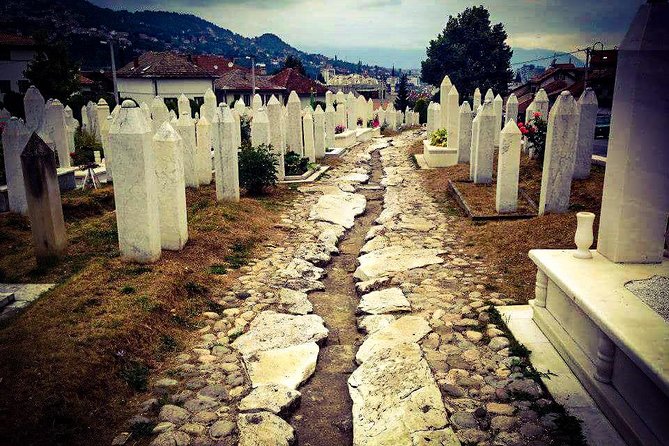
The Jewish Cemetery is another short but important stop, scheduled for about 20 minutes. The tour connects it with sniper positions and the first sniper shots aimed at civilians.
This site helps explain why crossing Sarajevo could be so dangerous. A cemetery on a hillside is not simply a historic place in this context. Its position made it part of the military view over the city and part of the story of civilians exposed to sniper fire.
I appreciate the inclusion of this stop because it takes the tour beyond famous landmarks. The Tunnel of Hope is the best-known location in the program, but a cemetery and sniper position can show the war from a more local, immediate angle.
The visit is brief, so expect an explanation and a focused stop rather than a long cemetery tour. Its impact comes from the location and the subject Faruk discusses, not from a large number of exhibits or activities.
What the $47.66 price really covers
At $47.66 per person, this is reasonably priced for a private tour lasting three to four hours, particularly if hotel or accommodation pickup saves you the trouble of arranging transport between several sites.
The price is more attractive when you consider the spread of the route. You are not paying for one museum and a short walk. You are visiting several locations across Sarajevo and its surrounding hills, with transport and a guide who can connect them into one account.
Still, the extra €10 Tunnel of Hope entrance matters. Include it in your budget before booking. The advertised price also does not mean every possible expense is covered, since the tunnel admission is specifically excluded.
A private format is useful here. Sarajevo’s siege story raises sensitive questions, and you can ask Faruk to explain a location in more detail or clarify how one site relates to another. A large group may cost less, but it can make a personal subject feel more rushed.
The tour is offered in English and begins at 8:30 in the morning. Pickup is available from hotels and private accommodations, provided you give the operator the name or address in advance. Confirmation is normally received at booking, although bookings made within 10 hours of departure are subject to availability.
Who will get the most from this tour
I would choose this experience if you want a focused explanation of Sarajevo’s siege and prefer to see places connected to the events rather than spend the morning inside a general museum.
It suits you particularly well if:
- You want a guide with direct personal experience of the war.
- You learn best through views, streets, and physical sites.
- You have only part of a day available.
- You want a private tour instead of a large shared group.
- You are comfortable with difficult wartime subject matter.
- You want the Tunnel of Hope included in a wider route.
It may be less suitable if you are looking for a light sightseeing tour, a relaxed mountain walk, or a broad introduction to every period of Sarajevo’s past. The focus is firmly on the siege years, the breakup of Yugoslavia, civilian life, sniper danger, and the city’s survival.
Most people can participate, and the experience is near public transportation. The supplied information does not provide detailed accessibility notes for each site, so you should ask the operator if you have specific mobility needs, especially for the bobsled track walk or tunnel visit.
Timing, weather, and cancellation details
The morning starts at 8:30, with pickup arranged from your hotel or private accommodation. The route takes about three to four hours, depending on the pace and conditions.
The experience requires good weather. If poor weather causes cancellation, you are offered another date or a full refund. It also requires a minimum number of participants, and if that requirement is not met, you are offered another date, another experience, or a full refund.
You can cancel for a full refund up to 24 hours before the start time. Changes or cancellations made less than 24 hours before departure are not accepted and are not refunded.
Should you book Sarajevo Siege Times?
I would book this tour if you want the war years explained through Sarajevo’s actual geography and you value a guide who can speak from personal experience. Faruk’s presence gives the route a human scale, while the mix of viewpoints, tunnel, cemetery, and Olympic track keeps the morning varied.
The strongest reason to go is the connection between the stops. The Yellow Fortress and Trebević show how the city was surrounded. The Jewish Cemetery and other sniper locations explain the danger of movement. The Tunnel of Hope shows how Sarajevo maintained a link with the outside world. The bobsled track adds a striking reminder that ordinary civic spaces can become war zones.
Just remember the €10 tunnel fee, the serious subject matter, and the brisk schedule. If those suit your plans, this is a valuable private introduction to Sarajevo’s siege, with enough personal detail to make the places difficult to forget.
FAQ
How long does the Sarajevo siege tour last?
The experience lasts approximately three to four hours.
What time does the tour begin?
The tour starts at 8:30 am.
Is hotel pickup available?
Yes. Pickup is available from hotels and private accommodations. You need to provide the hotel name or accommodation address in advance.
Is the tour offered in English?
Yes. The tour is offered in English.
Is this a private tour?
Yes. Only your group participates in the private activity.
Which places does the tour visit?
The route includes the Yellow Fortress, Sarajevo War Tunnel, Trebević Vidikovac, Sarajevo Olympic Bobsleigh and Luge Track, and the Jewish Cemetery.
Is admission to the Tunnel of Hope included?
No. The Tunnel of Hope entrance costs €10 per person and is listed as an additional expense.
What is the tour price?
The listed price is $47.66 per person.
Can most people participate?
Yes. The available information states that most people can participate. Detailed accessibility information for each stop is not provided.
Can I cancel for a full refund?
Yes. You can cancel up to 24 hours before the experience start time for a full refund. Cancellations made less than 24 hours before the start are not refunded.
Just added around Sarajevo
- Strbacki Buk and Una Waterfalls: Day Trip from Sarajevo★ 5.0 · 3 reviews
- Bosnian Kingdom Capitals: Travnik & Jajce Tour from Sarajevo★ 5.0 · 3 reviews
- Walking Tour in Sarajevo★ 5.0 · 3 reviews
- MTB Bjelasnica – Lukomir★ 5.0 · 3 reviews
- Sarajevo Under Siege: A City’s Struggle & Survival Tour★ 5.0 · 3 reviews
- Herzegovina Tour from Sarajevo: Mostar, Počitelj, Blagaj, Kravice★ 5.0 · 3 reviews
- Travnik, Jajce, Pliva Lakes & Mills –Medieval & Ottoman Bosnia Full Day Tour★ 5.0 · 3 reviews
- Tour of Herzegovina – From Sarajevo★ 5.0 · 3 reviews
Sarajevo Tours, compared.
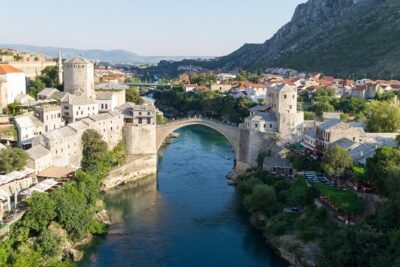
Sarajevo: Mostar, Konjic, Blagaj Tekke, Pocitelj & Waterfall
Read our review →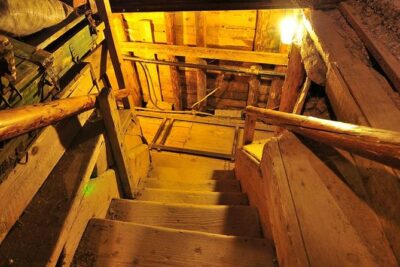
Fall of Yugoslavia, Sarajevo War Tour with Tunnel of Hope Museum and Frontlines
Read our review →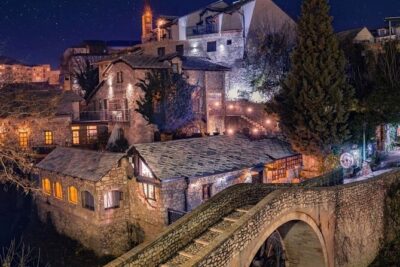
Sarajevo: Mostar, Konjic, Sufi House, Pocitelj & Kravice Falls
Read our review →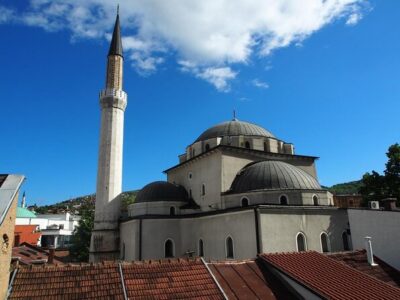
Sarajevo: 2 Hours Old Town Walking Tour With Local Guide
Read our review →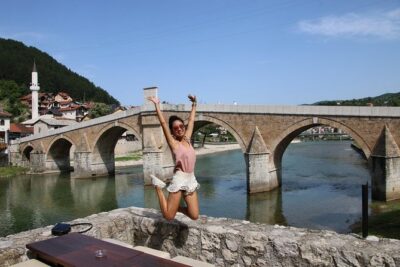
Sarajevo: Mostar, Konjic, Dervish House, Pocitelj & Kravica Falls
Read our review →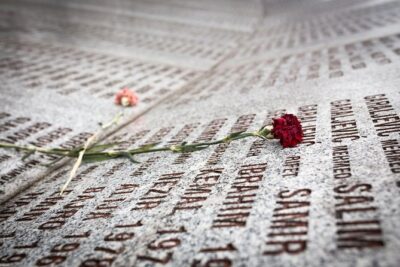
From Sarajevo: Srebrenica Genocide Memorial Study Tour
Read our review →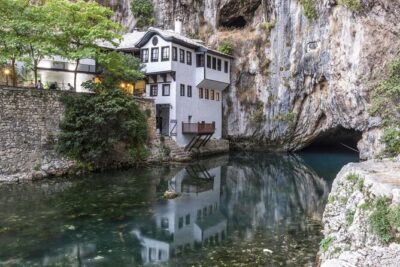
Mostar,Kravica Waterfall,Blagaj,Počitelj – Day Tour from Sarajevo
Read our review →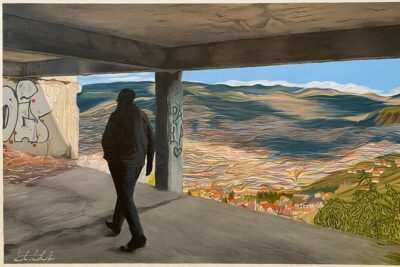
Sarajevo War Tour: A Veteran’s Story of the Siege (fees included)
Read our review →Browse the lists this tour appears in