
Reviewed · SARAJEVO TOURS
Sarajevo Grand Tour: Old Town, War Tunnel, Olympic Sites & More
Sarajevo’s past comes at you from every direction on this tour: Ottoman courtyards, Austro-Hungarian streets, war scars, and a mountain bobsleigh track all fit into one half-day. The War Tunnel and Olympic sites give the city’s recent past a physical setting, not just a story told from a sidewalk.
I like the hotel pickup and private-vehicle transport, which save you from working out Sarajevo’s hills and scattered sights yourself. I also like the mix of walking and driving: you get time in the Old Town, then reach Trebević, the cemetery, and the tunnel without wasting your day on taxis. The main caution is timing. Some departures have lasted closer to three hours, so confirm the schedule if seeing every stop matters to you.
Key points at a glance
- See Sarajevo in two different ways: walk the Ottoman Old Town, then drive through war sites and up to the Olympic mountain.
- The War Tunnel takes about an hour: expect a short film, a presentation, and a walk through part of the tunnel.
- Trebević adds a memorable change of mood: the abandoned Olympic bobsleigh and luge track makes striking photographs.
- Hotel pickup is included: transport is by private vehicle, with groups capped at 15 people.
- Bosnian coffee is part of the plan: it is served at Morica Han, though the exact coffee experience can vary.
- Allow extra money for the tunnel: the listed admission charge is €10.50 per booking, while tips are not included.
A fast, useful introduction to Sarajevo
At $47.06 per person, this is a strong value if you have only one full day or want an orientation before exploring alone. You see the central sights on foot, then cover places that are too spread out or steep to handle comfortably in a short visit.
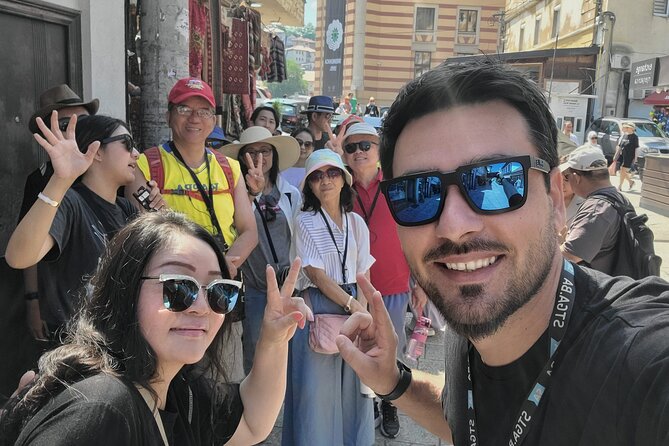
The tour begins at 9 a.m. with pickup at your hotel lobby or another location in Sarajevo. Your guide introduces the city’s position, population, climate, demographics, and basic history before leading you toward City Hall. Guides who have led this route include Elvis, Enes, Edis, Zulfo, and Adnan. Availability of a particular guide is not guaranteed, but the strongest descriptions consistently point to warm storytelling, clear explanations, good driving, and plenty of local context.
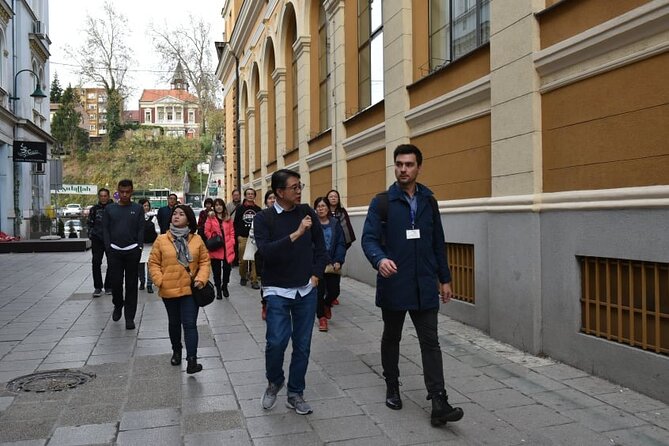
This is not a quiet museum tour. You move through working streets, food lanes, places of worship, markets, and neighborhoods marked by the 1992 to 1995 siege. You should be comfortable walking for part of the morning and climbing or navigating uneven surfaces at some stops.
More Sarajevo war and siege history tours:
- Fall of Yugoslavia, Sarajevo War Tour with Tunnel of Hope Museum and Frontlines
★ 5.0 · 1,314 reviews - Tunnel Museum: Bosnian & Yugoslav Wars Tour with War Veteran
★ 5.0 · 551 reviews - Sarajevo War Tour: A Veteran’s Story of the Siege (fees included)
★ 5.0 · 326 reviews
City Hall and the Miljacka River
The first section begins outside Sarajevo City Hall, known locally as Vijećnica. You see the grand Austro-Hungarian facade from outside, then walk toward the Miljacka River and the Seher Cehaja Bridge.
Across the water sits Inat Kuća, the Spite House. Its story is a compact lesson in Sarajevo’s character, showing how local pride pushed back against a grand city-building project. The stop is brief, but it helps you read the riverfront as more than a collection of pretty buildings.
You do not spend a long time inside any single landmark here. That is useful if your goal is orientation, but less useful if you want detailed interior visits. Think of this part as a visual introduction before the Old Town streets become narrower and more intimate.
Baščaršija, coppersmiths, and the food streets
Crossing the river brings you into the pedestrian heart of the Old Town. Kazandžiluk is the coppersmith street, where workshops continue a craft closely linked with Sarajevo’s Ottoman-era identity.
The guide takes you into one coppersmith shop for a short presentation. This is one of the tour’s better small touches because you see how the craft is practiced rather than simply passing rows of souvenir shops. Keep your expectations sensible: the presentation lasts about 15 minutes, not an extended workshop.
Nearby, Locksmith Street is now known for food. This is where you hear about or can seek out ćevapi, burek and other pita dishes, sweets, and coffee. The tour does not list a full meal as included, so bring cash if you want to eat. A guide may also help point you toward a good bite, and one guide made an unscheduled burek stop when the group needed food.
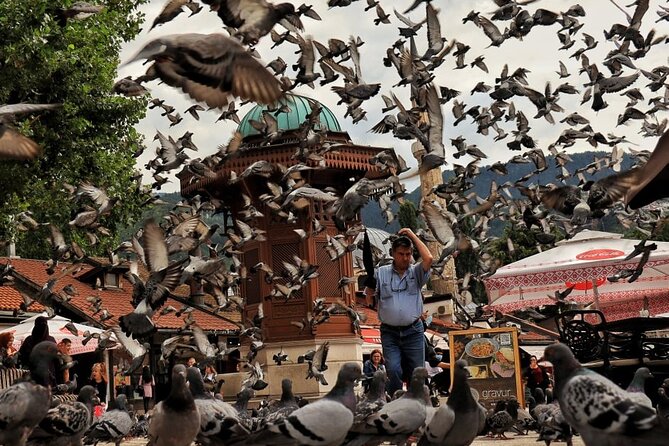
Baščaršija’s Sebilj fountain marks the main square. The fountain has offered water to people passing through for centuries and remains the natural meeting point in the Old Town. It is a quick stop, but you will likely want time afterward for photographs and a closer look at the surrounding lanes.
Morica Han and the Bosnian coffee pause
From the square, you walk along the main promenade, passing small shops, restaurants, cafes, and souvenir stalls. Then you enter Morica Han, a 16th-century Ottoman caravanserai once used by merchants and their animals.
The courtyard offers a welcome break from the street. Here, the guide serves traditional Bosnian coffee and explains local customs. The coffee is prepared in a small džezva and traditionally poured with care, often alongside a sweet treat. You should treat this as a cultural pause rather than a caffeine stop. The point is learning how the coffee is served and enjoyed.
One practical note: the coffee experience has not happened on every departure. Most descriptions of the route include it, but one account specifically reported that it was missed. If this matters to you, ask the guide early in the tour when and where it will take place.
A few more Sarajevo day trips to weigh up
- Sarajevo: Mostar, Konjic, Blagaj Tekke, Pocitelj & Waterfall
★ 4.9 · 1,335 reviews - Sarajevo: Mostar, Konjic, Sufi House, Pocitelj & Kravice Falls
★ 5.0 · 1,179 reviews - ROSES OF SARAJEVO (Official WAR + CITY tour)- Story of a Survivor
★ 5.0 · 770 reviews - Sarajevo: Mostar, Konjic, Počitelj, Sufi House, & Waterfalls
★ 4.9 · 572 reviews
Gazi Husrev-beg Mosque and the Ottoman center
The garden of Gazi Husrev-beg Mosque gives you a closer look at Sarajevo’s Islamic heritage. The complex includes the mosque, minaret, sadrvan fountain, Islamic school, and a lunar clock tower.
The guide explains Gazi Husrev-beg’s role and the place of the mosque in the Old Town. The scheduled visit is mainly an outside look at the garden and buildings. Entry inside the mosque is not included, and the experience may not pause for admission unless the group agrees to pay and has enough time.
That limitation is worth knowing before you book. You still see the setting and hear the story, but anyone hoping for an interior visit should arrange a separate return visit. Modest clothing is sensible around religious sites, even for an outside stop.
Latin Bridge and the Sarajevo assassination
At Latin Bridge, the guide connects Sarajevo to the event that helped trigger the First World War. You see the bridge and the place associated with the assassination of Archduke Franz Ferdinand and Sophie in 1914.
The stop also passes an old public toilet dating from the 16th century that is still in use. It is a wonderfully ordinary detail beside a site of global importance, and it fits Sarajevo’s habit of placing major history next to daily life.
The bridge stop lasts around 15 minutes. That is enough for the basic story and a few photographs, but not a full historical lecture. If you want to study the assassination in detail, save that for a museum or a later walk.
Bezistan, Tašlihan, and the meeting of cultures
The route continues past Tašlihan, the remains of a large caravanserai, and Hotel Europe. You then see Gazi Husrev-beg’s Bezistan, a covered 16th-century market.
This area helps explain why Sarajevo became a trading center between Ottoman east and Austro-Hungarian west. The covered market is still a useful place to notice the change in scale and architecture as the city shifts from Ottoman lanes to later European streets.
At the Sarajevo Meeting of Culture marker, the guide points out the line where east meets west. It is a simple visual idea, but an effective one. Within a short walk, you can see Islamic, Jewish, Orthodox Christian, and Catholic landmarks, along with the commercial streets that connect them.
Jewish Museum, Cathedral, Markale, and the city’s shared memory
The outside of the 16th-century synagogue that houses the Jewish Museum introduces the story of Sarajevo’s Jewish community and the Sarajevo Haggadah. The guide also discusses the city’s tradition of people from different faiths living close together.
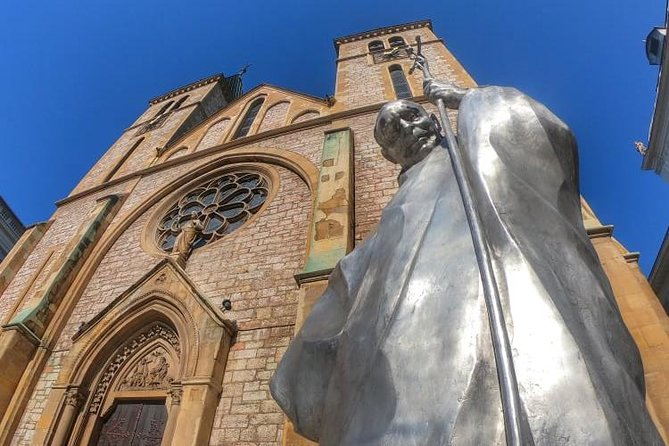
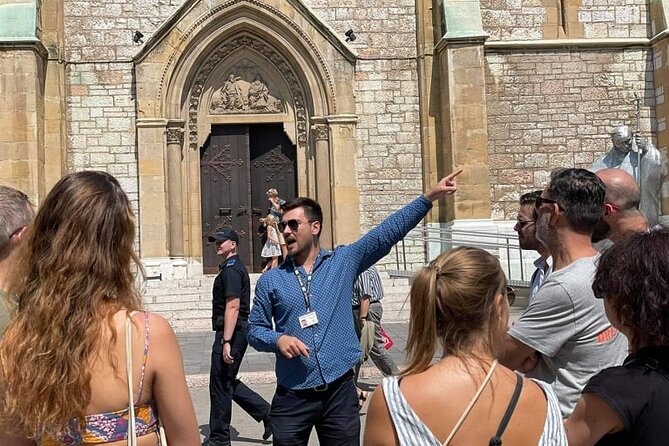
The walk then follows Ferhadija promenade to the Sacred Heart Cathedral. Outside, you see Sarajevo roses, marks in the pavement made to remember mortar explosions, and the statue of Pope John Paul II. These details give the war period a human scale without separating it from the city’s older religious life.
At Markale Market, the guide explains the massacres during the 1992 to 1995 war. The stop is brief and sober. You are looking at a functioning market that also carries painful memory, so give yourself time to take in the place respectfully.
The tour also passes the old hamam and the Serbian Orthodox Cathedral from outside. Because all these stops are close together, the walking section builds a clear picture of Sarajevo as a city where communities and eras overlap within a few blocks.
The War Tunnel and the siege of Sarajevo
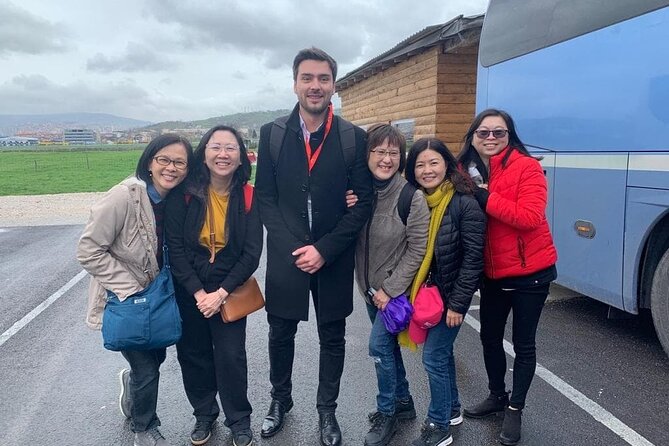
After the Old Town, you board the private vehicle and pass Sniper Alley on the way toward the Sarajevo War Tunnel. The drive crosses into the Republika Srpska entity and passes Sarajevo Airport before reaching the museum.
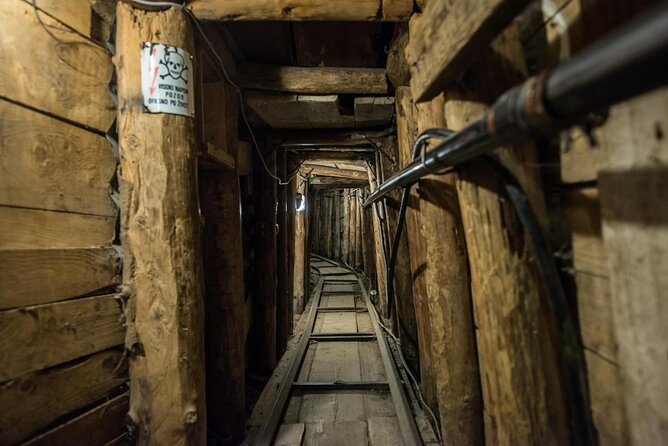
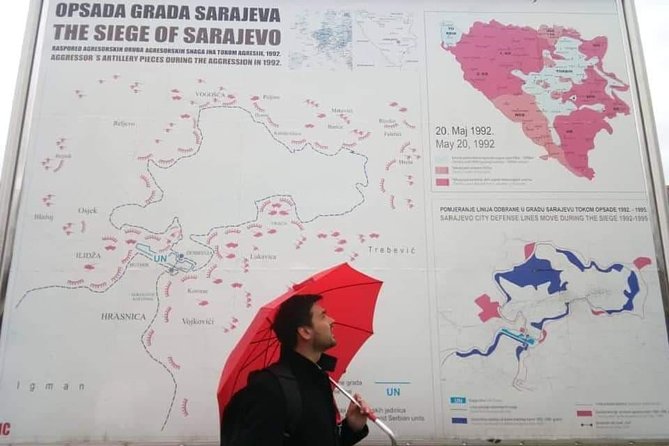
This is the emotional center of the tour. The tunnel was built during the siege to connect besieged Sarajevo with the outside world. At the museum, you watch a short film, hear a presentation, and walk through part of the tunnel itself.
The listed visit takes about one hour. Admission is not included, with a stated charge of €10.50 per booking. Check the amount when booking because entrance fees can change, and carry the right payment method if the operator requires it.
The tunnel section is compact, not a vast museum complex. Its value comes from the physical space and the guide’s explanation of how the siege affected ordinary life. Guides such as Enes and Elvis have been praised for adding personal context and using photographs to explain what you are seeing. You should expect serious subject matter, not a light sightseeing stop.
Trebević and the Olympic bobsleigh track
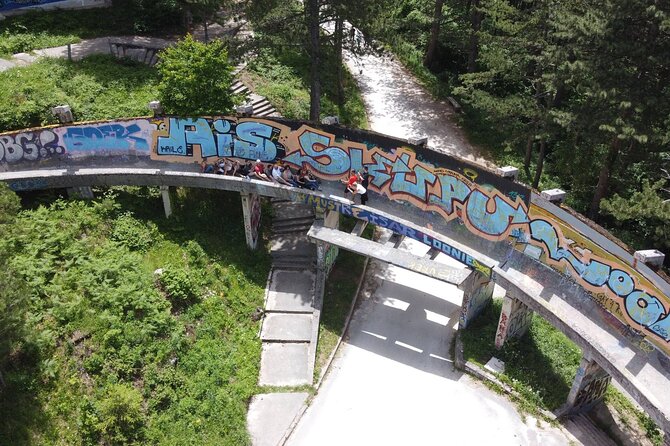
From the tunnel, the vehicle climbs Trebević Mountain in roughly 15 to 20 minutes. The mountain was part of Sarajevo’s 1984 Winter Olympics, but the old bobsleigh and luge track now carries a very different atmosphere.
You make a short walk to the track, with time for photographs. War frontlines ran across the mountain, and the concrete course shows both the Olympic past and the damage of later years. It is one of the tour’s most visually memorable places.
The walk can be affected by weather. One departure reportedly drove farther up because of rain, rather than following the planned walk through the forest. That may save effort in poor conditions, but it can also shorten the intended walking portion. Wear shoes you can manage on uneven ground and bring a layer, since mountain weather may differ from the city center.
Jewish Cemetery, sniper positions, and the Yellow Fortress
The descent passes through Sarajevo’s mahalas, or hillside neighborhoods, before reaching the Jewish Cemetery. From here, you look down toward the city center and Sniper Alley from a wartime sniper position.
The stop includes the cemetery, the view toward the city, and a reference to the War Hotel. It is a powerful way to understand Sarajevo’s bowl-shaped setting and why the surrounding hills mattered so much during the siege. The guide’s explanation is essential because the view alone cannot tell you what happened there.
The final major stop is Yellow Fortress. Along the way, you pass Skenderija Olympic Hall and the Ashkenazi Synagogue. From the fortress, Sarajevo spreads below you, making this the best broad view of the city on the route.
The vehicle then drops you in the Old Town. That final drop-off is handy because you can continue with lunch, shopping, or your own museum visits without finding your way back from a distant hill.
What the price includes, and what it does not
At $47.06 per person, the tour offers a lot of coverage for the price. You receive hotel pickup, private-vehicle transport, a local English-speaking guide, bottled water, and Bosnian coffee. A group can contain up to 15 people, though some departures may be much smaller or even operate as a private experience if few people book.
The price is especially useful if you would otherwise need separate taxis to the War Tunnel, Trebević, Jewish Cemetery, and Yellow Fortress. It also gives you a guide for the war sites, where context matters more than simply taking photographs.
You still need to budget for tunnel admission and tips. Food is not listed as included, so pay separately for ćevapi, burek, sweets, or extra coffee. Mosque entry is also not included according to the tour information and departure experience.
The advertised duration is about five hours. Several accounts describe roughly five to five and a half hours, while one departure lasted only three hours. That is the main issue I would clarify before booking. Ask the operator to confirm that the full Old Town walk, tunnel, Trebević, cemetery, and Yellow Fortress are all planned for your date.
Who should book this Sarajevo tour
I would choose this tour if you are visiting Sarajevo for the first time, have limited time, or want the city’s Ottoman, Austro-Hungarian, religious, Olympic, and wartime stories connected in one day.
It suits people who prefer a guide for difficult history and want transport to the outlying sights. It also works well for families and older members of a group, provided everyone can manage the walking portions. A six-year-old was kept engaged on one departure, and a guide helped a group of seniors with currency exchange, showing how much the experience can depend on the individual guide.
You should think twice if you want long interior visits, a slow food tour, or plenty of unplanned time. Most stops are short, and the route covers a great deal. The reward is breadth, not a leisurely examination of each building.
The tour is offered in English. Confirmation is sent at booking, and cancellation is free up to 24 hours before the start time. The operator requires a minimum number of participants, so a cancellation for that reason should result in another date or a full refund.
Should you book the Sarajevo Grand Tour?
Book it if you want a strong first look at Sarajevo and value efficient transport. The combination of Baščaršija, Gazi Husrev-beg Mosque, Latin Bridge, Markale, the War Tunnel, Trebević’s bobsleigh track, Jewish Cemetery, and Yellow Fortress gives you a useful map of the city in one morning and afternoon.
I would be most inclined to book when Elvis, Enes, Edis, Zulfo, or Adnan is available, based on the consistently warm and personal accounts attached to those guides. Since you may not be able to select a name, confirm the tour length and included stops instead.
This is a good-value introduction, not a substitute for returning to the Old Town, entering museums, or spending a full day with Sarajevo’s war memorials. Plan to walk, keep the schedule in mind, and ask about the coffee and mosque visit at the start. If you do that, the tour gives you both the city’s postcard views and the harder stories that make Sarajevo worth understanding.
FAQ
What is the price of the Sarajevo Grand Tour?
The listed price is $47.06 per person.
How long does the tour last?
The advertised duration is approximately five hours. Some departures have lasted about five to five and a half hours, while one reported departure lasted three hours.
What time does the tour start?
The scheduled start time is 9 a.m.
Where does pickup take place?
Pickup is offered at the lobby of your hotel or another location in Sarajevo.
Is transportation included?
Yes. Transport is by private vehicle, and hotel pickup is included.
Is the War Tunnel admission included?
No. The listed tunnel admission charge is €10.50 per booking.
Is Bosnian coffee included?
Yes, Bosnian coffee is listed as included and is planned at Morica Han. The exact coffee experience can vary by departure.
Does the tour enter Gazi Husrev-beg Mosque?
The mosque stop is primarily an outside visit. Entry is not included, and an interior visit may require the group to pay an additional fee and allow enough time.
How large is the group?
The maximum group size is 15 people. If only one or two people book, the tour may operate as a private experience.
Is the tour offered in English?
Yes, the tour is offered in English.
Can children join the tour?
Yes. Children must be accompanied by an adult, and most participants can take part.
What is the cancellation policy?
You can cancel up to 24 hours before the start time for a full refund. Changes or cancellations made less than 24 hours before the start are not accepted for a refund.
Just added around Sarajevo
- Strbacki Buk and Una Waterfalls: Day Trip from Sarajevo★ 5.0 · 3 reviews
- Bosnian Kingdom Capitals: Travnik & Jajce Tour from Sarajevo★ 5.0 · 3 reviews
- Walking Tour in Sarajevo★ 5.0 · 3 reviews
- MTB Bjelasnica – Lukomir★ 5.0 · 3 reviews
- Sarajevo Under Siege: A City’s Struggle & Survival Tour★ 5.0 · 3 reviews
- Herzegovina Tour from Sarajevo: Mostar, Počitelj, Blagaj, Kravice★ 5.0 · 3 reviews
- Travnik, Jajce, Pliva Lakes & Mills –Medieval & Ottoman Bosnia Full Day Tour★ 5.0 · 3 reviews
- Tour of Herzegovina – From Sarajevo★ 5.0 · 3 reviews
Sarajevo Tours, compared.
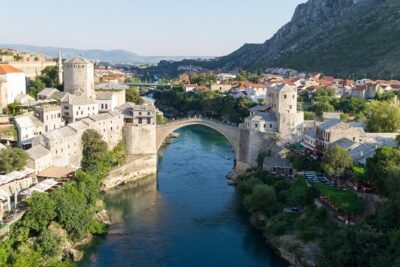
Sarajevo: Mostar, Konjic, Blagaj Tekke, Pocitelj & Waterfall
Read our review →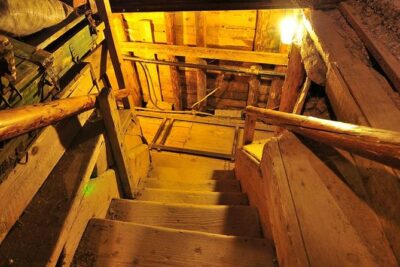
Fall of Yugoslavia, Sarajevo War Tour with Tunnel of Hope Museum and Frontlines
Read our review →
Sarajevo: Mostar, Konjic, Sufi House, Pocitelj & Kravice Falls
Read our review →
Sarajevo: 2 Hours Old Town Walking Tour With Local Guide
Read our review →
Sarajevo: Mostar, Konjic, Dervish House, Pocitelj & Kravica Falls
Read our review →
From Sarajevo: Srebrenica Genocide Memorial Study Tour
Read our review →
Mostar,Kravica Waterfall,Blagaj,Počitelj – Day Tour from Sarajevo
Read our review →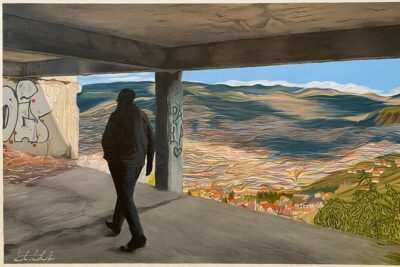
Sarajevo War Tour: A Veteran’s Story of the Siege (fees included)
Read our review →Browse the lists this tour appears in