
Reviewed · SARAJEVO TOURS
Eat, Pray, Love Tour
Sarajevo’s story is packed into a few walkable streets, and this four-hour tour gives you a useful first look at the city’s Ottoman, Austro-Hungarian, Catholic, Orthodox, and Jewish sides. You’ll visit the Latin Bridge, historic mosques, the old market, City Hall, and the famous Spite House, with Bosnian coffee and burek along the way.
I like the way the route connects major sights with small cultural stops, especially Kazandžiluk’s coppersmith street and the Tomb of the Seven Brothers. I also like the guide-led storytelling. Guides including Elsa, Irfan, Rijad, and Suad have been praised for explaining Sarajevo clearly and adding personal insight.
The main caution is that this is a city and culture walk with two food tastings, not a full food tour. One food-related complaint cited poor quality, and another person hoped for more tastings. You’ll also need to pay 13 BAM, about €7, for entry to three sites.
Key points about Sarajevo’s four-hour walking tour
- Four hours on foot: The route stays in central Sarajevo and ends where it begins, at Zelenih beretki 30.
- Many faiths in one walk: You visit Catholic, Islamic, Jewish, and Orthodox landmarks within a compact area.
- Two included tastings: Bosnian coffee with baklava and a burek tasting are part of the price.
- Useful guide personalities: Elsa, Irfan, Rijad, and Suad have each received especially warm praise for clear explanations and friendly service.
- Extra entry cost: The Bey’s Mosque, synagogue, and Old Orthodox Church require a combined 13 BAM admission package.
- Small-group format: The maximum group size is 20, though solo bookings may sometimes receive a private tour.
Why this is a smart first walk in Sarajevo
At $36.97 per person, the tour is priced like a reasonably accessible introduction rather than a luxury outing. You receive a certified guide, a city map, and two food and drink tastings. The route also covers a wide range of places that would be easy to pass without understanding.
I especially like the way the tour sets Sarajevo’s cultures beside one another. You may begin with the Latin Bridge, one of the city’s best-known historical markers, then move toward mosques, churches, a synagogue, Ottoman commercial buildings, and Austro-Hungarian architecture. The point is not to rush through a checklist. It is to show how the city’s identity was formed by several traditions living close together.
The pace is fairly full. Some stops last only two or three minutes, while the main visits and tastings take 20 or 30 minutes. That means you get a broad orientation, but you will not have long to study every building. I recommend using this as your first Sarajevo walk, then returning later to the places that catch your eye.
The tour begins at 10 a.m. and lasts about four hours. Wear comfortable shoes and clothes. Sunglasses and a camera are sensible, since much of the experience takes place outdoors on paved streets and open squares.
A few more Sarajevo day trips to weigh up
- Private Walking Tour, Food Tasting and Bosnian Coffee in Sarajevo
★ 5.0 · 255 reviews - Sarajevo: 4-Hour Food And Craft Tour
★ 5.0 · 70 reviews - Delicious Sarajevo: Eat, Walk & Discover City Tour
★ 4.5 · 37 reviews
From the Latin Bridge to Sarajevo’s oldest stories
Your meeting point is Insider City Tours and Excursions at Zelenih beretki 30. The first stop is the Latin Bridge, where the guide explains its name and its place in Sarajevo’s story. The stop is brief, only about three minutes, so expect an introduction rather than a long bridge-side talk.
The route then reaches Jedileri, known as the Tomb of the Seven Brothers. This quiet memorial is tied to local legend and historical memory. It gives the tour an early change of pace. Instead of only seeing grand buildings, you pause at a modest place where belief and neighborhood tradition matter.
Saint Anthony Catholic Church follows. It is a useful reminder that Sarajevo’s religious story is not limited to Islam. The church represents Catholic heritage within a city where several faiths have long shared the same urban space.
A short stop at Sarajevska Pivara adds another angle. The guide explains the story of the first brewery in the Ottoman Empire. You spend only about two minutes here, so this is more of a striking fact and exterior view than a brewery visit.
Ottoman Sarajevo at the Emperor’s and Gazi Husrev-beg Mosques
The Emperor’s Mosque is described as Sarajevo’s oldest mosque, with Ottoman architecture and centuries of spiritual importance. The visit is short, but it prepares you for the longer stop at Gazi Husrev-beg Mosque.
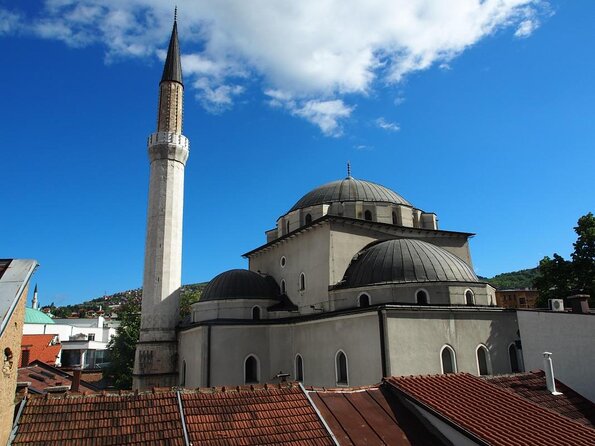
Gazi Husrev-beg Mosque receives about 30 minutes, making it one of the central visits of the morning. This is where the tour can give you more than a quick photograph. You’ll have time to look at the design, hear about the mosque’s place in Sarajevo’s Islamic life, and ask questions.
A guide makes a difference here. Irfan has been praised for detailed answers and a calm, personable manner. Elsa has also received strong praise for balancing historical information with personal stories, without burying the group in too many dates. That balance matters in Sarajevo, where a short walk can touch Ottoman rule, later European influence, religious life, and the more recent past.
The nearby Gazi Husrev Begova Medresa adds an educational side to the visit. This historic learning center is linked to Islamic scholarship and shows that the mosque complex was not simply a place of worship. It was also connected to study and public life.
The admission cost is not included at these sites. The entry package for the Bey’s Mosque, the synagogue, and the Old Orthodox Church costs 13 BAM, about €7, per person. Budget for it before you arrive, since the advertised tour price does not cover that package.
The Sarajevo Meeting of Culture and the Jewish Museum
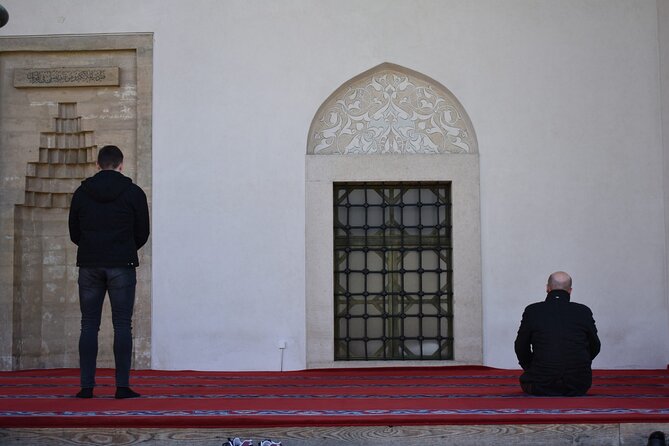
The Sarajevo Meeting of Culture is one of the route’s best orientation points. It marks the meeting of East and West, with the city’s Ottoman and Austro-Hungarian influences close together. The stop lasts only two minutes, but the guide can use it to help you read the city as you continue walking.
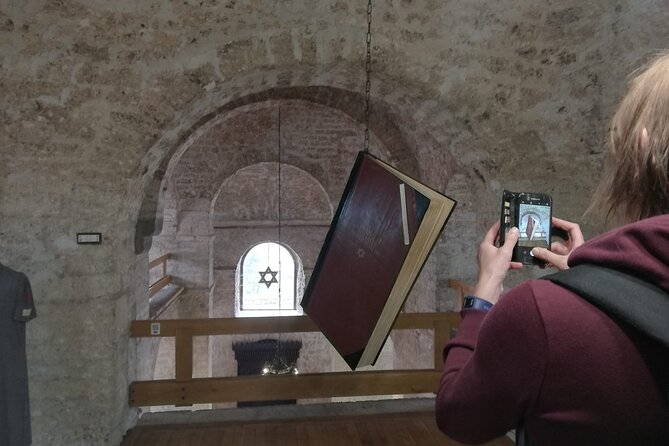
The Jewish Museum of Bosnia and Herzegovina receives about 20 minutes. It occupies one of the oldest synagogues in the Balkans and introduces Sarajevo’s Jewish heritage. This stop broadens the tour beyond the most familiar Muslim and Christian landmarks.
I value this part of the route because it keeps Sarajevo from being reduced to one era or one faith. You are shown a city shaped by several communities, with each site adding another piece. Still, 20 minutes is not enough for a full museum visit, so you may want to return independently if the subject interests you.
The synagogue is part of the 13 BAM entry package. Confirm the exact admission procedure with your guide at the start, especially if you plan to spend extra time at one of the included sites after the group moves on.
Same base, a completely different day out:
- Sarajevo: Mostar, Konjic, Blagaj Tekke, Pocitelj & Waterfall
★ 4.9 · 1,335 reviews - Fall of Yugoslavia, Sarajevo War Tour with Tunnel of Hope Museum and Frontlines
★ 5.0 · 1,314 reviews - Sarajevo: Mostar, Konjic, Sufi House, Pocitelj & Kravice Falls
★ 5.0 · 1,179 reviews - ROSES OF SARAJEVO (Official WAR + CITY tour)- Story of a Survivor
★ 5.0 · 770 reviews
Bosnian coffee, baklava, and a pause in Baščaršija
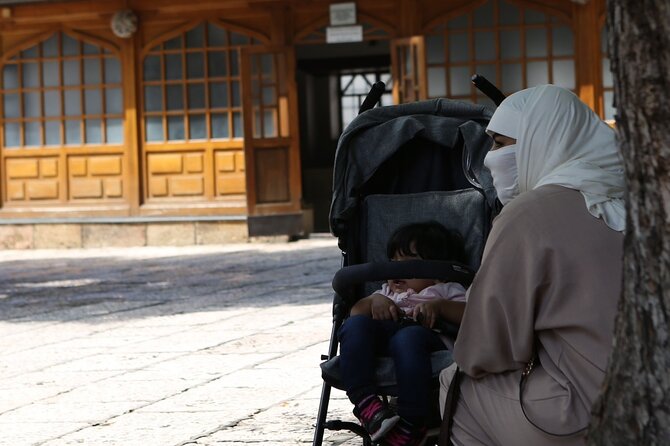
Baščaršija is the tour’s main food and market stop. Here you have a 30-minute coffee break with a Bosnian coffee tasting and baklava. This is not just a chance to sit down. It introduces a ritual that is central to daily life and gives your guide room to explain how the coffee is prepared and enjoyed.
I like that the coffee stop is built into the route rather than treated as an optional purchase. You can try a local drink, taste a sweet, and regain your energy before the walk continues.
Keep your expectations in check. This is one tasting, not a long sampling session. One person found the food quality disappointing, while another said the coffee and food stops were good but wished there had been more. The tour’s value comes from the cultural explanation and the city walk, not from the amount of food served.
Baščaršija also gives you time to watch the city work around you. The area is known for its traditional shops, small lanes, and Ottoman-era character. Your city map is useful here, since you may want to return later for shopping, more coffee, or a slower look at the market streets.
The Old Orthodox Church and Sebilj Fountain
The Old Orthodox Church is another important faith site, with Byzantine art and links to Sarajevo’s Christian heritage. The visit lasts about 10 minutes and requires part of the extra admission package.
This is one of the places where a guide’s explanation can help. The building may seem modest from outside, but its role in the city’s religious story is more important than its size suggests. You’ll have a short chance to see the interior and ask questions before the group moves on.
Next comes the Sebilj Fountain, the wooden fountain that has become one of Baščaršija’s most recognizable symbols. The stop lasts only two minutes, which is enough for a photograph and a quick explanation. If you want a quieter picture, be ready to step aside from the main flow of people and take your shot quickly.
The Old Orthodox Church and the Jewish Museum make the tour especially useful for anyone trying to understand Sarajevo’s religious mix. They also explain why the extra 13 BAM is worth considering if you want the route to feel complete.
Morica Han and the coppersmiths of Kazandžiluk
Morica Han is a former Ottoman caravanserai, a place where merchants and other road users once stayed. The stop is short, about five minutes, but it helps you picture Sarajevo as a trading center connected to wider Ottoman routes.
The route then reaches Kazandžiluk, the coppersmiths’ street. You spend about 20 minutes learning about traditional crafts that still exist in Sarajevo. This is one of my favorite parts of the plan because it connects the past with something you can see in the present.
Look at the shop fronts and the metalwork as you walk. You may find handmade pieces, decorative items, and practical objects for sale, but the tour does not promise a shopping session. The real benefit is learning how the craft fits into the character of the old market district.
This stop also gives the morning some texture. Grand mosques and museums explain the city’s history, while the craft street shows how old commercial traditions continue in everyday form.
Burek on Bravadžiluk Street
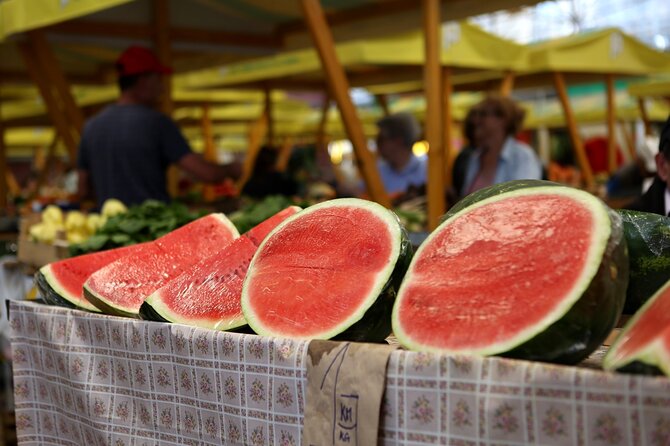
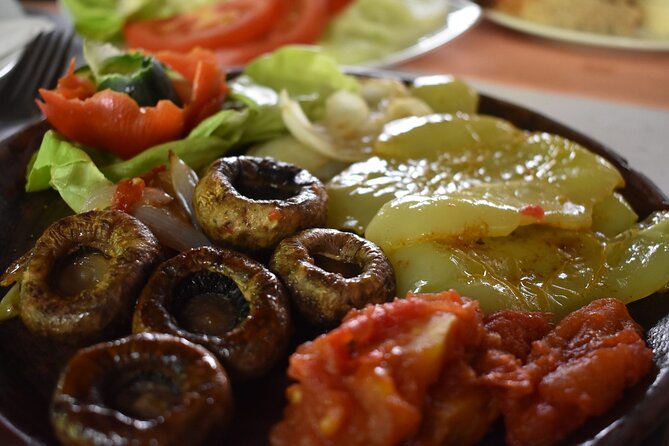
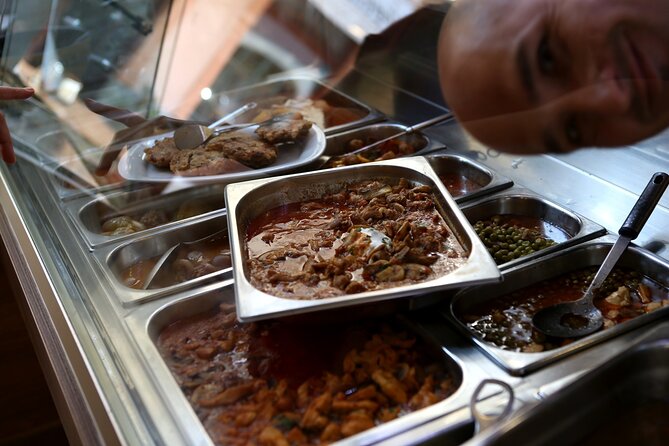
The second tasting comes on Bravadžiluk Street, with a 30-minute burek degustation. Burek is one of Bosnia’s best-known traditional foods, and this stop gives you a direct taste of local cooking rather than another explanation from a guide.
One particularly useful tip from the tour experience is that the guide may point you toward a highly regarded place for burek in Sarajevo. Rijad, for example, was praised for helping a first-time visitor get oriented and for making it easy to return to the old town independently the next day.
Again, this is a tasting rather than a full lunch tour. If you have a large appetite, you may want to plan another meal afterward. The timing puts the stop near the end of the four-hour route, so you can treat the burek as a light lunch or a sample before choosing where to eat more.
The food stop works best when you see it as part of the cultural lesson. Burek is not simply a dish to tick off. It is one of the simplest ways to connect the architecture and stories of the old town with daily life.
Sarajevo City Hall and the Spite House
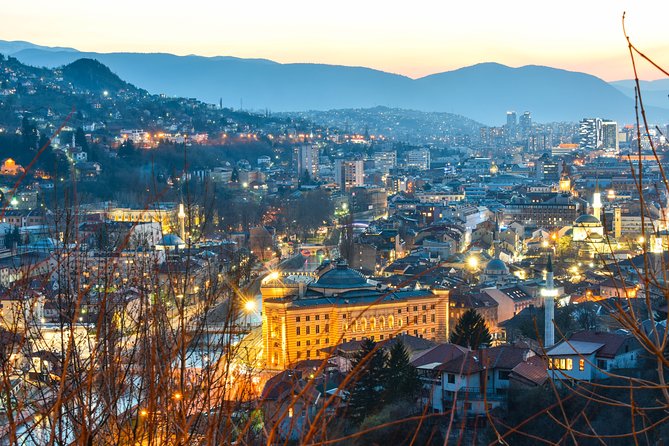
Sarajevo City Hall is the final major architectural stop. Its neo-Moorish style reflects the Austro-Hungarian period and gives you a clear contrast with the Ottoman buildings seen earlier. The planned visit lasts about 15 minutes, and admission is not included.
The last stop is Inat kuća, or the Spite House, across the river. Its story concerns a house that was moved to defy authority during the construction of City Hall. It is a small but memorable tale of stubbornness and local pride.
I like ending here because the story is easy to remember. After a morning of dates, religions, architectural styles, and political changes, the Spite House gives the tour a human punchline. Sarajevo’s past is not only found in official buildings. It also survives in stories about ordinary people pushing back.
The tour then returns to the original meeting point. Since there is no transport between stops, you finish with a practical sense of the central old town and can walk back to the sights that deserve a longer visit.
Guides, group size, and the value of the experience
The maximum group size is 20, which is manageable for a walking tour but not the same as having a private guide. Solo bookings may sometimes turn into private tours when few people book that morning. One person had that experience on December 31, with Suad leading the walk.
Guide quality appears to be one of the tour’s strongest features. Irfan was praised for answering questions in detail. Elsa was praised for warmth, humor, honest advice, and personal stories about the region’s recent past. Rijad was praised for never rushing a photographer and for helping a newcomer find the old town independently later.
There is one important counterpoint. A complaint described a guide with strong historical knowledge but weak people skills, along with disappointing food. That is a reminder that your experience can depend on the guide assigned and on your expectations for the tastings.
The tour has a 4.6 rating from 32 reviews, with 91 percent recommending it. Those figures suggest a strong overall record, but they do not remove the need to decide what kind of tour you want.
Who should book this Sarajevo tour?
I would choose this tour if you are visiting Sarajevo for the first time and want the city explained before exploring alone. It suits solo visitors, couples, and small groups who want a guided introduction without spending a full day on a large excursion.
It is also a good match if you care about religious history, Ottoman architecture, local crafts, and food traditions. The range of stops is broader than a simple old-town stroll, and the guide can help connect buildings that might otherwise seem unrelated.
I would skip it if your main goal is a serious food tour. You receive Bosnian coffee with baklava and burek, but there are only two planned tastings. I would also think twice if you dislike walking, quick exterior stops, or paying separate entry fees.
Book with free cancellation in mind, but cancel at least 24 hours before the 10 a.m. start for a full refund. The tour requires a minimum number of participants, and if that minimum is not met, you are offered another date or experience, or a full refund.
Final verdict: a useful first taste of Sarajevo
This is a strong introduction to Sarajevo at a fair price. The route gives you religious variety, Ottoman and Austro-Hungarian architecture, traditional crafts, two local tastings, and a guide who can make the city easier to understand.
The best reason to book is not the amount of food. It is the way the walk helps you get your bearings and shows why Sarajevo cannot be explained through one period or one community. If you want a four-hour orientation with local flavor, book it. If you want a dedicated food crawl or long museum visits, choose something more focused.
FAQ
How long does the Eat, Pray, Love Tour last?
The tour lasts approximately four hours. It begins at 10 a.m. and ends back at the meeting point.
Where does the tour start?
The meeting point is Insider City Tours and Excursions, at Zelenih beretki 30, Sarajevo 71000, Bosnia and Herzegovina.
What food and drinks are included?
The tour includes a Bosnian coffee tasting with baklava in Baščaršija and a traditional burek tasting on Bravadžiluk Street.
Are attraction admission fees included?
Most outdoor stops are free, but admission to the Bey’s Mosque, synagogue, and Old Orthodox Church is not included. The combined entry package costs 13 BAM, about €7, per person.
How large can the group be?
The tour can have a maximum of 20 participants. On some dates, a solo booking may result in a private tour if no one else has booked.
What happens if I need to cancel?
You can cancel at least 24 hours before the start time for a full refund. Cancellations or changes made less than 24 hours before the start are not refunded or accepted.
Just added around Sarajevo
- Strbacki Buk and Una Waterfalls: Day Trip from Sarajevo★ 5.0 · 3 reviews
- Bosnian Kingdom Capitals: Travnik & Jajce Tour from Sarajevo★ 5.0 · 3 reviews
- Walking Tour in Sarajevo★ 5.0 · 3 reviews
- MTB Bjelasnica – Lukomir★ 5.0 · 3 reviews
- Sarajevo Under Siege: A City’s Struggle & Survival Tour★ 5.0 · 3 reviews
- Herzegovina Tour from Sarajevo: Mostar, Počitelj, Blagaj, Kravice★ 5.0 · 3 reviews
- Travnik, Jajce, Pliva Lakes & Mills –Medieval & Ottoman Bosnia Full Day Tour★ 5.0 · 3 reviews
- Tour of Herzegovina – From Sarajevo★ 5.0 · 3 reviews
Sarajevo Tours, compared.
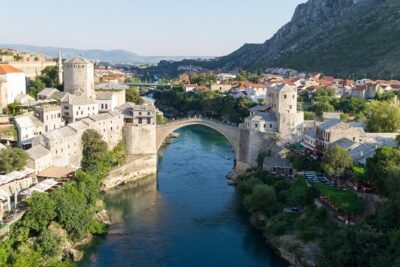
Sarajevo: Mostar, Konjic, Blagaj Tekke, Pocitelj & Waterfall
Read our review →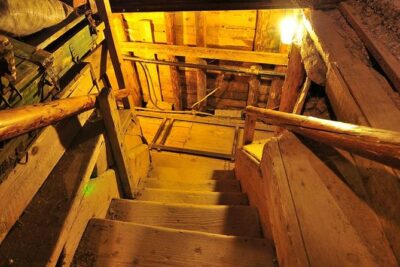
Fall of Yugoslavia, Sarajevo War Tour with Tunnel of Hope Museum and Frontlines
Read our review →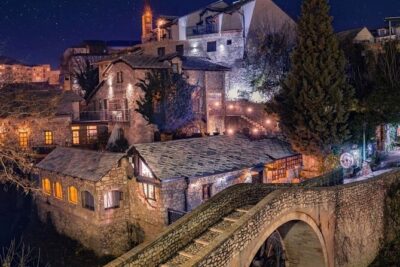
Sarajevo: Mostar, Konjic, Sufi House, Pocitelj & Kravice Falls
Read our review →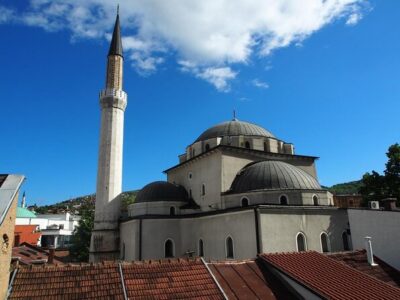
Sarajevo: 2 Hours Old Town Walking Tour With Local Guide
Read our review →
Sarajevo: Mostar, Konjic, Dervish House, Pocitelj & Kravica Falls
Read our review →
From Sarajevo: Srebrenica Genocide Memorial Study Tour
Read our review →
Mostar,Kravica Waterfall,Blagaj,Počitelj – Day Tour from Sarajevo
Read our review →
Sarajevo War Tour: A Veteran’s Story of the Siege (fees included)
Read our review →Browse the lists this tour appears in