
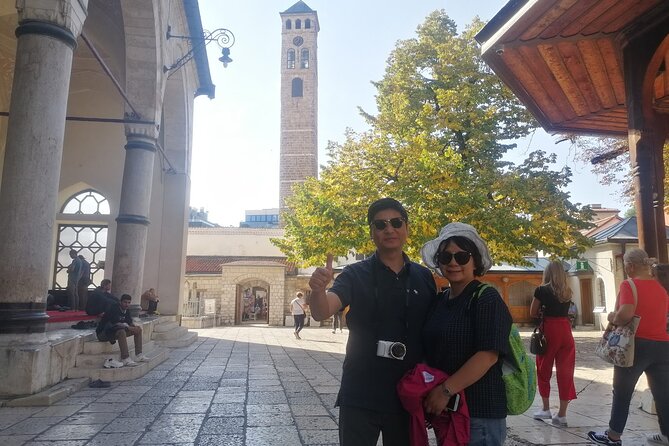
Reviewed · SARAJEVO TOURS
Sarajevo for beginners
Sarajevo’s story is packed into a remarkably small area. In about two hours, this walking tour moves from the Catholic cathedral and Serbian Orthodox church to Ottoman markets, mosques, bridges, City Hall, and the spot where the assassination of Archduke Franz Ferdinand helped change the world. It is a quick way to understand why Sarajevo feels like several cities sharing one valley.
I especially like the cross-cultural route, which treats Sarajevo as a meeting place of faiths and empires rather than reducing it to one chapter of history. I also like the personal touch: Cooltour’s Samra is known for warm, witty guiding, excellent English, useful restaurant and sightseeing advice, and showing you how Bosnian coffee fits into local life. The main drawback is the pace. With 17 named stops in roughly two hours, most places receive a short explanation rather than a long visit.
Key points at a glance
- Four traditions in one walk: See Catholic, Orthodox, Islamic, and Jewish landmarks within Sarajevo’s compact center.
- The 1914 assassination site: Connect the Latin Bridge area with the event that set off a chain of world-changing events.
- Ottoman Sarajevo up close: Walk through Gazi-Husrev Beg’s Bezistan, Kazandžiluk, Baščaršija, and the mosque quarter.
- Local guides make the difference: Samra and Irfan are among Cooltour’s guides, with Samra receiving especially warm praise for her humor, insight, and personal approach.
- Coffee is part of the experience: Bosnian coffee or tea is included, along with practical advice for the rest of your stay.
- Small-group format: The group is limited to 18 people, and the tour returns to its starting point.
Starting at Sarajevo’s cathedral
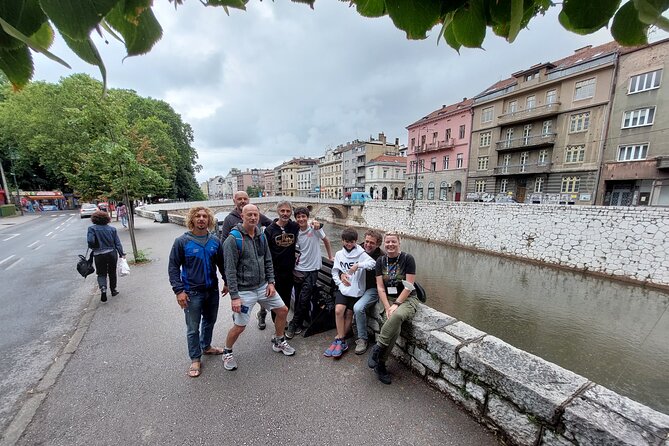
Meet at Trg fra Grge Martića at 9:00 a.m., beside the Cathedral of the Sacred Heart of Jesus. The opening stop gives you an immediate lesson in Sarajevo’s mixed religious makeup. The cathedral is described as simple but beautiful, and its clean design offers a calm starting point before the walk turns into a denser sequence of streets, stories, and monuments.
From there, you visit the Orthodox Church of the Nativity of the Theotokos. This Serbian Orthodox church adds another piece to the city’s religious picture. The tour allows about 10 minutes at each of these first two stops, so expect an outside explanation and a brief look rather than an extended church visit. Admission is not included at any of the listed stops.
That short format works well if you want orientation on your first morning. It is less suitable if your priority is detailed art, architecture, or quiet time inside every building.
A few more Sarajevo day trips to weigh up
- Sarajevo: Mostar, Konjic, Blagaj Tekke, Pocitelj & Waterfall
★ 4.9 · 1,335 reviews - Fall of Yugoslavia, Sarajevo War Tour with Tunnel of Hope Museum and Frontlines
★ 5.0 · 1,314 reviews - Sarajevo: Mostar, Konjic, Sufi House, Pocitelj & Kravice Falls
★ 5.0 · 1,179 reviews
From Hotel Europe to Sarajevo’s old trade center
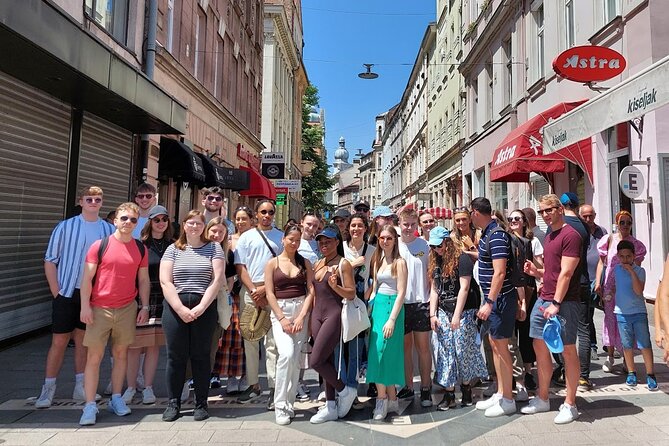
Hotel Europe brings the Austro-Hungarian period into the walk. It is presented as Sarajevo’s first hotel and the oldest in Southeast Europe. The stop lasts about five minutes, enough to understand its place in the city’s development and to see how grand European-style institutions entered a town still shaped by Ottoman planning.
Nearby Tašlihan survives only in remains. This former trading inn once served merchants and goods moving through Sarajevo. The ruins are not a grand sight on their own, but they help you picture the commercial life that once filled this part of town. A guide’s explanation matters here because the remains require context.
Next comes Gazi-Husrev Beg’s Bezistan, an Ottoman covered market often described as Sarajevo’s original shopping mall. This is one of the tour’s most useful stops for understanding how the old city functioned. Sarajevo was not simply a collection of religious buildings. It was also a place of trade, craft, lodging, food, and daily business.
The brief stop lets you get your bearings before the route heads toward the most famous historical point on the walk.
The assassination site and the three-name bridge
The location of the Sarajevo assassination receives about 15 minutes, the longest allocation before City Hall and the Jewish Museum. This is sensible. The event needs more than a date and a name.
Here, you can connect the street corner, the Latin Bridge area, and the political crisis that followed the killing of Archduke Franz Ferdinand and Sophie in 1914. The guide’s job is to explain the setting without turning the entire city into a single assassination story. Sarajevo’s past is much broader, and this tour keeps moving to show that.
Latin Bridge is called the bridge with three names. That detail makes it more than a standard photo stop. Names change with politics, language, and memory, and the bridge gives your guide a natural way to explain how Sarajevo has been interpreted by different communities and governments.
The stop is allotted 10 minutes. You should have time for photographs and a clear explanation, but not for an extended museum-style discussion. If this is the part of Sarajevo you most want to study, plan a separate visit to related museums or historical sites.
Ottoman Sarajevo around the Emperor’s Mosque
The Emperor’s Mosque is identified as Sarajevo’s oldest mosque. Its position on the route helps explain the Ottoman foundations of the city. You then continue toward Inat kuća, a building tied to the idea of inat, a Bosnian notion of stubborn pride or defiance.
The tour uses Inat kuća to introduce a local character trait rather than just another architectural fact. That is a good choice. A city becomes easier to understand when you hear how people describe their own habits and sense of humor.
Seher Cehaja’s Bridge follows. It is described as Sarajevo’s oldest bridge, though also the second one built, a detail that invites explanation about earlier structures and the city’s changing crossings over the river. With only five minutes here, expect a compact story and a photograph.
The route then reaches Sarajevo City Hall, one of the more visually striking contrasts in the itinerary. Built during the Austro-Hungarian period, it sits in the old part of town and is said to fit surprisingly well beside Ottoman architecture. That contrast is one of Sarajevo’s great visual lessons: you do not need to travel far to see two major eras sharing the same street.
City Hall receives about 15 minutes. Admission is not included, so this tour does not promise an interior visit. The value here is the explanation of how Austro-Hungarian planning and architecture were placed inside an older Ottoman city.
Same base, a completely different day out:
- ROSES OF SARAJEVO (Official WAR + CITY tour)- Story of a Survivor
★ 5.0 · 770 reviews - Sarajevo: Mostar, Konjic, Počitelj, Sufi House, & Waterfalls
★ 4.9 · 572 reviews - Tunnel Museum: Bosnian & Yugoslav Wars Tour with War Veteran
★ 5.0 · 551 reviews - Sarajevo: 2 Hours Old Town Walking Tour With Local Guide
★ 5.0 · 505 reviews
Bravadžiluk, Kazandžiluk, and the craft streets
The walk continues with the story of Bravadžiluk Street before reaching Kazandžiluk. These streets are among the best places on the route to sense Sarajevo’s working traditions.
Kazandžiluk is described as one of the most authentic streets in the city. Its name is linked to coppersmithing, and the stop gives you a chance to see the kind of craft identity that still defines the old quarter. The tour allows about 10 minutes, enough to take in the street and learn why it matters.
This is also where a good guide can keep the walk from becoming a string of dates. Samra’s guiding style, as reflected in her work with Cooltour, leans toward stories, personal context, and humor. She is also known for giving practical suggestions for other places to visit and eat, which can make this early orientation useful beyond the two-hour route.
Do not expect a hands-on craft workshop or a dedicated shopping session. You are seeing the street as part of a city story, not booking a copper demonstration.
Sebilj and Baščaršija
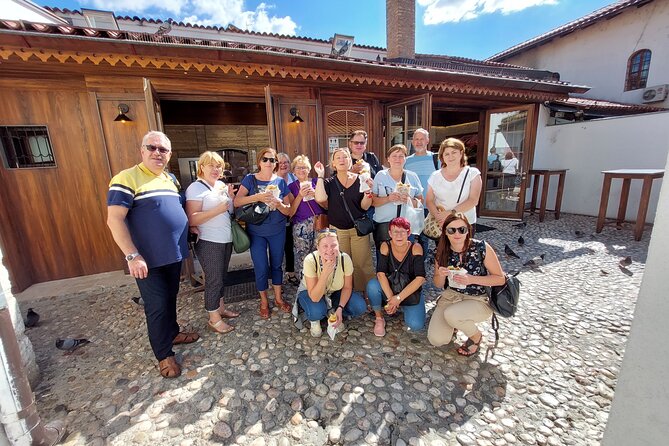
Sebilj is one of Sarajevo’s best-known meeting points and a natural gateway to Baščaršija. The stop lasts only five minutes, but the setting is central to the city’s daily identity.
Baščaršija itself receives about 10 minutes. As Sarajevo’s main square and the heart of the old bazaar district, it ties together many earlier stops: Ottoman trade, craft streets, religious buildings, coffee culture, and the city’s social life. If you have never visited Sarajevo before, this is the place that will likely help the whole route click.
The short time has an advantage. You get an overview before deciding where you want to return later. I would use the tour to mark cafés, shops, and streets for a second look, rather than trying to finish all your old-town exploring during the walk.
Morića Han and Gazi Husrev-beg Mosque
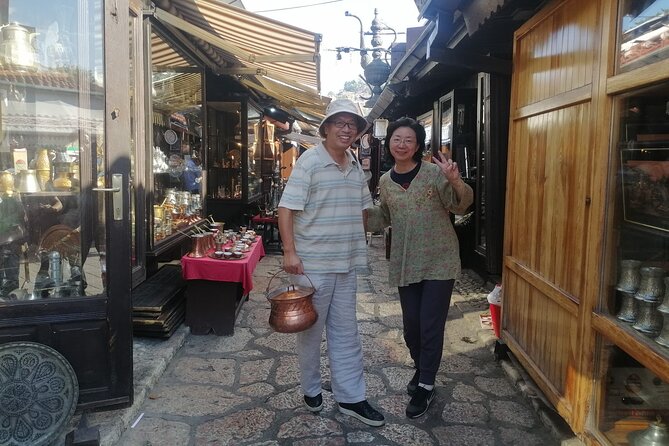
Fotokopirnica Morića Han is presented as one of the coolest places in Sarajevo. The name may sound unusual, and that is part of its appeal. The stop gives you a chance to hear about a historic han, or travelers’ inn, and how spaces in the old quarter have changed use over time.
The tour then reaches Gazi Husrev-beg Mosque, the central mosque in Sarajevo. This is one of the route’s most important Ottoman landmarks, both for its religious role and its place in the old city’s layout. The stop lasts about 10 minutes, and admission is not included.
The itinerary includes the phrase different time, different story before moving toward the Jewish Museum. That transition is important. Sarajevo’s identity cannot be explained by Ottoman history alone, and the next stop adds another community and another layer to the city’s past.
The Jewish Museum and Sarajevo’s many communities
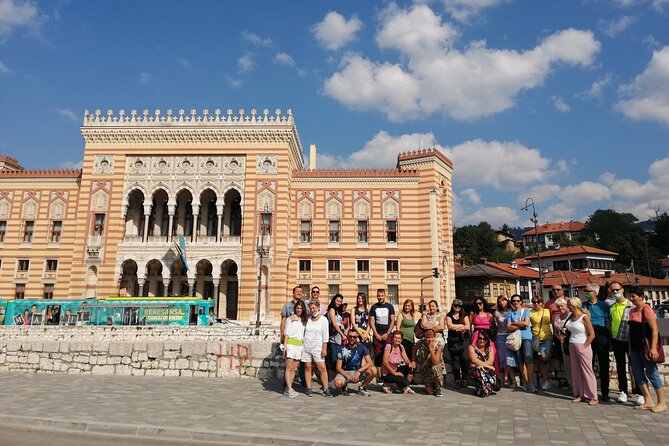
The Jewish Museum of Bosnia and Herzegovina receives about 15 minutes. The focus is on the square and the story of Jews in Bosnia and Herzegovina. This gives the tour a needed balance, placing Jewish life alongside the Catholic, Orthodox, and Muslim landmarks introduced earlier.
The tour does not list admission as included, so you should not assume that your ticket covers entry. The emphasis appears to be on the setting and the guide’s explanation, not an extended museum visit.
I like this ending because it leaves you with a fuller picture of Sarajevo. The city’s appeal is not just that several architectural styles sit close together. It is that different communities have shaped the same streets, markets, bridges, and public spaces over time.
What the two-hour pace feels like
The stated duration is approximately two hours, with the route ending back at the meeting point. There are many stops, but most are short: five or 10 minutes, with more time at the assassination site, City Hall, and the Jewish Museum.
That makes this a city orientation walk, not a slow architectural tour. You will hear the essential story at each place, take photographs, and learn where to return. You will not have time to linger inside every church, mosque, museum, or historic building.
The group can include up to 18 people. That is still a manageable size for a walking tour, though the guide may need to gather everyone carefully at narrow streets and busy public areas. The experience is offered in English and includes a mobile ticket, coffee or tea, and no listed transportation.
Wear comfortable shoes. The information provided does not describe the walking surface or accessibility in detail, so you should ask the provider if you need specific mobility information. Most people can participate, and service animals are allowed.
Is $34.92 a fair price?
At $34.92 per person, this tour is priced as a modest introduction rather than a full-day historical program. You are paying for a local guide, a carefully arranged route through the city center, English commentary, coffee or tea, and the convenience of seeing many major landmarks without planning the sequence yourself.
The value is strongest on a first morning in Sarajevo. A good guide can point out details you would otherwise pass, explain how to order Bosnian coffee, and suggest places to explore after the walk. Samra’s approach is especially suited to people who want history mixed with practical advice and a relaxed sense of humor.
The value is weaker if you already know Sarajevo well or want admission to museums and monuments. Entry fees are not included, and the tour does not provide long visits at individual sites. Think of the price as paying for context and orientation, not a package of attraction tickets.
Who should book this walk?
I would choose it if you are visiting Sarajevo for the first time, especially if you want the city explained through its religious, commercial, political, and cultural connections. It suits solo visitors, couples, and small groups who prefer a local voice to a large coach tour.
It also works well for people who enjoy asking questions. Cooltour’s guides, including Samra and Irfan, are described as friendly, clear in English, and open to personal discussion. Samra in particular brings warmth, humor, and a strong connection to Sarajevo and Bosnia and Herzegovina.
I would choose another format if you want a museum-heavy day, private transportation, or extensive interior visits. The route is dense, and the two-hour limit means the guide must keep moving.
Should you book Sarajevo for beginners?
Book it if you want a smart first look at Sarajevo for a reasonable price. The route covers more than a dozen meaningful places, from the cathedral and Orthodox church to Baščaršija and the Jewish Museum, while the guide helps connect the pieces.
The best reason to book is the human element. With a guide such as Samra, you can expect more than directions and dates: you can get local advice, Bosnian coffee guidance, humor, and a personal reading of the city. Just remember that admissions are extra and the pace is brisk.
Free cancellation is available up to 24 hours before the 9:00 a.m. start. If the minimum number is not reached and the activity is canceled, you are offered another date or experience, or a full refund.
FAQ
Where does the tour start?
The tour starts at Trg fra Grge Martića, Trg Fra Grge Martića, 71000 Sarajevo, Bosnia and Herzegovina.
What time does the tour begin?
The scheduled start time is 9:00 a.m.
Where does the tour finish?
The activity ends back at the meeting point.
How long does the tour last?
The tour lasts approximately two hours.
What language is offered?
The tour is offered in English.
How much does the experience cost?
The listed price is $34.92 per person.
Is coffee or tea included?
Yes. Coffee and/or tea is included.
Are attraction admission tickets included?
No. Admission tickets are not included for the listed stops.
How large can the group be?
The maximum group size is 18 people.
Can I cancel for a full refund?
Yes. You can cancel at least 24 hours before the experience start time for a full refund. Changes or cancellations made less than 24 hours before the start are not accepted for a refund.
Just added around Sarajevo
- Strbacki Buk and Una Waterfalls: Day Trip from Sarajevo★ 5.0 · 3 reviews
- Bosnian Kingdom Capitals: Travnik & Jajce Tour from Sarajevo★ 5.0 · 3 reviews
- Walking Tour in Sarajevo★ 5.0 · 3 reviews
- MTB Bjelasnica – Lukomir★ 5.0 · 3 reviews
- Sarajevo Under Siege: A City’s Struggle & Survival Tour★ 5.0 · 3 reviews
- Herzegovina Tour from Sarajevo: Mostar, Počitelj, Blagaj, Kravice★ 5.0 · 3 reviews
- Travnik, Jajce, Pliva Lakes & Mills –Medieval & Ottoman Bosnia Full Day Tour★ 5.0 · 3 reviews
- Tour of Herzegovina – From Sarajevo★ 5.0 · 3 reviews
Sarajevo Tours, compared.
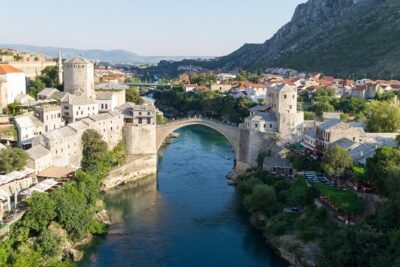
Sarajevo: Mostar, Konjic, Blagaj Tekke, Pocitelj & Waterfall
Read our review →
Fall of Yugoslavia, Sarajevo War Tour with Tunnel of Hope Museum and Frontlines
Read our review →
Sarajevo: Mostar, Konjic, Sufi House, Pocitelj & Kravice Falls
Read our review →
Sarajevo: 2 Hours Old Town Walking Tour With Local Guide
Read our review →
Sarajevo: Mostar, Konjic, Dervish House, Pocitelj & Kravica Falls
Read our review →
From Sarajevo: Srebrenica Genocide Memorial Study Tour
Read our review →
Mostar,Kravica Waterfall,Blagaj,Počitelj – Day Tour from Sarajevo
Read our review →
Sarajevo War Tour: A Veteran’s Story of the Siege (fees included)
Read our review →Browse the lists this tour appears in