
Reviewed · HISTORICAL TOURS IN SARAJEVO
Sarajevo Under Siege: A War History Tour
The most powerful part of this tour is the way Sarajevo’s war story moves from broad history to personal memory. At the Tunnel of Salvation, you walk through part of the narrow wartime passage that kept the besieged city supplied. At Zetra, your guide connects the conflict to his own childhood, family, street, and neighborhood.
I like two things here: the private format, which gives you room to ask difficult questions, and the mix of viewpoints. The White Fortress explains why Sarajevo mattered militarily, while Sniper Alley, Lukavica, and Sarajevo City Hall show how war affected daily life, politics, and culture. The main drawback is emotional rather than practical: this is a serious outing, with shelling, deaths, cemeteries, and destroyed buildings at its center.
Key points to know before booking
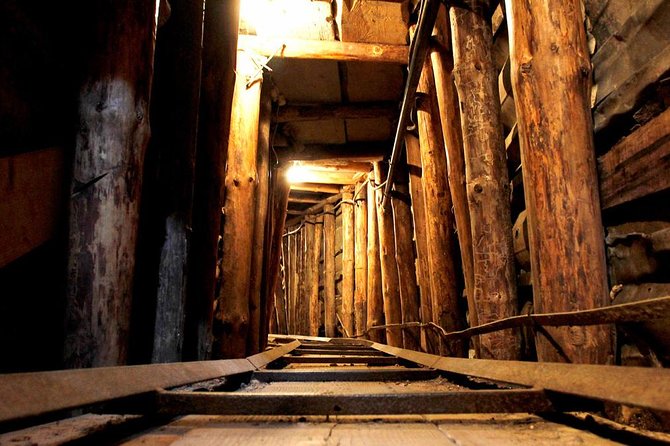
- The Tunnel of Salvation is the main historical stop: Allow about 80 minutes for the tunnel, wartime objects, and a short film.
- Personal stories shape the tour: At Zetra, your guide discusses growing up during the siege and points out the street where he played and the place where his father was buried.
- You see both sides of post-war Sarajevo: The route passes through Lukavica, now in Republika Srpska, and explains the city’s political division after Dayton.
- The private vehicle saves time: Air-conditioning, private transport, and WiFi make it easier to cover sites spread across Sarajevo.
- The advertised price is not the complete cost: The tour costs $30.10 per person, with an additional entrance fee of €10.25 for adults or €5.25 for students.
- It suits serious history-minded visitors: The subject matter is difficult, but the pace and three-hour length make it manageable for most people.
Why Sarajevo’s siege story needs more than a museum
Sarajevo’s 1992 to 1995 siege can be hard to grasp from a map or a short museum visit. The city is long and enclosed by hills, and those heights shaped the fighting. People below faced shelling and sniper fire while trying to collect water, find food, get to work, or reach medical care.
This tour helps you connect those facts to actual places. From the White Fortress, you can look across the city and understand its position in the valley. Later, when you pass Sniper Alley and the former front lines, the geography becomes part of the lesson.
I find that useful because the siege was not confined to one battlefield. It took place in streets, apartment blocks, hospitals, markets, libraries, and family homes. The route keeps returning to that fact.
The experience is also personal. One of the guides, Suvad, has shared his own wartime memories in Italian and English, while another guide named Evan is praised for using personal anecdotes to explain the conflict. Guide assignments can vary, so you should not assume one particular person will lead your departure. Still, the tour clearly depends on local knowledge and lived experience rather than a memorized list of dates.
More Historical Tours in Sarajevo
- East Bosnia & West Serbia UNESCO heritage day tour from Sarajevo
★ 5.0 · 55 reviews - Sarajevo Full Day Tour: History, Culture, Nature, War & Olympics
★ 5.0 · 27 reviews - Sarajevo genuine walking tour: Steps through history
★ 5.0 · 22 reviews
White Fortress gives you the city’s military setting
The tour begins at Bijela Tabija, or the White Fortress, one of Sarajevo’s best viewpoints. The fortress dates from the 16th century, and its elevated position gives you a wide look over the city.
The visit lasts about 30 minutes, with no admission ticket listed for this stop. That makes it a useful opening rather than a lengthy historical visit. Your guide explains Sarajevo’s strategic importance from the Ottoman period through the siege, giving you the basic setting before the tour turns to the 1990s.
Bring a layer if the weather is changeable. The stop is outdoors, and the value here comes from the view and the explanation rather than a large collection of exhibits. If you have already seen Sarajevo from another high point, this may feel familiar. Even so, it helps you see how the surrounding hills affected movement and military control.
I like starting here because it avoids dropping you straight into a list of tragedies. First, you get your bearings. Then the guide shows how the shape of the city influenced what happened to the people living below.
Zetra connects wartime history to a family
The Zetra stop is short, about 15 minutes, but it may be one of the most affecting parts of the experience. This is the neighborhood where your local guide lived during the war, near the former maternity hospital that was heavily bombed.
You hear about childhood under shelling, daily survival, and life in a city where ordinary errands could become dangerous. The guide also points out the street where he grew up and played. You visit the place where his father was buried.
That personal scale matters. A war tour can sometimes become too broad, with maps and political names replacing human experience. Here, the story comes back to a child, a family, and a familiar street. You are not simply hearing that civilians suffered. You are being shown where one family lived through it.
The stop may be difficult for some people. The subject is direct and personal, and the schedule leaves little time for a long pause. If you need distance from wartime memorials, tell your guide. Since this is a private activity, your group has more freedom to ask questions or take a quiet moment than it would on a large bus tour.
Sniper Alley shows how ordinary streets became dangerous
The drive along Sniper Alley adds a crucial daily-life detail. This main avenue was exposed to sniper fire during the siege. Crossing it could mean risking your life simply to reach water, food, work, or a safer area.
Today, modern buildings and normal traffic can make the street look unremarkable. That contrast is part of the point. The name carries the memory of a place where movement was watched and feared, even though it now functions as a city road.
You will spend much of this part in the vehicle, listening as the guide points out the route and explains what happened. Do not expect a preserved battlefield or a large memorial at every turn. The lesson is in the mismatch between the present-day street and its wartime role.
This is also where a private vehicle helps. The tour can cover more ground without asking you to navigate unfamiliar neighborhoods or rely on public transport between scattered sites. Air-conditioning is useful in warm weather, and onboard WiFi is included.
More Sarajevo war and siege history tours:
- Fall of Yugoslavia, Sarajevo War Tour with Tunnel of Hope Museum and Frontlines
★ 5.0 · 1,314 reviews - Tunnel Museum: Bosnian & Yugoslav Wars Tour with War Veteran
★ 5.0 · 551 reviews - Sarajevo War Tour: A Veteran’s Story of the Siege (fees included)
★ 5.0 · 326 reviews - Sarajevo 1425 days under the siege – War Tour
★ 5.0 · 170 reviews
The Tunnel of Salvation is the tour’s essential stop
The Tunnel of Salvation, also called the Tunnel of Hope, is the centerpiece of the visit. Built secretly beneath the airport runway in 1993, the passage linked Sarajevo with the outside world during the siege.
The tunnel carried food, medicine, and other supplies. It also offered a route for people trying to enter or leave the besieged city. The section open to visitors is narrow and only part of the original passage, but that limitation helps you understand the physical strain of moving through it.
Plan on about 80 minutes here. You walk through the surviving section, see wartime artifacts, and watch a short documentary about the siege. The entrance fee is not included in the listed tour price. Adults pay €10.25, while students pay €5.25.
Wear practical shoes and expect a confined space. The available information does not state the tunnel’s full accessibility details, so anyone with mobility concerns should ask the operator before booking. The stop is not about polished displays. It is about a crude, vital passage built under extreme pressure.
I would not skip this site. It explains how Sarajevo survived in practical terms. The city was not only shelled from the hills. It also had to find ways to keep food, medicine, information, and people moving. The tunnel makes that effort physical.
Lukavica explains the post-war divide
The route then passes through Lukavica, once part of the front line and now within Republika Srpska. This section shifts from wartime survival to the political shape Bosnia and Herzegovina took after the conflict.
Your guide explains the division between the Federation of Bosnia and Herzegovina and Republika Srpska. You also learn how the Dayton Peace Agreement reshaped the country and affected Sarajevo. Former front lines are pointed out along the way.
The route includes graffiti and murals that glorify wartime figures such as Ratko Mladić. Their presence shows that the war is not only a past event. Memory remains politically divided, and public symbols can still reflect sharply different views of what happened.
This can be a valuable part of the tour, but it needs careful listening. The subject is politically charged, and a short visit cannot explain every legal, ethnic, and constitutional detail. Ask your guide to clarify terms rather than trying to draw quick conclusions from one mural or neighborhood.
I appreciate that the tour does not stop in 1995. Sarajevo’s story did not become simple when the shooting ended. The city still deals with divided identities, competing memories, and the long work of reconciliation.
Sarajevo City Hall shows what cultural loss looks like
The final landmark is Sarajevo City Hall, or Vijećnica. Built in 1896 during the Austro-Hungarian period, the building once housed the National Library.
In August 1992, Serbian forces shelled the building. Almost two million books and manuscripts were lost in the fire. The restored structure now recalls both the destruction of Sarajevo’s cultural life and the effort to rebuild it.
This stop brings the tour back to the meaning of civilian places. The library was not a military target in the ordinary sense of the word. Its destruction attacked the written memory of a city and a country.
The building is also a useful contrast to the Tunnel of Salvation. One site represents survival through an improvised underground route. The other represents cultural destruction and restoration in a grand public building. Together, they show different kinds of damage caused by the war.
The tour ends back at the meeting point. Since Vijećnica is listed as the start point, you can plan to finish near the same central area even if you use hotel pickup at the beginning.
What the three-hour private format does well
Three hours is enough to cover the major sites without turning the day into a long military lecture. The route has a clear shape: viewpoint, personal neighborhood, wartime road, supply tunnel, former front line, and cultural landmark.
The private format is a real advantage. You can ask about family stories, the siege, the Dayton agreement, or the current political division without waiting for a large group to catch up. You can also tell the guide if you need more context at one stop and less at another.
Pickup is available from any hotel or location in Sarajevo city center. Pickup begins 15 minutes before the 1:30 pm start time. If you stay outside the center, additional arrangements can be made in advance.
The vehicle is air-conditioned and private, with WiFi onboard. Most people can participate, and the route is near public transport, although the private vehicle means you do not need to organize the connections yourself.
One small point to watch: the advertised cost is $30.10 per person, but that does not include the entrance charge. Add €10.25 if you are an adult or €5.25 if you are a student. For a private three-hour tour with transport, that can be good value, especially if you are sharing the vehicle with family or friends. Solo visitors should compare the full cost with a group option before booking.
Who will get the most from this Sarajevo tour
I would choose this tour if you want the siege explained by someone with a local connection to the events. The personal account at Zetra gives the experience a human center, while the Tunnel of Salvation supplies the physical evidence.
It is also a good first activity in Sarajevo for anyone who wants to understand the city before exploring its museums and neighborhoods alone. The White Fortress gives you the setting, and the vehicle covers places that are not all clustered in the old center.
This is less suitable if you want a light sightseeing outing. The tour includes death, shelling, bombed hospitals, graves, destroyed books, and divisive wartime symbols. It asks you to pay attention and think about how civilians lived.
Families with older children may find it useful, but the operator says only that most people can participate. The supplied information does not give a specific child age policy. If you are booking for young children, ask about the subject matter and the tunnel conditions first.
The English option is listed, and guides have also led tours in Italian. If you need another language, confirm it before paying.
Booking details and practical advice
The starting time is 1:30 pm, with pickup from central Sarajevo beginning 15 minutes earlier. The activity is offered as a private tour, so only your group participates.
The tour is often booked well in advance, with an average booking lead time of 29 days. That is a useful sign to plan ahead during busy periods, especially if you need a particular afternoon or pickup location.
Free cancellation is available up to 24 hours before the start time for a full refund. Changes or cancellations made less than 24 hours before the start are not accepted for a refund. The tour also depends on good weather and a minimum number of participants. If the operator cancels for either reason, you are offered another date or experience, or a full refund.
The experience provider is The Globe Balkans. Confirmation is received at booking, and the tour includes private transportation, an air-conditioned vehicle, and WiFi.
Should you book Sarajevo Under Siege?
Yes, if you want a focused and personal introduction to Sarajevo’s wartime past. The Tunnel of Salvation, the guide’s family story at Zetra, and the stop at Sarajevo City Hall give you more than a drive past historic sites.
Book with the right expectations. This is not a cheerful city tour, and the extra entrance fee raises the final price above the headline amount. But the private vehicle, small-group attention, local storytelling, and carefully linked stops make it a worthwhile choice for visitors who want to understand how the siege affected both daily life and Sarajevo’s identity.
FAQ
How long is Sarajevo Under Siege: A War History Tour?
The tour lasts approximately three hours.
What time does the tour start?
The tour starts at 1:30 pm. Pickup begins 15 minutes before the start time.
Is hotel pickup available?
Yes. Pickup is offered from any hotel or location within Sarajevo city center. If you stay outside the center, additional arrangements can be made in advance.
Is the tour private?
Yes. Only your group participates in this private activity.
Is the Tunnel of Salvation entrance fee included?
No. The entrance fee is listed separately at €10.25 per adult and €5.25 per student.
What is included in the tour price?
The price includes an air-conditioned vehicle, private transportation, and WiFi onboard.
More History Walks near Sarajevo
- SARAJEVO STREET ART TOUR (art, history & mystery) – sARTajevo!
★ 5.0 · 18 reviews - BOSNIAN PYRAMIDS TOUR (nature, history & archeology)
★ 5.0 · 17 reviews - Sarajevo: Jewish Heritage Tour
★ 5.0 · 13 reviews - Mostar War Heritage Walking Tour
★ 5.0 · 6 reviews
Just added around Sarajevo
- Strbacki Buk and Una Waterfalls: Day Trip from Sarajevo★ 5.0 · 3 reviews
- Bosnian Kingdom Capitals: Travnik & Jajce Tour from Sarajevo★ 5.0 · 3 reviews
- Walking Tour in Sarajevo★ 5.0 · 3 reviews
- MTB Bjelasnica – Lukomir★ 5.0 · 3 reviews
- Sarajevo Under Siege: A City’s Struggle & Survival Tour★ 5.0 · 3 reviews
- Herzegovina Tour from Sarajevo: Mostar, Počitelj, Blagaj, Kravice★ 5.0 · 3 reviews
- Travnik, Jajce, Pliva Lakes & Mills –Medieval & Ottoman Bosnia Full Day Tour★ 5.0 · 3 reviews
- Tour of Herzegovina – From Sarajevo★ 5.0 · 3 reviews
Historical Tours in Sarajevo, compared.
East Bosnia & West Serbia UNESCO heritage day tour from Sarajevo
Read our review →
Sarajevo genuine walking tour: Steps through history
Read our review →
SARAJEVO STREET ART TOUR (art, history & mystery) – sARTajevo!
Read our review →
BOSNIAN PYRAMIDS TOUR (nature, history & archeology)
Read our review →
Browse the lists this tour appears in