
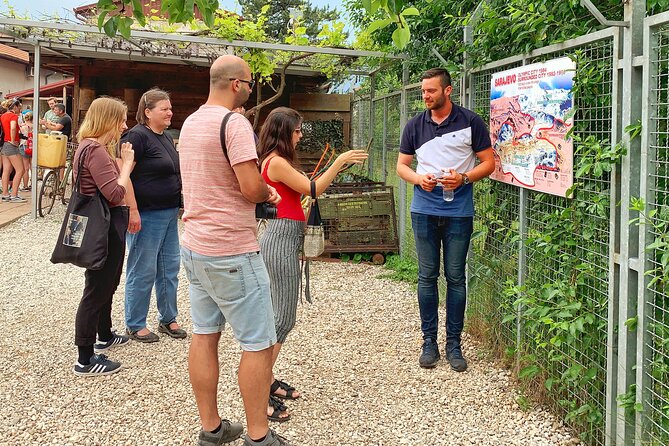
Reviewed · SARAJEVO TOURS
WAR TUNNEL – Sarajevo’s only way of a communication during the WAR – Top secret
Sarajevo’s Tunnel of Hope was the besieged city’s only working link with the outside world. On this tour, you do not just see a small museum room. You follow the route of the siege through Markale Market, Sniper Alley, City Hall, and the old town before walking through part of the 800-meter tunnel.
I like the mix of major wartime sites and personal storytelling, especially when guides such as Aid or Adna explain how ordinary families lived through the siege. I also like the simple logistics: hotel pickup, a professional driver, bottled water, and a licensed guide are included. The main drawback is that the tunnel museum entrance costs an extra 15 BAM, and the exact duration can stretch from about 1 hour 40 minutes to 2 hours 30 minutes.
Key points about Sarajevo’s Tunnel of Hope tour
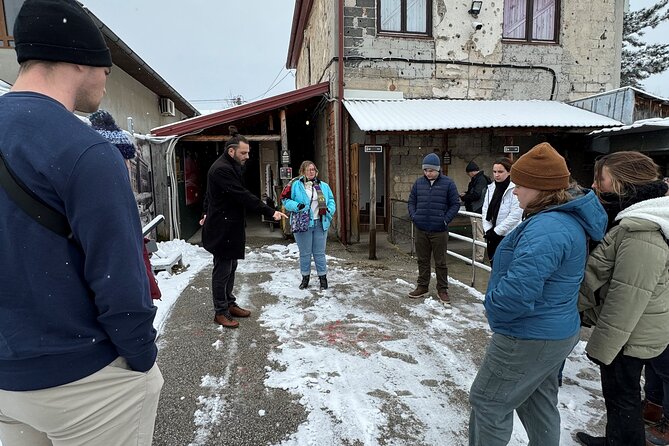
- The 800-meter tunnel connected Sarajevo with the outside world during the city’s four-year siege.
- Markale Market and Sniper Alley put the war into an urban setting, among streets and buildings you can still see today.
- Local guides add family stories and firsthand memories, which make the history easier to understand.
- Hotel pickup and drop-off are included, along with a driver, modern vehicle, guide, and bottled water.
- The 15 BAM museum ticket is extra, so add it to the advertised $30.10 price.
- The tour begins near Baščaršija, at Meet Bosnia Travel on Gazi Husrev-beg 75.
Why this tour matters in Sarajevo
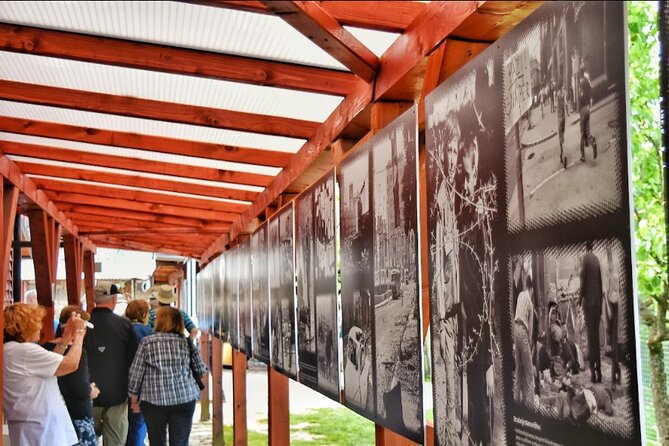
Sarajevo can look invitingly relaxed today. Its cafés, market lanes, and Ottoman-era streets draw you in quickly. Yet the city’s recent past is close at hand. Bullet scars still mark some buildings, and many everyday places carry painful memories.
The 1992 to 1996 siege of Sarajevo lasted nearly four years. During that time, the city was surrounded, and supplies were hard to bring in. The Tunnel of Hope became the only entrance into Sarajevo, linking the city under the airport runway with territory outside the siege lines.
That basic fact gives the tour its force. You are not visiting a distant battlefield. You are looking at markets, roads, homes, and public buildings where civilians tried to buy food, move around, and survive. The guide’s job is to connect those places with the larger story of the breakup of Yugoslavia and the war in Bosnia and Herzegovina.
The listed rating is 4.9 from 12 ratings, with 100 percent recommending the experience. That is a small sample, so I would not treat the number as scientific proof. Still, it points to the tour’s strongest feature: clear explanations delivered with care.
More Sarajevo war and siege history tours:
- Fall of Yugoslavia, Sarajevo War Tour with Tunnel of Hope Museum and Frontlines
★ 5.0 · 1,314 reviews - Tunnel Museum: Bosnian & Yugoslav Wars Tour with War Veteran
★ 5.0 · 551 reviews - Sarajevo War Tour: A Veteran’s Story of the Siege (fees included)
★ 5.0 · 326 reviews
Starting near Gazi Husrev-beg Mosque
The tour begins at Meet Bosnia Travel, Gazi Husrev-beg 75, in central Sarajevo. You can also request pickup at your hotel or another location. If your pickup point is close to the agency, you may be asked to meet at the office instead.
The opening section is brief, about 10 minutes. It gives you time to meet the licensed guide and get settled in the vehicle. A modern vehicle and professional driver are included, which matters here because the tunnel museum is outside the central walking area.
The group can contain up to 50 people. That is a fairly large possible group for a history tour. A larger group may mean less chance to ask private questions, though transport is easier than arranging your own taxi and museum visit. The guide team named in the tour details includes Aid, Adna, Argan, Eddie, and Amir. Your guide may differ, but the supplied information shows a clear pattern of local guides who explain both public events and personal family experiences.
If you are staying around Baščaršija, walking to the agency may be simpler than arranging pickup. The meeting point is close to public transportation as well.
Markale Market and the civilian story
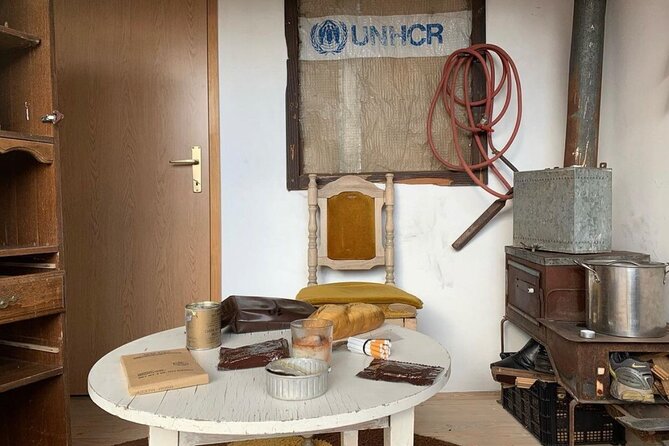
Markale Market is one of the tour’s most important stops because it shifts attention from military maps to daily life. Even during the siege, people came here looking for food and other basic supplies.
The market was also the site of two of the war’s largest massacres. Your guide explains what happened and why Markale became such a powerful symbol of the danger civilians faced in Sarajevo.
This stop is not about a scenic photo. It is a place for context and quiet attention. You may find the guide’s account more useful than a long museum panel because the story is tied to the exact public space around you. The market still belongs to ordinary city life, which makes the wartime history feel close rather than remote.
I would give this part your full attention. It can be easy to rush through a market while thinking about lunch or shopping, but here the location carries a serious meaning. The guide’s explanation helps you understand how access to food became part of the struggle to keep the city alive.
Driving through Sniper Alley
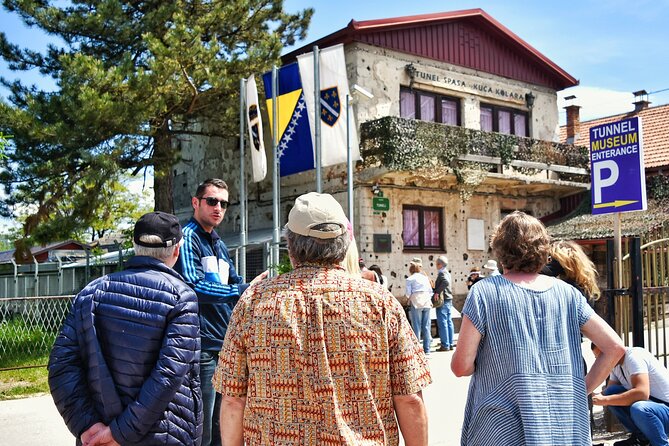
The route then passes through Sniper Alley, the name given to one of Sarajevo’s most dangerous streets during the war. Snipers fired on people moving through the area, and civilians faced danger simply by crossing town.
The stop lasts about 15 minutes, though the exact timing depends on traffic and the group. From the vehicle, you can see buildings from the Yugoslav period that still show signs of war damage. Those damaged façades are among the clearest reminders that Sarajevo’s recent past is not sealed away in a museum.
I like this part because the guide describes the city from street level. You hear about movement, risk, and the practical choices people had to make. The road is not presented as an abstract military site. It was a route used by people trying to get to work, find food, or reach family.
There is a limitation. You are passing through by vehicle rather than taking a long walking tour, so the experience can feel quick. Listen closely as the guide points out buildings and explains what you are seeing. If you want an extended battlefield-style tour, this shorter experience may feel like an introduction rather than a complete study of the siege.
A few more Sarajevo day trips to weigh up
- Sarajevo: Mostar, Konjic, Blagaj Tekke, Pocitelj & Waterfall
★ 4.9 · 1,335 reviews - Sarajevo: Mostar, Konjic, Sufi House, Pocitelj & Kravice Falls
★ 5.0 · 1,179 reviews - ROSES OF SARAJEVO (Official WAR + CITY tour)- Story of a Survivor
★ 5.0 · 770 reviews - Sarajevo: Mostar, Konjic, Počitelj, Sufi House, & Waterfalls
★ 4.9 · 572 reviews
Sarajevo City Hall and the road back through Baščaršija
The tour also passes Sarajevo City Hall, a landmark rebuilt after severe damage in the Bosnian War. The building is a symbol of Sarajevo and an important reminder that cultural and civic spaces were also caught in the fighting.
You may not spend a long time inside or touring the building, since the main purpose here is to see it as part of the wider route. The guide places City Hall within the story of the city’s destruction and rebuilding.
On the return journey, the vehicle passes through the old town and Baščaršija, Sarajevo’s most popular area. This creates a useful contrast. The old town’s market streets and historic character can feel far removed from the siege sites, yet they are part of the same city and the same modern story.
If you have just arrived in Sarajevo, this section helps you get your bearings. It also gives you a reason to return to Baščaršija later, when you can explore its streets at your own pace. I would not count this drive as a substitute for a proper old-town walk, but it is a helpful link between the city’s past and present.
Entering the Tunnel of Hope
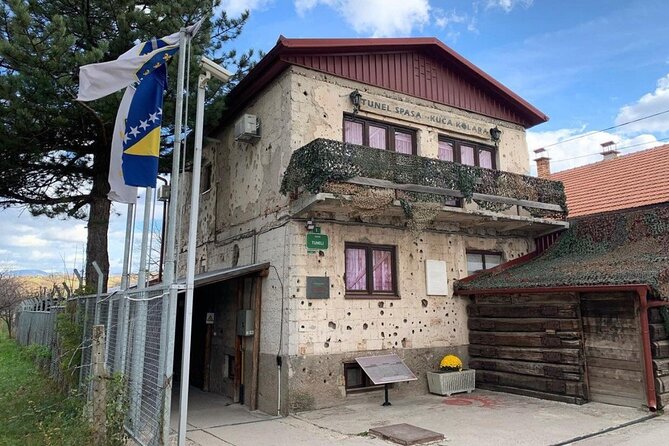
The central stop is the Sarajevo War Tunnel, also called the Tunnel of Hope. The tunnel was about 800 meters long and served as Sarajevo’s only connection with the outside world during the four-year siege.
Today, the site functions as a museum. You see exhibits about the siege and walk through a preserved section of the tunnel. That physical act is the heart of the experience. Even a short section gives you a sense of the cramped underground passage that carried people and supplies in and out of the surrounded city.
The museum visit is listed as about two hours in the itinerary, but the full tour is advertised at approximately 1 hour 40 minutes to 2 hours 30 minutes. Those times do not line up perfectly, so treat the duration as a rough estimate. Ask the operator for the day’s expected schedule if you have a tight connection or another booking.
The admission ticket is not included. It costs 15 BAM, payable separately. At the advertised tour price of $30.10 per person, the total remains reasonable for a guided excursion with transport, but you should budget for the museum fee as well.
The tunnel is small. Do not arrive expecting a vast underground complex or a long walk through all 800 meters. The value comes from the setting, the surviving section, the displays, and the guide’s explanation of what the tunnel meant. Personal accounts can make the visit especially powerful. Guides named in the supplied details, including Aid, Eddie, Amir, and Adna, have been praised for connecting the site to family and city experiences.
This is also the part that may feel emotionally heavy. The tour deals with massacres, civilian danger, shortages, and the breakup of Yugoslavia. It is not a light sightseeing outing. You should choose it because you want to understand Sarajevo, not simply because you have a spare hour.
What the guide adds to the experience
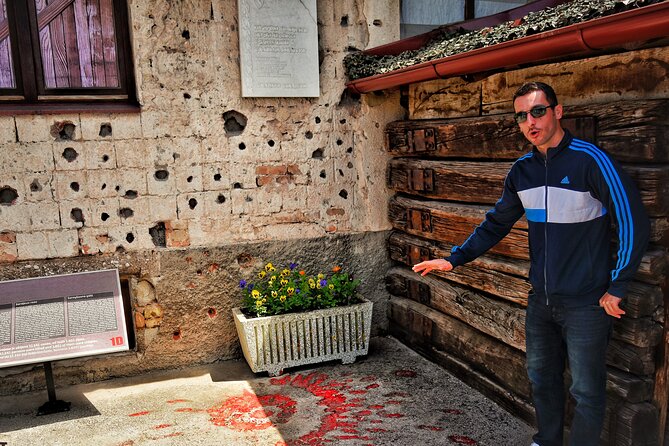
The guide can make or break a war-history tour. A list of dates and names will not tell you much about how siege conditions changed daily life. The strongest accounts from this tour describe guides answering many questions, explaining the political background, and adding personal family stories.
That personal link is important in Sarajevo. The war is recent enough that local families were directly affected. A guide who explains where relatives lived, how the city functioned, or how people moved through the siege can make the route much easier to follow.
The names associated with the guide team include Aid, Adna, Argan, Eddie, and Amir. You cannot select a particular guide from the information provided, but you can expect the experience to be led by a local English-speaking professional. Guides have also been described as courteous and willing to answer questions, which is useful if you want more than a fixed speech.
I suggest preparing a few questions before you go. You might ask how the tunnel operated, how supplies reached the city, or how the surrounding streets changed during the siege. The tour has enough structure to work for first-time visitors, but questions can help you get more from the guide.
Price, transport, and the real value
The listed price is $30.10 per person. For that amount, you receive a licensed guide, professional driver, modern vehicle, hotel pickup, hotel drop-off, and bottled water. The museum entrance costs another 15 BAM.
I consider that a fair price if you want a short, organized introduction to the siege. A taxi to the tunnel would add cost and leave you without the route through Markale and Sniper Alley. Booking transport separately could also mean missing the citywide explanation that gives the museum more meaning.
The possible weakness is group size. The maximum is 50 people, so this may not feel like a quiet private tour. The vehicle also limits how long you can stop at each location. If you want a slower, more customized experience, ask about a private option. One supplied account describes a private four-hour siege tour, but that is not the same product as this shorter experience and should not be assumed to be included.
The tour is offered in English and includes a mobile ticket. Confirmation is received at booking. It operates Monday through Friday from 9:00 AM to 5:30 PM during the listed operating periods, from February 5, 2025 through February 4, 2026, and from February 5, 2026 through February 4, 2027.
You can cancel for a full refund up to 24 hours before the start time. Cancellations or changes made within 24 hours are not accepted for a refund.
Who should book this experience
I would recommend this tour to first-time visitors who want the basic story of the Siege of Sarajevo without arranging several separate visits. It suits families, solo visitors, and anyone interested in recent European history, military history, or the breakup of Yugoslavia.
It is also a good choice if you have limited time in Sarajevo. In one outing, you see Markale Market, Sniper Alley, City Hall, Baščaršija, and the Tunnel of Hope. The route gives you a useful framework for exploring the city on your own afterward.
You should think twice if you want a long museum visit, a private guide, or a detailed military analysis. The group may be large, the sightseeing stops are brief, and the tunnel section open to the public is small. The subject matter is also painful, so this is not the right pick for a casual scenic tour.
If you book, wear shoes suitable for walking through the tunnel and allow some flexibility in your schedule. The tunnel museum ticket is extra, and the total timing may vary. A morning or early afternoon departure gives you the best chance of having room later in the day for Baščaršija and Sarajevo City Hall.
Should you book the Sarajevo War Tunnel tour?
Yes, if your goal is to understand how the siege shaped Sarajevo and you value a local guide’s explanation. The strongest parts are the connection between ordinary city streets and wartime events, plus the chance to walk through part of the Tunnel of Hope.
Book it knowing what it is: a compact, guided introduction rather than an exhaustive battlefield tour. At $30.10, with transport and hotel pickup included, it offers solid value. Add the 15 BAM museum fee, bring a thoughtful attitude, and you will come away with a clearer sense of why Sarajevo’s recent past still matters.
FAQ
What is included in the tour price?
The price includes a licensed English-speaking tour guide, professional driver, modern vehicle, bottled water, hotel pickup, and hotel drop-off.
Is the Tunnel of Hope entrance ticket included?
No. The entrance ticket to the Tunnel of Hope Museum costs 15 BAM and is paid separately.
Where does the tour start?
The standard meeting point is Meet Bosnia Travel at Gazi Husrev-beg 75, Sarajevo 71000, Bosnia and Herzegovina.
Is hotel pickup available?
Yes. Pickup is offered from your location. If you are staying close to the agency, you may be asked to meet at the listed starting point instead.
How long does the tour last?
The experience lasts approximately 1 hour 40 minutes to 2 hours 30 minutes. The itinerary lists the tunnel museum section at about two hours, so timing can vary.
Can I cancel for a full refund?
Yes. You can cancel at least 24 hours before the experience start time for a full refund. Cancellations or changes made less than 24 hours before the start time are not accepted for a refund.
Just added around Sarajevo
- Strbacki Buk and Una Waterfalls: Day Trip from Sarajevo★ 5.0 · 3 reviews
- Bosnian Kingdom Capitals: Travnik & Jajce Tour from Sarajevo★ 5.0 · 3 reviews
- Walking Tour in Sarajevo★ 5.0 · 3 reviews
- MTB Bjelasnica – Lukomir★ 5.0 · 3 reviews
- Sarajevo Under Siege: A City’s Struggle & Survival Tour★ 5.0 · 3 reviews
- Herzegovina Tour from Sarajevo: Mostar, Počitelj, Blagaj, Kravice★ 5.0 · 3 reviews
- Travnik, Jajce, Pliva Lakes & Mills –Medieval & Ottoman Bosnia Full Day Tour★ 5.0 · 3 reviews
- Tour of Herzegovina – From Sarajevo★ 5.0 · 3 reviews
Sarajevo Tours, compared.
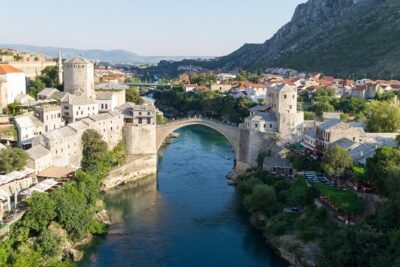
Sarajevo: Mostar, Konjic, Blagaj Tekke, Pocitelj & Waterfall
Read our review →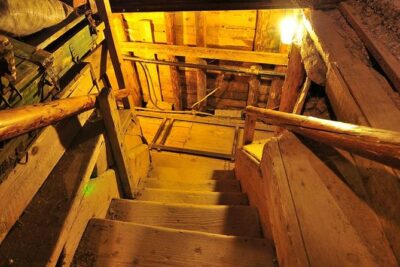
Fall of Yugoslavia, Sarajevo War Tour with Tunnel of Hope Museum and Frontlines
Read our review →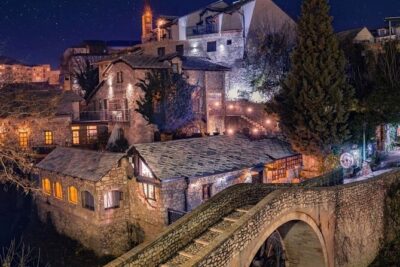
Sarajevo: Mostar, Konjic, Sufi House, Pocitelj & Kravice Falls
Read our review →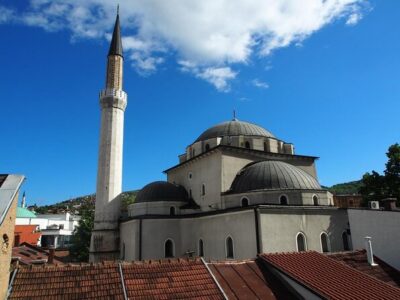
Sarajevo: 2 Hours Old Town Walking Tour With Local Guide
Read our review →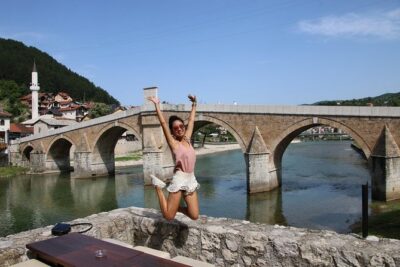
Sarajevo: Mostar, Konjic, Dervish House, Pocitelj & Kravica Falls
Read our review →
From Sarajevo: Srebrenica Genocide Memorial Study Tour
Read our review →
Mostar,Kravica Waterfall,Blagaj,Počitelj – Day Tour from Sarajevo
Read our review →
Sarajevo War Tour: A Veteran’s Story of the Siege (fees included)
Read our review →Browse the lists this tour appears in