
Reviewed · SARAJEVO TOURS
Tunnel Museum: Bosnian & Yugoslav Wars Tour with War Veteran
Sarajevo’s Tunnel of Hope is the heart of this four-hour tour, but the most affecting part may be hearing a Bosnian war veteran explain what it meant to live inside a city under siege. Guides such as Adis, Ibrahim, Enes, Mustafa, and others bring personal memories, family stories, and clear explanations of how Yugoslavia broke apart.
I like the smart route: you see major city sites before reaching the tunnel, then visit former military positions on Trebević for a wider view of the siege. I also like the small vehicle, usually a car or minivan, which keeps the ride comfortable and the group manageable.
The subject is painful, and the tour does not soften it. The museum film, Sarajevo Roses, cemetery, sniper positions, and stories of civilian life can feel heavy. You should also confirm the exact meeting point before setting out, since the supplied details name both the Ferhadija pedestrian street near Sarajevo Meeting of Cultures and Velika avlija Laure Papo Bahorete 2.
Key points to know before booking
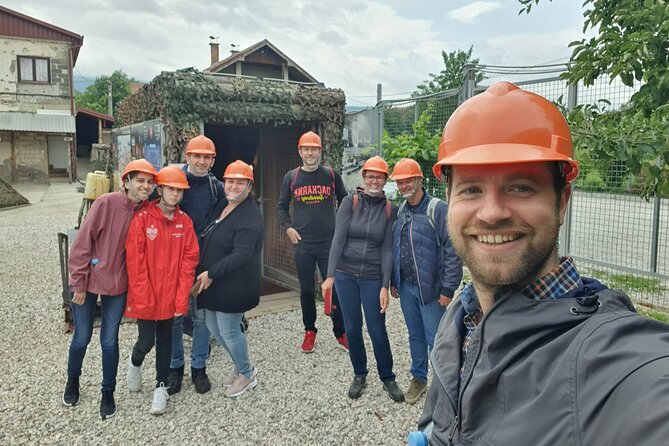
- A Bosnian veteran leads the story: Guides including Adis, Ibrahim, Enes, and Mustafa explain the war through firsthand experience as well as dates and places.
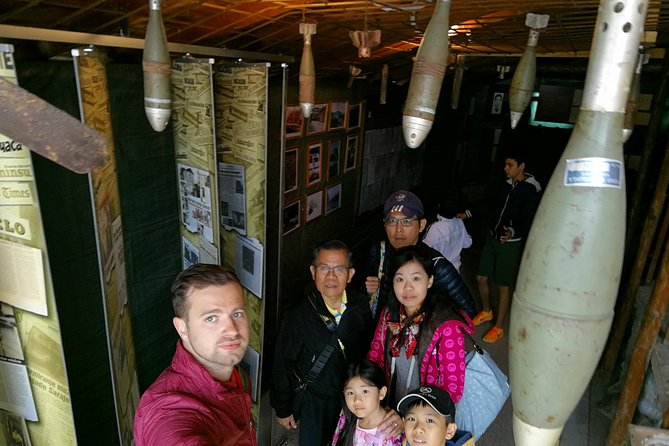
- The Tunnel Museum gets about an hour: A short film and presentation cover Yugoslavia’s breakup, the wars in Slovenia, Croatia, and Bosnia and Herzegovina, and the tunnel’s purpose.
- Trebević adds the best city view: Former wartime positions and the 1984 Olympic area help you understand why the surrounding mountains mattered.
- You see more than the tunnel: The route includes Sniper Alley, Markale, the Eternal Flame, the National Museum area, Jewish Cemetery, and Yellow Fortress.
- The $36.28 price covers transport and guiding: The museum admission, food, and hotel drop-off are not included.
- Expect a serious afternoon: You need moderate physical fitness, and children must stay with an adult.
Why this Sarajevo war tour matters
Sarajevo can look relaxed and welcoming today, with cafés, trams, Ottoman streets, and busy squares. This tour asks you to look again. The same city center once faced shelling, sniper fire, shortages, and a blockade that lasted for more than three years.
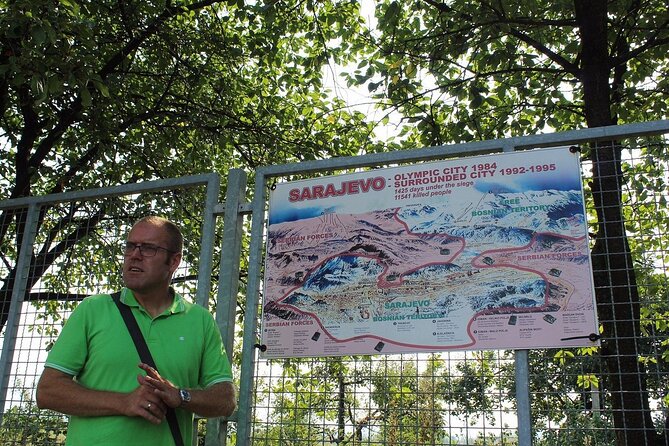
The guide gives you a useful frame before you reach the museum. Rather than meeting the Tunnel of Hope with no context, you hear how Yugoslavia began to fall apart, how conflict spread through Slovenia, Croatia, Bosnia and Herzegovina, and how Sarajevo became surrounded.
That preparation matters. The tunnel is not a grand museum with a huge collection. It is a compact, powerful site. The guide’s explanation helps you grasp why a roughly 1,000-meter passage under the airport became a lifeline for food, supplies, weapons, and people.
I would choose this tour early in a Sarajevo stay if you want the rest of your sightseeing to make more sense. It changes the way you read the city. A boulevard becomes a dangerous route. A mountain becomes a firing position. A graveyard becomes evidence of what civilians endured.
More Sarajevo war and siege history tours:
- Fall of Yugoslavia, Sarajevo War Tour with Tunnel of Hope Museum and Frontlines
★ 5.0 · 1,314 reviews - Sarajevo War Tour: A Veteran’s Story of the Siege (fees included)
★ 5.0 · 326 reviews - Sarajevo 1425 days under the siege – War Tour
★ 5.0 · 170 reviews
Starting in Ferhadija and reading the city
The advertised start is on Sarajevo’s main pedestrian street, Ferhadija, near the Sarajevo Meeting of Cultures marker and an Info Bosnia Tourist Information Center. One set of meeting details also gives Velika avlija Laure Papo Bahorete 2, so check your confirmation carefully before you walk to the wrong end of the center.
After introductions, you board an air-conditioned car or minivan. The ride toward the tunnel takes about 25 to 30 minutes. This is not wasted transport time. The guide begins explaining the wartime setting and points out locations connected with the story.
The route may pass places that later appear in the museum film. That repeated view is useful. You first see a building or road as part of modern Sarajevo, then understand its wartime role a little later.
The guide’s style appears to vary by person, but the strongest part of the experience is the personal account. Adis, who was in high school when he joined the Bosnian forces, has also spoken about his later work demining Bosnia. Ibrahim is praised for explaining complex events clearly and remembering everyone in a small group. Enes is described as quick, funny, and able to answer detailed questions. Mustafa has shared his own wartime experience in a calm, direct way.
You may be assigned another guide. The company uses several guides, including Adnan, Aid, Asim, Haris, Enes, Ibrahim, and others. The important point is that the tour is built around local voices, not only a memorized script.
Markale, the Eternal Flame, and Sniper Alley
The first city sights build a timeline before the countryside portion of the tour.
The Markale market was targeted in two separate bombardments during the Siege of Sarajevo. Civilians were killed there, and the site remains one of the clearest reminders that the war was fought in the middle of ordinary city life.
The Eternal Flame gives you a different layer of memory. Dedicated on April 6, 1946, it honors military and civilian victims of the Second World War and marks Sarajevo’s liberation from Nazi German and fascist Independent State of Croatia occupation. Seeing this memorial alongside the newer war sites helps you understand how Sarajevo carries several periods of violence in the same public space.
Sniper Alley refers mainly to Zmaja od Bosne Street and Meša Selimović Boulevard. This major route links the industrial part of the city, the airport, and the tunnel area with the Old Town. During the Bosnian War, high-rise buildings and mountain positions gave snipers clear lines of fire across streets civilians still needed to use.
This is one of the tour’s strongest teaching moments. You are not looking at a battlefield far outside town. You are looking at a working city boulevard. The distance between a tram stop, an apartment block, and a sniper position becomes much easier to understand from inside the vehicle with a guide pointing out the connections.
The National Museum and Sarajevo’s older story
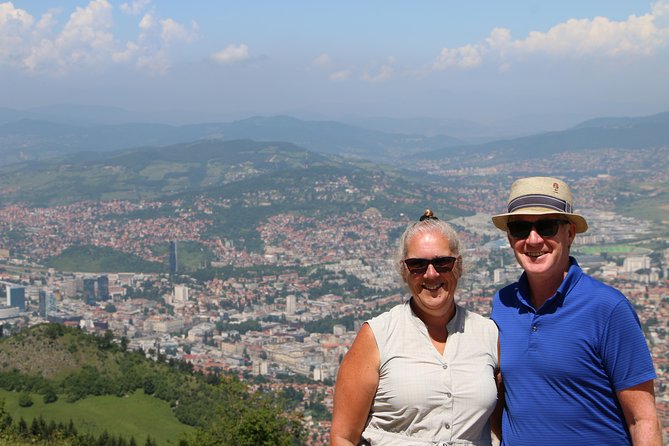
The route also introduces the National Museum of Bosnia and Herzegovina. Its collections cover archaeology, art history, ethnology, geography, history, and natural history.
The museum is especially known for holding the Sarajevo Haggadah, an illuminated Jewish manuscript produced in Barcelona around 1350. It is regarded as the oldest Sephardic Jewish document of its kind in the world. The tour does not list museum entry as a separate visit, so think of this stop as part of the city explanation rather than a guaranteed museum tour.
That distinction is useful. If you want time inside the National Museum, plan a separate visit. On this half-day outing, the emphasis remains the war and the way Sarajevo’s different communities and eras overlap.
More museums in Sarajevo:
- Tunnel of Hope Museum Tour
★ 5.0 · 38 reviews - Cable Car Olympic Tour With Museum
★ 5.0 · 17 reviews - SARAJEVO CONCEPTUAL ART TOUR (galleries, art and arhitecture)
★ 5.0 · 7 reviews - Sarajevo: A City Under Siege – War Tour With Tunnel Museum
★ 5.0 · 4 reviews
Inside the Sarajevo War Tunnel Museum
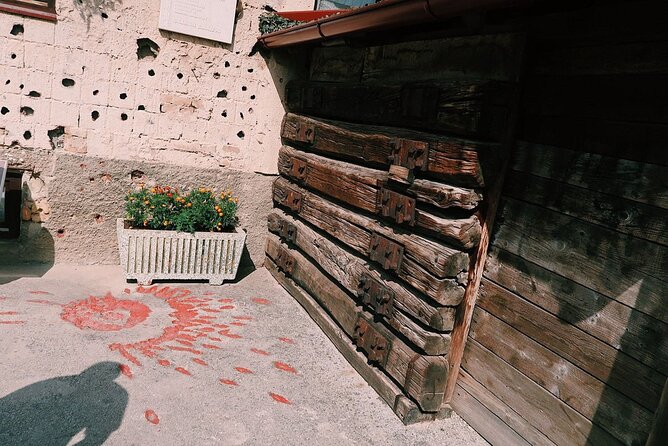
The Tunnel Museum is the main paid stop, and admission is not included in the tour price. At the entrance, the guide explains the museum’s position and points out a Sarajevo Rose, a concrete scar filled with red resin marking a shell impact where people died.
You then watch a short film. Afterward, the guide gives a presentation lasting about an hour. It covers the breakup of Yugoslavia, the wars in Slovenia and Croatia, the conflict in Bosnia and Herzegovina, and the tunnel’s creation and importance.
The tunnel connected besieged Sarajevo with a small area outside the city still controlled by Bosnian forces. It allowed supplies, weapons, and people to move in and out despite the surrounding army and the limits placed on the city’s airport.
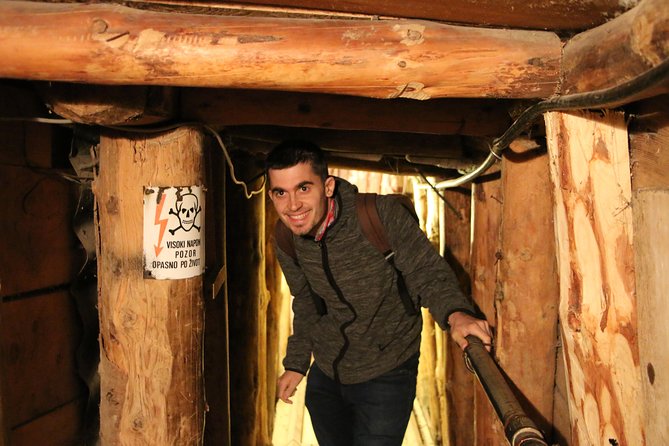
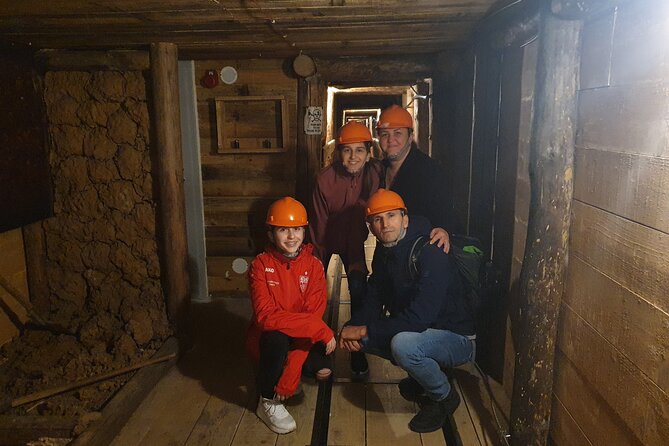
You should set your expectations correctly. This is not a long underground walk. The visit is valuable because of the explanation, the film, and the sense of scale. A small section of the original passage shows how narrow and practical the route was. The personal stories give the physical space its meaning.
Some of the most important information concerns ordinary survival. The tunnel was not just a military project. It helped the city remain connected to the outside world when roads were blocked and shelling made normal movement dangerous.
The museum can feel emotional, especially when the film and guide’s personal memories meet the physical evidence. You should allow yourself time afterward rather than planning a rushed meal or immediate museum visit across town.
Trebević and the Olympic bobsled area
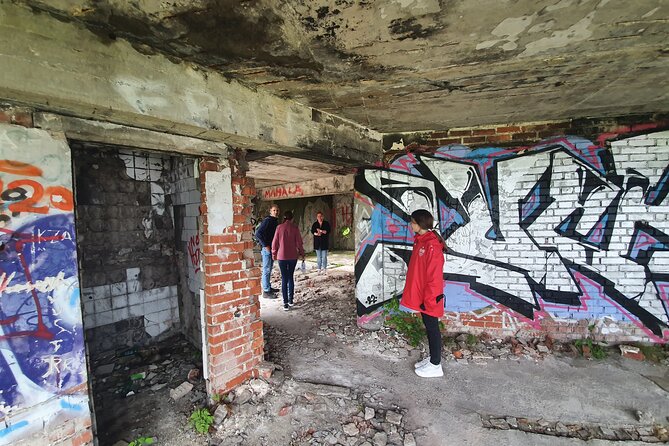
After the tunnel, the vehicle climbs toward Trebević, the mountain closest to Sarajevo’s center. Trebević hosted part of the 1984 Winter Olympics and later became a frontline area during the siege.
The tour includes time to get out and walk at a former position associated with the Olympic facilities. The bobsled and luge runs are among the memorable sights connected with this part of the route. The contrast is stark: a place built for international sport later became tied to military positions and shelling.
The reward is the panoramic view over Sarajevo. From up here, the city’s bowl shape becomes clear. You can see why the surrounding heights had such military value and why movement through the city was so exposed.
I like this stop because it adds geography to the story. Inside the tunnel, you understand isolation. On Trebević, you understand the surrounding positions. You also get a break from the museum’s enclosed, serious atmosphere.
Bring shoes suitable for a short walk. The tour requires a moderate level of physical fitness, and the mountain stop may involve uneven ground. The itinerary allows about 30 minutes, so this is a focused viewpoint and historical stop, not a mountain excursion.
The Jewish Cemetery and its bullet-marked stones
Below Trebević lies Sarajevo’s Jewish Cemetery, described as the second-largest Jewish cemetery in Europe. Its tombstones have distinctive shapes associated with Bosnia and Herzegovina and are believed to show an influence from medieval Bosnian stećak stones.
The cemetery is also tied directly to the siege. Bullet damage can be seen on some stones, a small but stark reminder that the fighting reached places of burial as well as homes, markets, and transport routes.
The stop lasts about 20 minutes. That is enough for a short walk and explanation, but not for a long cemetery visit. Treat the site with care. It is an active place of memory, not simply a scenic stop.
This stop also broadens the tour beyond a simple account of two opposing armies. Sarajevo’s story includes Muslim, Jewish, Orthodox, and Catholic communities, along with the shared urban life that existed before the war. One useful result of the tour is a clearer sense of how coexistence had worked, and how badly the war damaged it.
Yellow Fortress and the final view
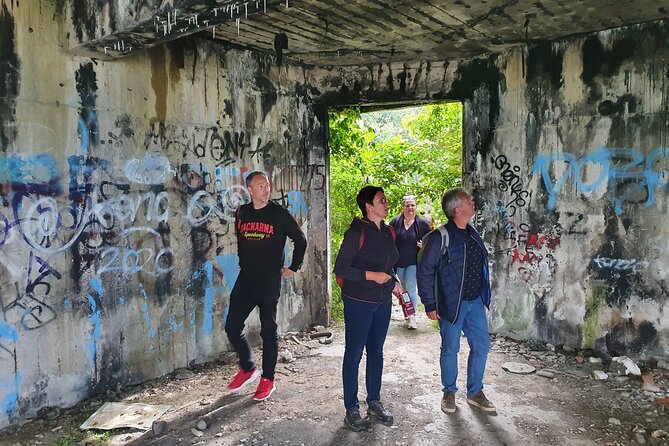
The last listed stop is Yellow Fortress, above the old Ottoman part of Sarajevo. From here, you can look toward the Soldiers’ Cemetery and the resting place of Bosnia and Herzegovina’s first president.
The fortress provides another view across the city, but it also brings you back toward Sarajevo’s older quarters. After the tunnel, the mountain positions, and the cemetery, ending near the Ottoman center gives the afternoon a broader shape.
The stop takes about 20 minutes. You will not have a long visit to explore the old city from the tour itself, but the route puts you close to places worth seeing on foot later, including the historic pedestrian center.
The activity ends back at the meeting point. Hotel pickup is available for people staying outside Sarajevo’s Old Town, but hotel drop-off is not included. If you are staying farther out, ask in advance how pickup will work.
What the $36.28 price really buys
At $36.28 per person, this is good value if you want a guided introduction to Sarajevo’s wartime geography. You are paying for roughly four hours of transport, a driver-guide, several city stops, the tunnel museum, Trebević, the Jewish Cemetery, and Yellow Fortress.
The price does not include tunnel admission, food, or return to your hotel. That matters when you compare it with a private tour or a larger group excursion. You should budget separately for the museum ticket and any meal you want afterward.
The air-conditioned vehicle is a practical advantage, especially for the drive to the tunnel and climb toward Trebević. The maximum group size is 20, though some departures use a much smaller vehicle. One reported outing had only seven people, and another booking became a private tour when no one else chose that departure time.
A small group makes it easier to ask questions. It also helps when a guide is sharing personal memories. But group size can vary, so do not book on the assumption that every departure will use an eight-seat van.
The activity is often booked about eight days ahead. That is a useful planning clue, not a rule. If your Sarajevo dates are fixed, reserve before arrival and make sure the confirmation gives the meeting details clearly.
Who will get the most from this tour
This is a strong choice for you if you want the basic wartime story explained by someone from Sarajevo rather than pieced together from plaques and guidebooks. It suits adults, older children accompanied by an adult, and anyone interested in modern European history, military geography, or the breakup of Yugoslavia.
It is also useful if you have only a few days in Sarajevo. In four hours, you reach places that are spread around the city and hills and would be awkward to connect on foot.
You may prefer another activity if you want a light sightseeing ride, a long visit inside museums, or plenty of unstructured time. The subject includes massacres, civilian deaths, shelling, and life under siege. Personal testimony can make the experience more intense than a standard city tour.
Guides generally welcome questions, and several are praised for being friendly, patient, and humorous when appropriate. Still, the tone stays respectful. This is not entertainment dressed up as history.
Practical details that affect your afternoon
Wear comfortable shoes for the tunnel area, cemetery, fortress, and Trebević stop. The tour is mostly vehicle-based, but you should expect several short walks and some uneven ground.
The mobile ticket is convenient, and confirmation is provided at booking. Children must be accompanied by an adult. The tour is offered in English.
Free cancellation is available up to 24 hours before the start time for a full refund. Changes or cancellations inside that period are not accepted, and the experience can be changed or refunded if the minimum number is not reached.
Check the meeting address before you leave. The description points to the pedestrian center near Sarajevo Meeting of Cultures, while the meeting point details identify Velika avlija Laure Papo Bahorete 2. A quick confirmation with Dream Balkans Travel can save you a hurried start.
Should you book it?
I would book this tour if you want a serious, personal account of Sarajevo’s recent past and prefer to see the places that shaped it. The tunnel alone is important, but the combination of Sniper Alley, Trebević, the Jewish Cemetery, and Yellow Fortress gives you a much clearer map of the siege.
The best reason to choose it is the guide. Adis, Ibrahim, Enes, Mustafa, and the other listed guides bring different personalities and memories, yet the strongest feedback consistently centers on personal stories, clear answers, and warm interaction.
Book it with enough emotional space in your day. Do not expect a breezy sightseeing loop. Expect a moving history lesson, strong city views, and a better understanding of how Sarajevo survived.
FAQ
How long does the Sarajevo war tour last?
The activity lasts approximately four hours, including the city drive, Tunnel Museum visit, Trebević, Jewish Cemetery, and Yellow Fortress.
What is included in the price?
The price includes a driver-guide, transport in an air-conditioned car or minivan, and hotel pickup for people staying outside Sarajevo’s Old Town when required.
Is Tunnel Museum admission included?
No. Admission to the Sarajevo War Tunnel Museum is not included in the tour price.
Where does the tour start?
The details identify the meeting area as the Sarajevo pedestrian center near the Info Bosnia Tourist Information Center and Sarajevo Meeting of Cultures. They also list Velika avlija Laure Papo Bahorete 2, so confirm the exact address on your booking confirmation.
Does the tour return me to my hotel?
No. The tour ends back at the meeting point. Hotel drop-off is not included.
Is the tour suitable for children?
Children may join, but they must be accompanied by an adult. The activity also recommends a moderate level of physical fitness.
Can I cancel for a full refund?
Yes. You can cancel at least 24 hours before the local start time for a full refund. Cancellations or changes made less than 24 hours before the start are not accepted for a refund.
Just added around Sarajevo
- Strbacki Buk and Una Waterfalls: Day Trip from Sarajevo★ 5.0 · 3 reviews
- Bosnian Kingdom Capitals: Travnik & Jajce Tour from Sarajevo★ 5.0 · 3 reviews
- Walking Tour in Sarajevo★ 5.0 · 3 reviews
- MTB Bjelasnica – Lukomir★ 5.0 · 3 reviews
- Sarajevo Under Siege: A City’s Struggle & Survival Tour★ 5.0 · 3 reviews
- Herzegovina Tour from Sarajevo: Mostar, Počitelj, Blagaj, Kravice★ 5.0 · 3 reviews
- Travnik, Jajce, Pliva Lakes & Mills –Medieval & Ottoman Bosnia Full Day Tour★ 5.0 · 3 reviews
- Tour of Herzegovina – From Sarajevo★ 5.0 · 3 reviews
Sarajevo Tours, compared.
Sarajevo: Mostar, Konjic, Blagaj Tekke, Pocitelj & Waterfall
Read our review →
Fall of Yugoslavia, Sarajevo War Tour with Tunnel of Hope Museum and Frontlines
Read our review →
Sarajevo: Mostar, Konjic, Sufi House, Pocitelj & Kravice Falls
Read our review →
Sarajevo: 2 Hours Old Town Walking Tour With Local Guide
Read our review →
Sarajevo: Mostar, Konjic, Dervish House, Pocitelj & Kravica Falls
Read our review →
From Sarajevo: Srebrenica Genocide Memorial Study Tour
Read our review →
Mostar,Kravica Waterfall,Blagaj,Počitelj – Day Tour from Sarajevo
Read our review →
Sarajevo War Tour: A Veteran’s Story of the Siege (fees included)
Read our review →Browse the lists this tour appears in