
Reviewed · JAJCE & TRAVNIK DAY TRIPS
Jajce, Travnik and Pliva watermills – Day Tour from Sarajevo
Jajce’s 17-meter waterfall is the star of this long day from Sarajevo, but the water tumbling through the town is only part of the appeal. You’ll also see a medieval royal fortress, an unusual rock-cut church, Ottoman mosques, clear Pliva Lakes, and a row of old watermills that looks made for a storybook.
I like the way this tour pairs history with scenery, rather than keeping you inside old towns all day. I also like the small maximum of eight people, which can make the ride and sightseeing feel personal, especially when guides such as Kenan, Emir, Mufid, or Benjamin are leading.
The trade-off is time. You should expect roughly eight to ten hours, with about three hours each way according to one detailed account. Lunch is not included, and the itinerary can feel tightly packed. Bring a snack, since the main meal stop may come late.
What makes this Bosnia day trip worthwhile
- Jajce’s waterfall in the town center: See the Pliva River meet the Vrbas River in a rare urban waterfall setting.
- A royal Bosnian capital: Walk around one of the best-preserved fortified centers connected with the medieval Bosnian Kingdom.
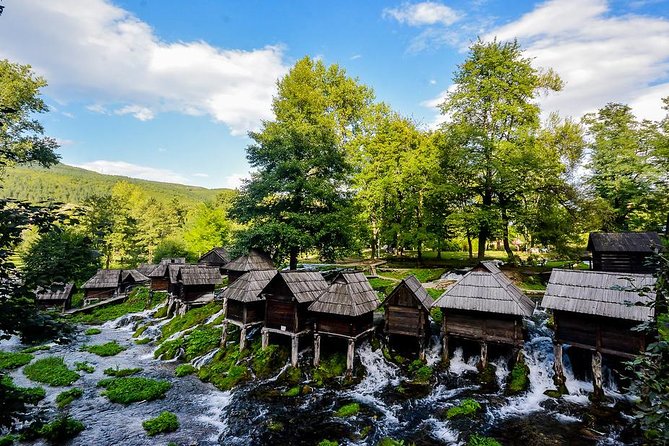
- The Pliva Watermills: Visit about 20 small historic mills near the lakes, one of the day’s most picturesque stops.
- Travnik’s Ottoman character: Combine a fortress, the colorful Šarena Džamija, and coffee beside Plava Voda.
- Small-group transport: The vehicle carries no more than eight people, with hotel pickup in Sarajevo and WiFi on board.
- A full day beyond Sarajevo: This is a practical way to reach central Bosnia without renting a car or arranging intercity transport.
Leaving Sarajevo for Travnik at 8:00 am
The tour begins at 8:00 am, with pickup available from any hotel in Sarajevo. You can also meet at Adventure in Bosnia on Kulovića 4, in central Sarajevo. The activity ends back at the same meeting point.
The drive is a major part of the experience. One account puts the journey at about three hours each way, so this is not a quick outing. You’ll spend much of the day moving through Bosnia’s countryside, with the reward of reaching places that are difficult to combine by public transport in one day.
The vehicle includes bottled water, private transportation, and WiFi. Those details matter on a long ride. The small-group limit of eight also gives you a better chance of asking questions or requesting a little flexibility than you would on a large coach.
Guides named in the feedback include Kenan, Emir, Mufid, Benjamin, Senad, and Aid. The strongest praise goes to their warmth, careful driving, clear communication, humor, and willingness to answer questions about Bosnia’s politics and past. Some guides have also adjusted plans for solo customers or helped people with mobility issues.
That personal touch is one of the tour’s best features, but it is wise to remember that guide style can vary. Some accounts describe detailed historical explanations, while one less enthusiastic assessment found the historical context limited and the timing uneven. If history is your main reason for booking, tell your guide early in the day that you want fuller explanations.
More Jajce, Pliva and Travnik days:
- From Sarajevo: Travnik, Jajce, Pliva Lakes & Watermills Tour
★ 5.0 · 213 reviews - Jajce, Travnik, Pliva lake and Watermills Tour
★ 5.0 · 104 reviews - Travnik, Jajce & Pliva Lakes Day Tour From Sarajevo (fees Incl.)
★ 5.0 · 50 reviews
Travnik Fortress and the old Bosnian Kingdom
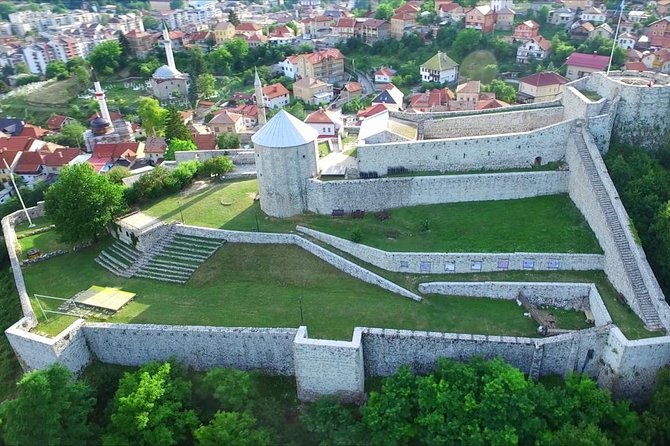
Travnik is the first major sightseeing stop. Its Old Fortress, or Tvrdava Stari Grad, is one of Bosnia and Herzegovina’s best-preserved medieval fortifications. The tour allows about 40 minutes here, with admission costing €2 per person.
The fort helps explain why Travnik matters. It reflects the period of the Bosnian Kingdom, while later rulers left their own marks on the structure. You can expect stone walls, old defensive features, and views over the town and surrounding countryside.
Fortress visits are rarely just about architecture. Here, the value comes from seeing how a strategic settlement developed across different eras. Ask your guide to connect the medieval kingdom with the later Ottoman period, since the day moves between both worlds.
Forty minutes is enough for a focused visit, but not a leisurely one. Wear shoes suitable for uneven ground and stairs. The supplied information does not promise a specific accessibility arrangement, so anyone with mobility concerns should discuss the route with the operator before departure.
Coffee beside Plava Voda
After the fortress, the tour pauses in Travnik at Plava Voda, also called Blue Water Springs. You’ll have about 30 minutes for Bosnian coffee beside the flowing water.
This is a useful change of pace after the fort. Rather than rushing from one monument to the next, you get a short chance to sit, drink, and watch the stream. Several accounts also point to a restaurant recommendation for traditional Bosnian food, desserts, and coffee, though lunch itself is not part of the price.
Do not assume this is your only food stop. The schedule can run late, and one poor experience involved eating around 5:00 pm. I would carry a sandwich, fruit, or another small meal. Bottled water is supplied, but extra snacks are sensible for a day this long.
Šarena Džamija and Travnik’s Ottoman style
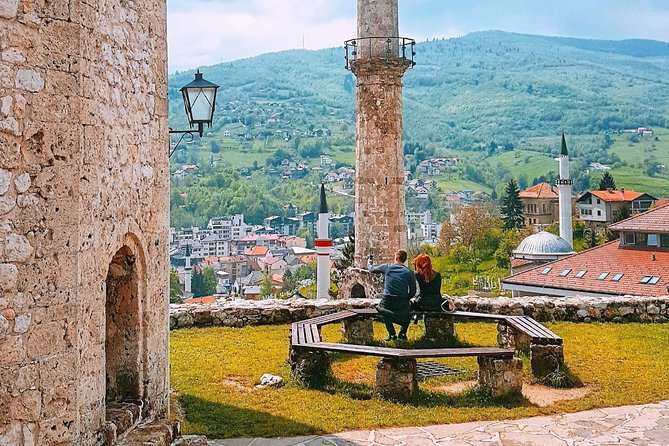
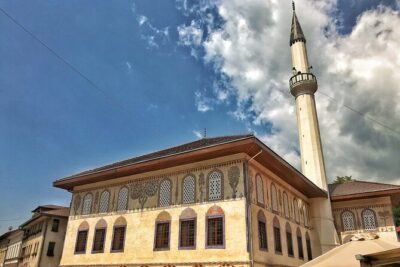
The final Travnik sight is Šarena Džamija, or the Colorful Mosque. Built in 1757 during the Ottoman era, it is known for its painted architectural decoration and distinctive appearance.
The stop lasts about five minutes, so think of it as a short orientation rather than a full visit. The mosque is a reminder that Travnik’s story did not end with the medieval kingdom. Its Ottoman identity is part of the town’s character, and it sets up the later historical sights in Jajce.
The itinerary covers a lot of ground in a short time. You may want to take a quick photograph and listen closely to the guide’s explanation rather than expecting time to explore at length.
A few more Sarajevo day trips to weigh up
- Sarajevo: Mostar, Konjic, Blagaj Tekke, Pocitelj & Waterfall
★ 4.9 · 1,335 reviews - Fall of Yugoslavia, Sarajevo War Tour with Tunnel of Hope Museum and Frontlines
★ 5.0 · 1,314 reviews - Sarajevo: Mostar, Konjic, Sufi House, Pocitelj & Kravice Falls
★ 5.0 · 1,179 reviews - ROSES OF SARAJEVO (Official WAR + CITY tour)- Story of a Survivor
★ 5.0 · 770 reviews
Jajce Fortress, the royal city
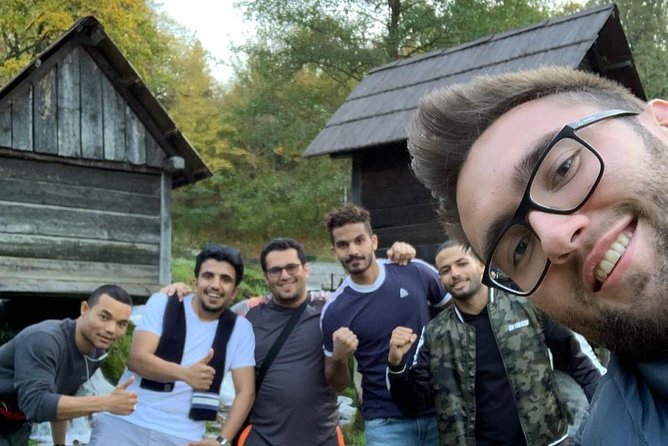
Jajce is often called the King City. Its medieval fortress was one of the last strongholds of the Bosnian Kingdom before Ottoman military expansion brought the kingdom to an end.
The scheduled visit lasts about 30 minutes, and admission costs €2.50 per person. The fort is one of the main reasons to choose this day trip. It gives you a physical sense of Jajce’s former importance, while the town’s position above the rivers makes the stop especially scenic.
The tour format works well here because your guide can provide the basic political and historical setting as you move through the town. Several guides have been praised for answering questions well, including questions that went beyond the official route.
Still, half an hour is brief. If you want every wall, viewpoint, and side street, you may feel hurried. The tour aims to give you a broad taste of Jajce, not a slow archaeological study.
Jajce’s underground church and burned mosque
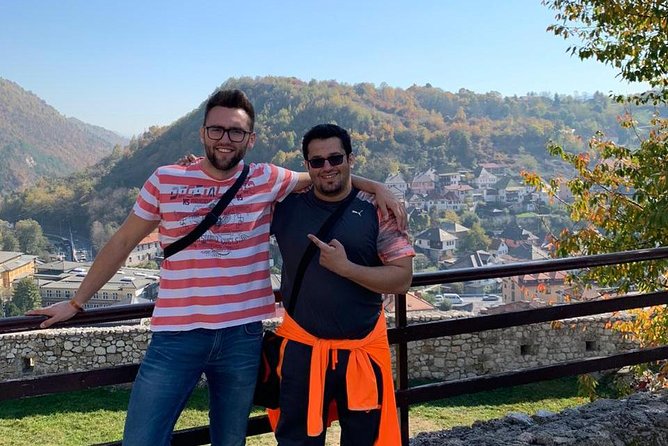
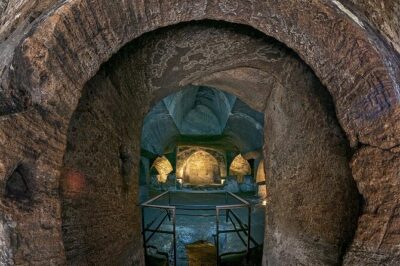
Near the fortress, you’ll see the Catacomb of Jajce, an underground Christian church carved into a single rock or cave. The local name is slightly misleading: it is not a catacomb in the usual sense. The small church was made in a late Romanesque style and takes about five minutes to see.
You’ll also pass the remains of St. Mary’s Church, a building with a remarkable sequence of uses. An older Romanesque church was adapted in Gothic style in the 15th century. It became important to the Bosnian royal court, and the coronation of the last Bosnian king, Stjepan Tomašević, took place there in 1461 according to papal envoys.
During Ottoman rule, the church became a mosque named for Sultan Suleiman I. Fires damaged it repeatedly. The 1832 fire left only the walls, and the building has not been used since.
These two short stops reward a good guide. The sites are small, but the changes in faith, royal power, and architecture tell a larger story about Jajce. If your guide is Emir, Kenan, Benjamin, or Mufid, ask for extra context if the schedule allows.
Esma Sultana Mosque and the town’s layered past
The Esma Sultana Mosque, also called the Čaršija Mosque, sits on Jajce’s main street between the Travnik and Banja Luka gates. It is the only mosque in Bosnia and Herzegovina named after a woman and is protected as a national monument.
The visit lasts about ten minutes and admission is free. It is a compact stop, but a useful one. Along with the church and catacomb, it shows how many religious and political chapters are packed into a small town.
The tour does not treat Jajce as a single-period monument. That is its strength. You move from the Bosnian Kingdom to Ottoman rule, then out to the rivers and lakes that made the area valuable long before modern tourism arrived.
The Pliva Waterfall, Jajce’s big visual moment
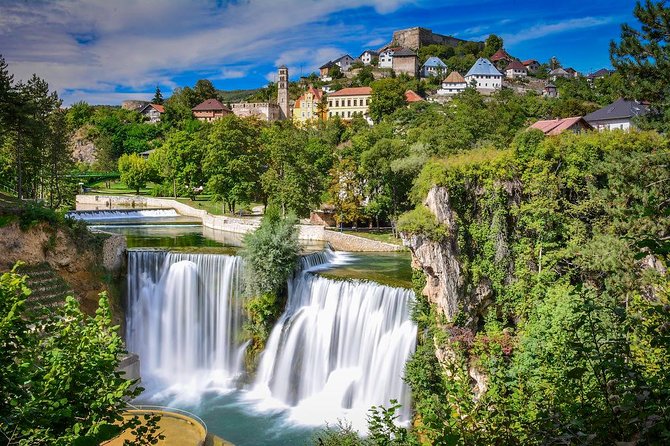
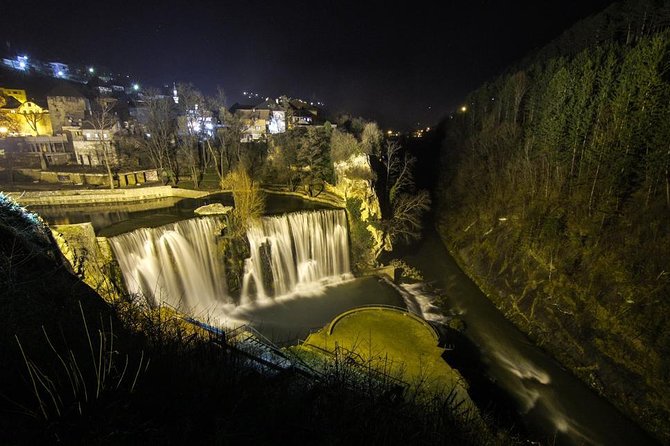
The Pliva Waterfall drops 17 meters in the center of Jajce. The Pliva River joins the Vrbas River here, creating an unusual waterfall and river meeting point within the town itself.
You’ll have about 30 minutes, and admission is included. You may view the falls from above or go closer to the water. One practical point: the best viewpoint may not give you a perfectly straight-on view, depending on where the group stops. Even so, the falls are the day’s clearest visual highlight.
Water levels and weather will affect the scene. On a bright day, the views from the town and higher points can be excellent. In poor weather, the spray and slippery surfaces may make the visit less comfortable, so keep your footing and protect your phone or camera.
The Pliva Watermills at Mlincici
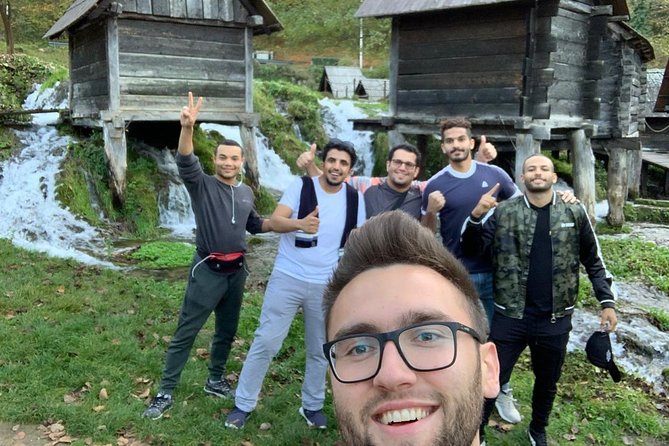
Downstream from Jajce, at the Pliva Lakes, you’ll visit Mlincici, a group of about 20 small watermills. Many date from the Austro-Hungarian period, roughly 1867 to 1918.
The mills are the most distinctive stop on the route. Their little wooden structures sit beside the water in a compact group, making the place feel almost unreal without being artificial. This is where I would slow down, take photographs, and pay attention to how the mills used the flowing water.
The visit lasts about 30 minutes. That is enough to see the group and enjoy the setting, though you will not have hours for a long walk around the lakes. Several guides recommend a local lunch nearby, and the combination of traditional food and a lake view is one of the pleasant surprises of the day.
Lunch is not included, so budget separately. The tour information specifically points to food around Pliva Lake, but it does not name a fixed restaurant or meal price.
Clear water and a short Pliva Lakes stop
The Pliva Lakes are known for clear water and a peaceful natural setting. You’ll have about ten minutes here as part of the return route.
That is a short stop, but it gives you another view of the area beyond Jajce’s walls and waterfall. The lakes also explain why the watermills are here. Water is not just decoration in this region. It shaped work, settlement, travel, and the look of the towns.
If you prefer nature to monuments, the lakes and mills may be your favorite part of the trip. If you prefer history, the fortresses and old religious buildings will likely carry more weight. The appeal of this tour is that you do not have to choose only one.
Price, group size, and the day’s real value
The listed price is $95.58 per person. For that amount, you receive private transportation, hotel pickup in Sarajevo, bottled water, WiFi on board, and a full route covering Travnik, Jajce, the Pliva Watermills, and the lakes.
You pay separately for the two fortress admissions: €2 for Travnik and €2.50 for Jajce. Lunch is also extra. These are small additional costs, but you should carry euros or confirm accepted payment methods before leaving.
The value depends on what you want to avoid. If you rent a car, you take on driving, navigation, fuel, and a very long day on unfamiliar roads. If you use intercity buses, you may save money, but connecting all these sights in one day becomes less simple. The tour charges for convenience and a driver who also provides local explanation.
The group cap of eight is important. If only a few people book, the outing may feel almost private. Some customers have ended up with one-on-one or three-person trips, and guides have sometimes adjusted the schedule for small groups. That is a real advantage over a large bus tour.
The downside is that the schedule can suffer from pickup changes or unscheduled waiting. One account described turning back near Sarajevo to collect another person, and another reported a long coffee and smoke stop. These may be isolated problems, but they show why you should plan for a flexible day rather than a clockwork itinerary.
Who should book this tour?
I would choose this excursion if you have at least two full days in Sarajevo and want to see more of Bosnia without renting a car. It suits first-time visitors who want a broad introduction to medieval Bosnia, Ottoman architecture, waterfalls, lakes, and rural scenery in one outing.
It is also a good fit for solo visitors and couples who value conversation with a local guide. Kenan has been praised for tailoring a solo day, while Emir is often described as warm, funny, and willing to offer food and music suggestions for the rest of your stay.
You should think twice if you dislike long drives, need a precise meal schedule, or want to explore each site at a slow pace. Winter can also feel quiet, with some small shops and tourist-oriented places closed for the season.
Pickup is offered from any Sarajevo hotel, confirmation comes at booking, and most people can participate. Free cancellation is available up to 24 hours before the start time. Changes or cancellations inside that window are not accepted for a refund.
Should you book the Jajce and Travnik day tour?
Book it if you want the easiest way to combine Jajce’s waterfall and fortress, Travnik’s Ottoman sights, and the Pliva Watermills in one day. The scenery is excellent, the route reaches places that are awkward to connect by bus, and a small group gives the experience a personal feel.
Skip it if the thought of six hours on the road outweighs the reward. For everyone else, carry snacks, budget for lunch and €4.50 in fortress fees, wear practical shoes, and ask your guide for the historical detail you want. With those expectations, this is a strong-value day beyond Sarajevo.
FAQ
How long does the tour last?
The tour lasts approximately eight to ten hours. It begins at 8:00 am and ends back at the Sarajevo meeting point.
Where does the tour start?
You can meet at Adventure in Bosnia, Kulovića 4, Sarajevo. Pickup is also offered from any hotel in Sarajevo.
What is included in the price?
The price includes bottled water, private transportation, and WiFi on board.
Are the fortress admission fees included?
No. Travnik Fortress costs €2 per person, and Jajce Fortress costs €2.50 per person.
Is lunch included?
No. Lunch is not included. A food stop is planned around the Pliva Lakes, so you should bring money for a meal and consider carrying a snack.
How many people can join the tour?
The tour has a maximum of eight travelers.
Can I cancel for a full refund?
Yes, if you cancel at least 24 hours before the local start time. Cancellations or changes made less than 24 hours in advance are not accepted for a refund.
Just added around Sarajevo
- Strbacki Buk and Una Waterfalls: Day Trip from Sarajevo★ 5.0 · 3 reviews
- Bosnian Kingdom Capitals: Travnik & Jajce Tour from Sarajevo★ 5.0 · 3 reviews
- Walking Tour in Sarajevo★ 5.0 · 3 reviews
- MTB Bjelasnica – Lukomir★ 5.0 · 3 reviews
- Sarajevo Under Siege: A City’s Struggle & Survival Tour★ 5.0 · 3 reviews
- Herzegovina Tour from Sarajevo: Mostar, Počitelj, Blagaj, Kravice★ 5.0 · 3 reviews
- Travnik, Jajce, Pliva Lakes & Mills –Medieval & Ottoman Bosnia Full Day Tour★ 5.0 · 3 reviews
- Tour of Herzegovina – From Sarajevo★ 5.0 · 3 reviews
Jajce & Travnik Day Trips, compared.
From Sarajevo: Travnik, Jajce, Pliva Lakes & Watermills Tour
Read our review →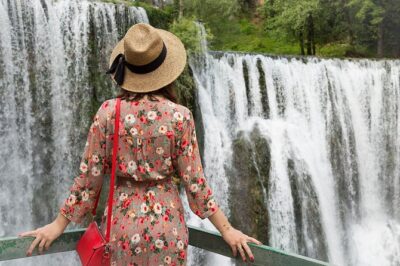
Travnik, Jajce & Pliva Lakes Day Tour From Sarajevo (fees Incl.)
Read our review →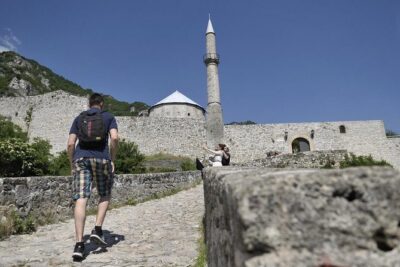
CENTRAL BOSNIA | A medieval tour (Jajce + Travnik + Pliva lakes)
Read our review →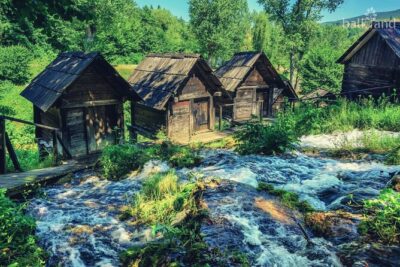
Bosnian Kingdom Capitals: Travnik & Jajce Tour from Sarajevo
Read our review →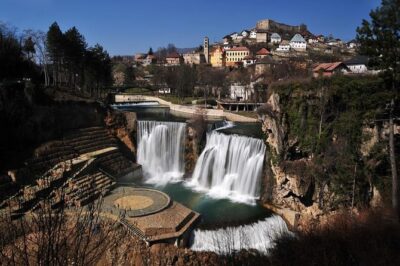
Sarajevo to Zagreb: One-Way Tour via Jajce, Travnik, Pliva Lake and Watermills
Read our review →
Travnik, Jajce, Pliva Lakes & Mills –Medieval & Ottoman Bosnia Full Day Tour
Read our review →Browse the lists this tour appears in