
Reviewed · JAJCE & TRAVNIK DAY TRIPS
From Sarajevo: Travnik, Jajce, Pliva Lakes & Watermills Tour
Jajce gives this long day its big finish: a 17-meter waterfall crashing through the town center, with a medieval fortress and old catacombs nearby. Before that, you visit Travnik, then Pliva Lakes and the charming wooden watermills. It is a lot of Bosnia in one outing, not a quick city excursion.
I like the small group limit of eight, which gives guides such as Ismet, Alem, Sanad, Ahmed, and Adnan room to answer questions and adjust the pace. I also like the easy transport from Sarajevo, plus bottled water and a traditional Bosnian breakfast pastry or sandwich. The drawback is plain: expect a long day with plenty of time in the vehicle, and lunch and several entry fees cost extra.
Key points at a glance
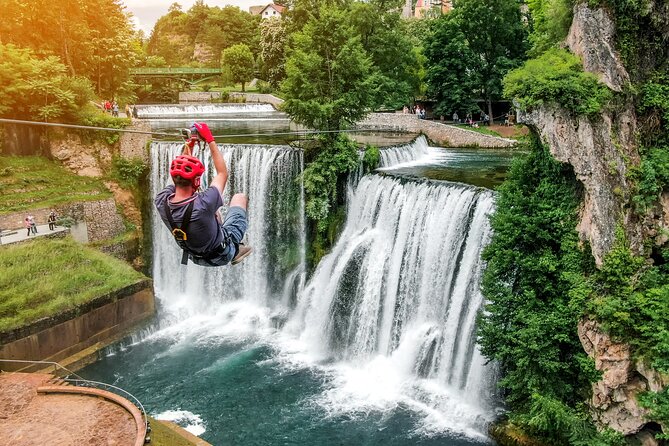
- Jajce’s waterfall is the visual highlight: You see a rare natural feature right in the middle of a historic town.
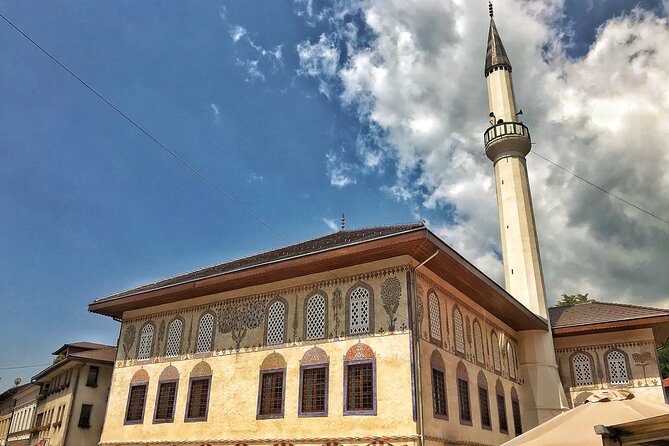
- Travnik adds Ottoman-era character: Traditional Bosnian houses and the Colorful Mosque make this more than a nature trip.
- Pliva’s watermills are wonderfully unusual: Small huts on stilts use many narrow channels instead of one large wheel.
- The group stays small: A maximum of eight people makes conversation with the guide easier.
- The day starts early and ends late: The usual departure is 8:00 a.m., with roughly 10 to 11 hours on the road.
- Budget for add-ons: The listed entrance fees total EUR 12 per person if you enter Jajce Fortress, the Jajce waterfall area, and Travnik Fortress.
Why this Central Bosnia day trip works
Sarajevo is a rewarding city, but Bosnia and Herzegovina opens up once you leave the capital. This trip takes you west through central Bosnia to Travnik and Jajce, two towns with different personalities.
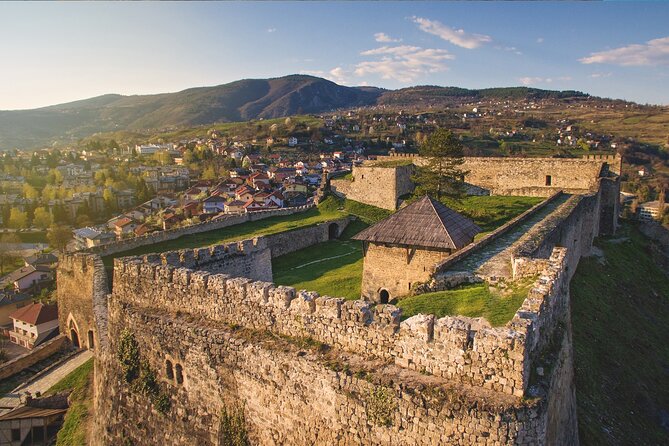
Travnik is associated with Ottoman architecture, traditional houses, mosques, and its hilltop fortress. Jajce feels more dramatic. Its old stone walls rise above the town, while the Pliva River drops over the waterfall below. Between the two towns, Pliva Lakes and the old watermills bring in a quieter, rural side of the country.
The route is useful if you have only a few days in Sarajevo and do not want to rent a car. You can let the driver handle the roads while you watch the scenery and listen to explanations about Bosnian culture, politics, nature, and the country’s past.
The tradeoff is distance. You are covering a large section of the country in a single day. That means the schedule is efficient, but not leisurely. If you prefer to spend half a day at one castle or lake, this will feel rushed. If you want a broad look at central Bosnia without arranging several separate transfers, the pace makes sense.
More Jajce, Pliva and Travnik days:
- Jajce, Travnik and Pliva watermills – Day Tour from Sarajevo
★ 5.0 · 295 reviews - Jajce, Travnik, Pliva lake and Watermills Tour
★ 5.0 · 104 reviews - Travnik, Jajce & Pliva Lakes Day Tour From Sarajevo (fees Incl.)
★ 5.0 · 50 reviews
Starting in Sarajevo at 8:00 a.m.
The usual meeting point is in front of Meet Bosnia Agency at Gazi Husrev begova 75, near the crossing of Mula Mustafe Bašeskije. Pickup from another location can be arranged, with the exact time agreed after you provide your pickup address.
The early departure is helpful. It gives you a chance to see the main places before the day runs out, though you should not expect a slow morning. After a brief introduction, the guide provides complimentary bottled water and the group sets off.
Hotel pickup and drop-off are included, which adds real value in Sarajevo. You do not need to find your way back to the old town after a full day on the road. The vehicle is described in the feedback as comfortable, but the amount of driving remains an important part of the experience.
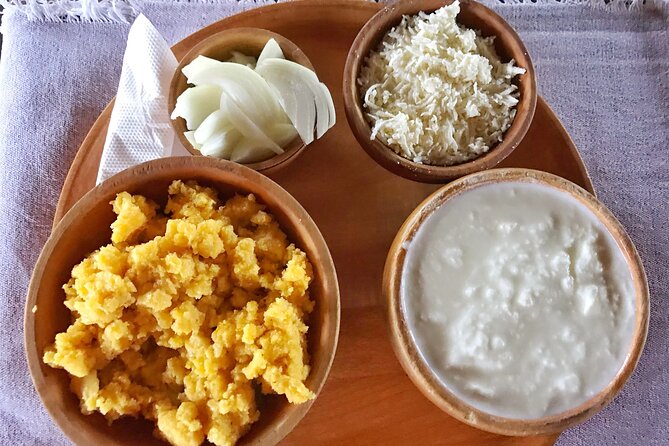
A traditional Bosnian sandwich or pastry is included for breakfast, with a vegetarian option. Lunch is not included, so bring a snack in addition to the supplied water. One useful way to think about the price is this: you are paying for a full day of transport, a professional English-speaking guide, breakfast, and door-to-door convenience, not just admission to a few sights.
Travnik’s traditional houses and Colorful Mosque
The first proper stop is Travnik’s old town, where you have about 20 minutes to look around. That is enough for a first impression, not enough for a detailed visit.
Travnik’s appeal is its traditional Bosnian architecture. Look for the wooden upper stories, projecting eaves, and compact houses that give the town a distinctly Ottoman feel. The old center is more intimate than Sarajevo’s main tourist streets, and the short stop lets you get a taste of its character without spending the entire morning there.
You then spend about 10 minutes at Šarena Džamija, the Colorful Mosque. Its painted decoration makes it one of the most memorable mosques in Bosnia and Herzegovina. Even with a short visit, the building gives you a clear sense of how Ottoman religious architecture in Bosnia can be ornate, colorful, and closely tied to the town around it.
The timing here is the first place to manage your expectations. Travnik is not being treated as a full walking tour. If the town interests you most, you may wish you had longer to visit the fortress, explore more streets, or pause over coffee. The listed information includes a EUR 2 entrance fee for Travnik Fortress, but the schedule does not give it a dedicated stop, so confirm with the guide if entering it matters to you.
Jajce Fortress and a royal medieval setting
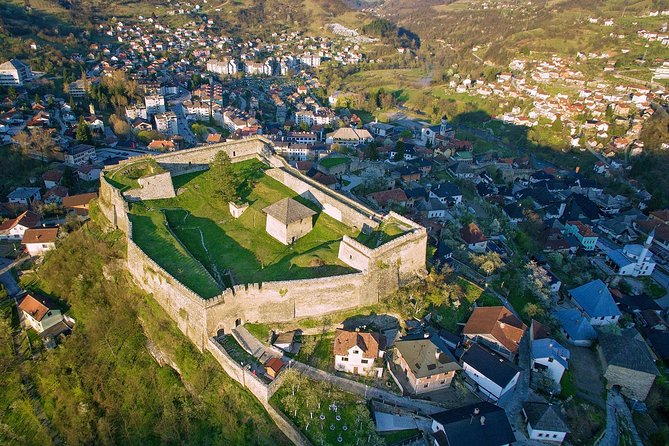
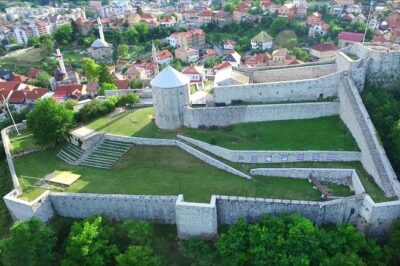
Jajce’s fortress sits above the town at about 470 meters. Its walls enclose remains built over several centuries, including a castle connected with the medieval Bosnian royal court.
The site has an important royal link. King Stjepan Tomašević and Tvrtko II are connected with the fortress, and a portal on the southwest side carries a royal coat of arms. The court moved to Jajce in 1421, giving the town a role far beyond that of a scenic hilltop settlement.
You get about 30 minutes here. That is enough to walk along part of the fortifications, see the main remains, and take in the view over Jajce. Wear shoes with a good grip, since fortress surfaces can be uneven. The EUR 5 admission is extra.
I would pay the fee if you enjoy old walls and town views. The fortress adds context to the waterfall and catacombs later in the visit. Without it, Jajce can seem like a collection of attractive sights. With it, the town’s medieval importance becomes easier to understand.
Do not expect a fully guided archaeological visit in half an hour. Your guide supplies the story and orientation, but you will have limited time to inspect every corner. The compact schedule favors variety over depth.
A few more Sarajevo day trips to weigh up
- Sarajevo: Mostar, Konjic, Blagaj Tekke, Pocitelj & Waterfall
★ 4.9 · 1,335 reviews - Fall of Yugoslavia, Sarajevo War Tour with Tunnel of Hope Museum and Frontlines
★ 5.0 · 1,314 reviews - Sarajevo: Mostar, Konjic, Sufi House, Pocitelj & Kravice Falls
★ 5.0 · 1,179 reviews - ROSES OF SARAJEVO (Official WAR + CITY tour)- Story of a Survivor
★ 5.0 · 770 reviews
Pliva Lakes and Mlincici watermills
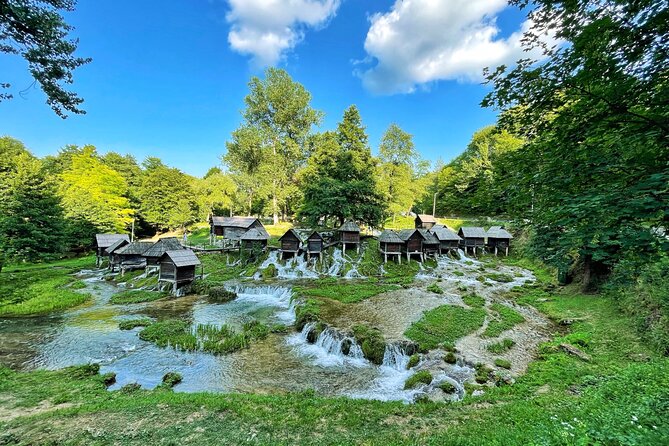
The route includes a lovely view of Pliva Lakes, followed by a stop at Mlincici, the historic watermills. The watermills are among the most distinctive parts of the day.
The little huts sit on narrow stilts directly above fast-moving water. Instead of relying on one large wheel, the mills use a spread of small channels and multiple wheels to gather the river’s force. It is a simple solution to a practical problem, and the result looks almost like a storybook village.
Many of the huts date from the Austro-Hungarian period, roughly 1867 to 1918. Their age and setting make the stop feel different from the stone fortresses and mosques earlier in the day. Here, the interest comes from local engineering and rural life rather than royal power or religious art.
You have about 20 minutes at Mlincici. Use it to look closely at the channels, take photographs, and listen to the guide explain how the mills worked. The stop is short, but it does not need a long lecture. The structures are small, easy to view, and visually clear.
The Pliva Lakes section also gives the day a breath of open space after the town visits. You might find the lake views especially welcome after sitting in the vehicle. Still, this is not a lakeside recreation day. The focus is on seeing the area from the route and visiting the watermills, not on swimming, boating, or a long waterfront walk.
The Pliva Waterfall in Jajce
The waterfall is the tour’s strongest natural sight. At 17 meters, the Pliva River drops in the center of Jajce, close to the old town and fortress. That setting is what makes it memorable: you do not leave the town behind to reach a remote waterfall.
The visit lasts about 20 minutes. You can take in the main viewpoint, photograph the falls, and watch the water plunge below the stone buildings. Spray and changing weather can make the viewing area damp, so a light rain layer is sensible even if the forecast looks friendly.
Admission is not included and is listed at EUR 5 per person. I consider this a worthwhile extra if you want the full Jajce experience. The waterfall is not merely a scenic stop on the edge of town. It is part of Jajce’s identity and one of the clearest examples of nature and urban history sharing the same space.
Weather may shape this part of the day. One traveler described heavy rain around Travnik that cleared by afternoon, leaving sunshine at the falls. That is a useful reminder to dress for changeable conditions, especially in a day that moves between towns, water, and higher ground.
Jajce Catacombs and the Bosnian Church
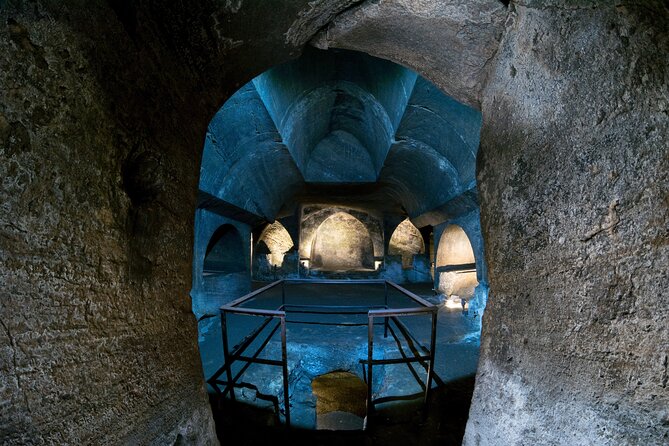
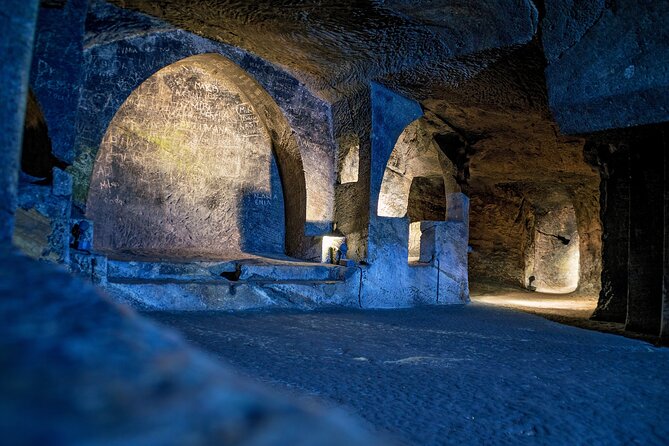
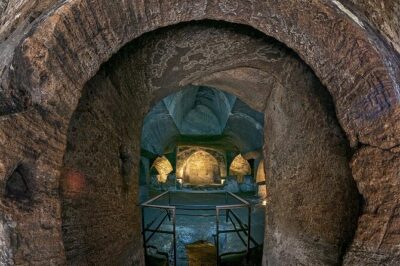
The final listed stop is the Catacomb of Jajce, a small two-level crypt built around 1400 for the Hrvatnić aristocratic family. It is roughly cut into the rock but has carefully placed lighting and unusual carved symbols.
Inside, you can see a cross, sun, and crescent moon motifs. The site is also linked with the independent Bosnian Church, making it an important reminder that Bosnia’s religious past does not fit neatly into one tradition.
The visit lasts about 10 minutes. That is brief, but the catacomb itself is compact. You will want to pay attention to the guide here, since the meaning of the carvings and the site’s place in medieval Bosnia are more interesting than its size suggests.
The catacomb has a different mood from the waterfall and fortress. It is quiet, enclosed, and somewhat rough. If you dislike confined spaces or prefer outdoor sights, this may not be your favorite stop. If you enjoy unusual religious and medieval sites, it provides a strong final layer to Jajce.
Guides, vehicles, and the small-group advantage
The tour is offered in English and has a maximum of eight participants. That size matters on a long day. You can usually hear the guide clearly, ask follow-up questions, and avoid the impersonal feel of a large coach group.
The named guides praised in the supplied material include Alem, Hismet, Sanad, Ahmed, Ismet, Hannah, Muemer, Agan, Amer, Hamza, and Adnan. The strongest pattern is consistent: guides are described as friendly, flexible, and well informed about Bosnian history and daily life.
Some guides add local music or conversation about food, politics, modern Bosnia, and regional customs. One driver, Faruk, was remembered for singing during the journey. That sort of personality is not guaranteed, but it shows how the drive can become part of the day rather than dead time.
You should still judge the tour by its structure, not by hopes of getting one particular guide. The company may assign different staff. The reliable features are the small group, English service, transport, and a guide who explains the places along the way.
Price, extra fees, and overall value
At $84.69 per person, the tour is fairly priced for a 10 to 11-hour outing with hotel pickup, drop-off, fuel, guide service, breakfast, and bottled water. Renting a car would add fuel, navigation, parking, and the stress of handling an unfamiliar route. A private tour would usually cost more.
Set aside extra money for admission:
- Jajce Fortress: EUR 5
- Jajce Waterfall: EUR 5
- Travnik Fortress: EUR 2
If all three fees apply to your plans, that is EUR 12 per person beyond the tour price. Lunch and personal purchases are also extra.
The value is strongest if you want to combine Travnik, Jajce, Pliva Lakes, and the watermills in one day. It is weaker if you dislike long drives or want generous time at each site. I would choose it after seeing Sarajevo’s main sights, or when you have only a few days and want one broad excursion into central Bosnia.
Who should book this day out?
I would recommend it to first-time visitors who want history, scenery, and small-town Bosnia without renting a car. It suits couples, solo visitors, families with older children, and small groups who appreciate a guide’s stories and do not mind a full schedule.
You should also book it if Jajce is high on your list but you are staying in Sarajevo. The waterfall, fortress, catacombs, and Pliva watermills are spread across a long route, and organizing them independently would take more planning.
I would hesitate if your priority is slow travel. Travnik receives short visits, the fortress time is limited, and the day includes a substantial amount of driving. In that case, consider spending more time in Sarajevo or arranging a private itinerary with fewer stops.
Final verdict: a strong choice for a full day
Book this tour if you want to see a wide slice of central Bosnia in one well-organized day. The Jajce waterfall and Pliva watermills give it memorable scenery, while Travnik and the Jajce fortress provide cultural depth.
The main question is not quality. A 4.9 rating from 213 reviews and a 99 percent recommendation indicate a consistently well-received experience. The real question is pace. If you accept a long day and bring snacks, comfortable shoes, and a rain layer, this is a practical and rewarding way to get beyond Sarajevo.
FAQ
How long does the tour last?
The tour lasts approximately 10 to 11 hours and usually begins at 8:00 a.m. It ends back at the meeting point in Sarajevo.
Where does the tour start?
The usual meeting point is in front of Meet Bosnia Agency at Gazi Husrev begova 75, near the crossing of Mula Mustafe Bašeskije in Sarajevo.
Is hotel pickup available?
Yes. Hotel pickup and drop-off are included. If you need pickup, the exact time and place are arranged after you enter your pickup location.
What is included in the tour price?
The price includes fuel surcharge, a professional English-speaking guide, hotel pickup and drop-off, bottled water, and a traditional Bosnian breakfast sandwich or pastry. A vegetarian option is available.
Which entrance fees are extra?
Jajce Fortress costs EUR 5 per person, the Jajce Waterfall costs EUR 5 per person, and Travnik Fortress costs EUR 2 per person. Lunch and personal expenses are not included.
How many people can join the tour?
The activity has a maximum of eight participants. Children must be accompanied by an adult, and most people can participate.
Just added around Sarajevo
- Strbacki Buk and Una Waterfalls: Day Trip from Sarajevo★ 5.0 · 3 reviews
- Bosnian Kingdom Capitals: Travnik & Jajce Tour from Sarajevo★ 5.0 · 3 reviews
- Walking Tour in Sarajevo★ 5.0 · 3 reviews
- MTB Bjelasnica – Lukomir★ 5.0 · 3 reviews
- Sarajevo Under Siege: A City’s Struggle & Survival Tour★ 5.0 · 3 reviews
- Herzegovina Tour from Sarajevo: Mostar, Počitelj, Blagaj, Kravice★ 5.0 · 3 reviews
- Travnik, Jajce, Pliva Lakes & Mills –Medieval & Ottoman Bosnia Full Day Tour★ 5.0 · 3 reviews
- Tour of Herzegovina – From Sarajevo★ 5.0 · 3 reviews
Jajce & Travnik Day Trips, compared.
Jajce, Travnik and Pliva watermills – Day Tour from Sarajevo
Read our review →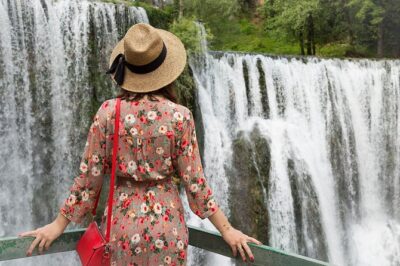
Travnik, Jajce & Pliva Lakes Day Tour From Sarajevo (fees Incl.)
Read our review →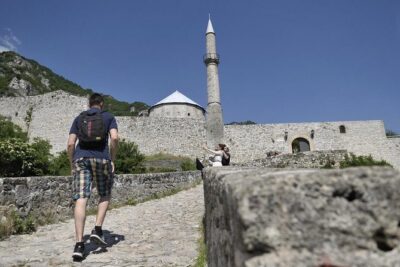
CENTRAL BOSNIA | A medieval tour (Jajce + Travnik + Pliva lakes)
Read our review →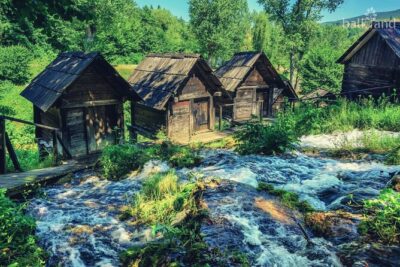
Bosnian Kingdom Capitals: Travnik & Jajce Tour from Sarajevo
Read our review →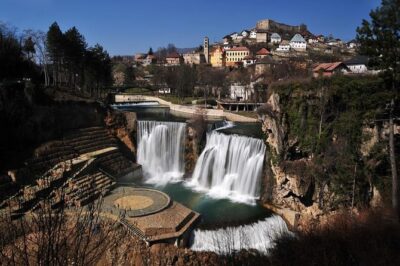
Sarajevo to Zagreb: One-Way Tour via Jajce, Travnik, Pliva Lake and Watermills
Read our review →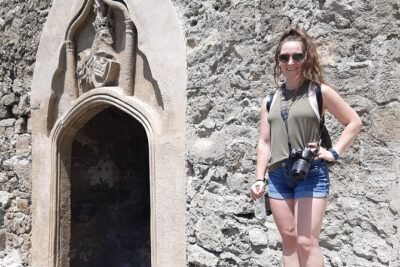
Travnik, Jajce, Pliva Lakes & Mills –Medieval & Ottoman Bosnia Full Day Tour
Read our review →Browse the lists this tour appears in