
Reviewed · JAJCE & TRAVNIK DAY TRIPS
Travnik, Jajce, Pliva Lakes & Mills –Medieval & Ottoman Bosnia Full Day Tour
The star of this long day is Jajce, where the Pliva River drops 22 meters in the town center before meeting the Vrbas. Add Travnik’s Ottoman streets, a medieval fortress, underground catacombs, and wooden watermills, and you get a strong introduction to central Bosnia in one outing. I especially like the mix of major sights and small local details, including Travnik cheese and ćevapi.
I also like the small group limit of eight. That matters on a 10 to 11 hour trip with several historic sites, since you can ask questions without shouting across a crowded bus. The main drawback is the distance: the return from Jajce takes about 2.5 to 3 hours, so this is a full day in every sense.
Key points to know before booking
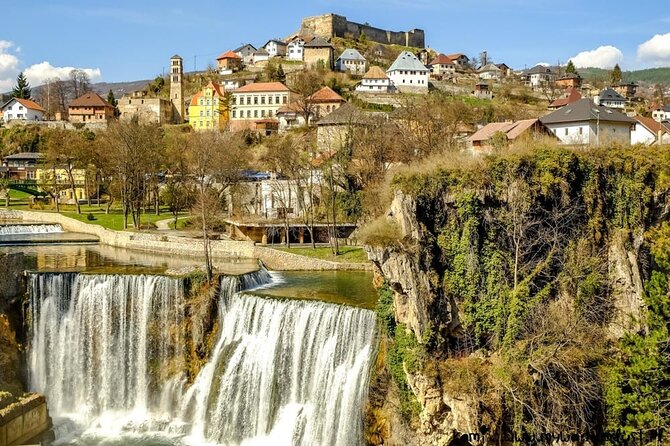
- Jajce’s central waterfall: See a rare urban waterfall, where the Pliva meets the Vrbas beside the old town.
- Two very different historic towns: Travnik explains Ottoman Bosnia, while Jajce moves from medieval kings to later eras.
- A small group of up to eight: The format gives the guide room to adjust explanations and keep the day personal.
- Food is part of the experience: Travnik is known for ćevapi and cheese, but lunch is not included in the $88 price.
- Several entry tickets are covered: Travnik Fortress, Jajce Fortress, and Jajce Catacombs are included.
- Expect a long road day: Pickup starts at 8:00 a.m., and the drive back from Jajce alone takes 2.5 to 3 hours.
Why this central Bosnia day trip works
This tour gives you a useful contrast. Travnik was the main seat of Ottoman governors in Bosnia for more than 150 years. Jajce was a medieval royal capital, later shaped by Ottoman, Austro-Hungarian, and Yugoslav periods. You are not simply collecting viewpoints. You are watching Bosnia change from one historical chapter to another over a single day.
The route also has a good visual rhythm. You begin with green scenery along the Bosnia River valley, pass near Visoko and the Bosnian Pyramid of the Sun, then reach Travnik’s old town. After that come Jajce’s stone defenses, underground chambers, waterfall, lakes, and mills.
The price is $88 per person. For that amount, you receive pickup, a licensed guide, parking and motorway fees, and admission to three important historic attractions. Lunch and the Pliva Waterfall ticket are extra, so you should budget a little more. The value is strongest if you want history explained as you go and prefer not to arrange several long intercity journeys yourself.
The small group is another important part of the calculation. With a maximum of eight people, this is more intimate than a large coach excursion. Past bookings also show that the tour may operate with only one person if others cancel, so solo visitors may still receive the trip rather than having it dropped for lack of numbers. Guide Damir is specifically associated with the experience, and the available comments describe him as patient, engaged, and keen to explain the region.
More Jajce, Pliva and Travnik days:
- Jajce, Travnik and Pliva watermills – Day Tour from Sarajevo
★ 5.0 · 295 reviews - From Sarajevo: Travnik, Jajce, Pliva Lakes & Watermills Tour
★ 5.0 · 213 reviews - Jajce, Travnik, Pliva lake and Watermills Tour
★ 5.0 · 104 reviews
The morning road to Visoko and the Pyramid of the Sun
The day begins at 8:00 a.m. in Sarajevo. The first portion is a pleasant 20 minute drive through the Bosnia River valley near Visoko. This is not the main stop, but it gives the guide a chance to introduce one of Bosnia’s most debated modern attractions, the so-called Pyramid of the Sun.
You will hear about the theory that the hill near Visoko could be the largest pyramid in the world and why it has drawn interest from scientists and tourists. The wording matters here. Treat this as a discussion of a controversial theory, not as an established archaeological fact.
That brief stop adds an unusual note to the day. It also gives you a look at how Bosnia’s past and present are often discussed together. Ancient claims, medieval monuments, Ottoman architecture, and twentieth-century politics all sit within the same broad journey.
Travnik: Ottoman governors, old walls, and local food
Travnik is the first major stop, with about 1 hour and 30 minutes set aside for the old town and nearby sights. This is the place to focus on Ottoman Bosnia. For more than 150 years, Travnik served as the city of Ottoman governors, known as viziers, and acted as the capital of Ottoman Bosnia.
The Old Town Fortress gives you the clearest sense of the town’s strategic role. Its stone walls and higher position help explain why Travnik mattered to rulers trying to govern this inland part of the country. Admission is included, which makes the stop better value than a quick outside look.
Travnik is also the birthplace of Ivo Andrić, the Bosnian writer and Nobel Prize winner. His work, especially his writing about the town’s officials and communities, is closely tied to Travnik. A good guide can use his stories to make the old streets feel less like a collection of monuments and more like a place shaped by administrators, soldiers, merchants, religious leaders, and ordinary families.
From the fortress, the tour moves toward the old market area and the Colorful Mosque, also called Šarena Džamija. The mosque is one of Bosnia and Herzegovina’s most striking Islamic buildings. Its painted exterior and interior decoration make it very different from the restrained stone mosques you may see elsewhere in the region.
You get about 20 minutes at the mosque itself. That is enough for a focused look, though not a long architectural study. Pay attention to the unusual painted patterns and the way the building fits into the surrounding čaršija, or old commercial quarter.
Travnik is also a good place for a quick taste of local food. The town is known for ćevapi, small grilled meat portions usually served in bread, and for its cheese. The meal is not included, and the tour describes the food as lunch on the go, so do not expect a long restaurant sitting with a broad menu.
I like this arrangement because food here connects directly to place. You are not stopping at a generic roadside restaurant. You have a chance to try two things Travnik is known for before moving on. If you need a full meal, keep in mind that the day remains long and driving resumes after the stop.
The main limitation in Travnik is time. The fortress, mosque, old town, food, and historical explanation could easily fill half a day. You will get an introduction rather than a slow, detailed exploration.
Jajce Fortress and the last Bosnian royal capital
Jajce brings a different mood. The town was founded in the 14th century by Hrvoje Vukčić Hrvatinić, a powerful Bosnian nobleman. In 1421, King Stjepan Tomašević moved his royal court here, making Jajce the capital of the Kingdom of Bosnia.
The Fortress of Jajce was the town’s stronghold and the center of its medieval power. You have about 40 minutes here, and admission is included. The best reason to climb through the fortress area is the view. From above, you can understand Jajce’s defensive position and see how the old town relates to the surrounding hills and waterways.
The fortress also gives useful context for Bosnia’s difficult position between stronger neighbors, especially Hungary and the Ottoman Empire. Medieval Bosnia was not an isolated mountain kingdom. Its rulers had to make political and military decisions while trying to protect their territory from outside pressure.
Fortress time can involve uneven ground and some uphill walking. The tour is suitable for most people, but anyone with mobility concerns should be realistic about the nature of medieval sites. The schedule is fairly compact, so you may need to keep moving rather than pause at every wall and viewpoint.
A few more Sarajevo day trips to weigh up
- From Sarajevo: Full-Day Hike to Lukomir Village
★ 5.0 · 59 reviews - Sarajevo Full Day Tour: History, Culture, Nature, War & Olympics
★ 5.0 · 27 reviews - Sarajevo to Belgrade Full Day Tour one-way
★ 4.5 · 9 reviews - Private Full Day Safari Tour
★ 5.0 · 8 reviews
The Catacombs and Bear Tower
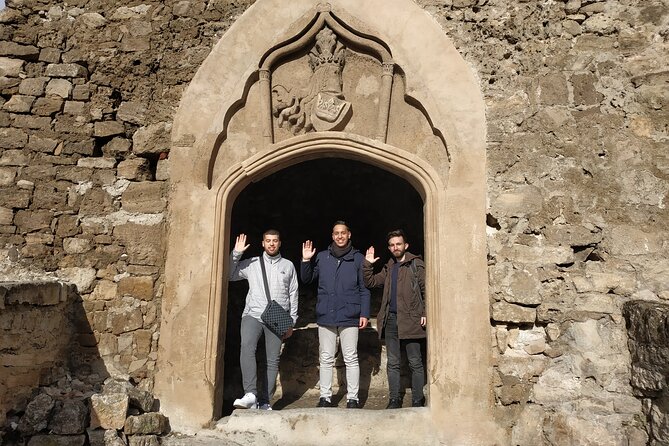
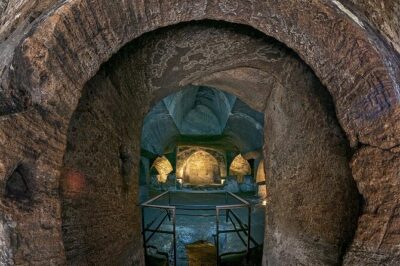
The Catacombs of Jajce are a short but memorable stop, with about 20 minutes inside. They were built as an underground Christian religious site, and Hrvoje Vukčić Hrvatinić intended them to serve as a family tomb.
Their story continued across several periods. During Ottoman rule, local legends connected the chambers with a dervish who was confined there for 40 days and later regarded as an awliya, or holy man. That story gives the site a spiritual layer, though you should treat it as tradition rather than proven fact.
The catacombs are valuable because they show a side of Jajce that a fortress cannot. Above ground, you see royal power and military defense. Below ground, you find a place linked to worship, burial, and later religious memory.
The nearby Medvjed Kula, or Bear Tower, takes about 20 minutes. Its name refers to the tower’s heavy, bear-like appearance. One local legend says a bear was kept there and prisoners were thrown to it, but the more solid explanation is its defensive function.
Built in the mid-15th century, the tower is one of the earliest military structures from Bosnia’s medieval period. The short visit works well beside the fortress because it adds another piece to Jajce’s defense system without repeating the same story.
The Pliva Waterfall in the town center

The Pliva Waterfall is the visual payoff of the day. It is 22 meters high and sits in Jajce’s center, where the Pliva River meets the Vrbas. That urban setting makes it unusual. You are not hiking deep into the countryside to find it. The water is part of the town itself.
You have about 30 minutes here. The admission charge is not included and is listed as 4 euros in high season or 2 euros in the off season. Bring some extra money for this ticket.
The waterfall’s shape and setting make it a strong photo stop, but do not rush away after taking one picture. Look at how the river gathers force before dropping, then spreads into the larger water system below. The site is also on Bosnia and Herzegovina’s tentative UNESCO list, which reflects its cultural and natural importance, though tentative status is not the same as full UNESCO inscription.
The waterfall is one of the few stops where the schedule may feel short. If you like photography, water, or town views, you could easily want more time. Still, the compact visit is understandable because the tour must also reach the Pliva Lakes and begin the long ride back to Sarajevo.
Mlincici and the old watermills
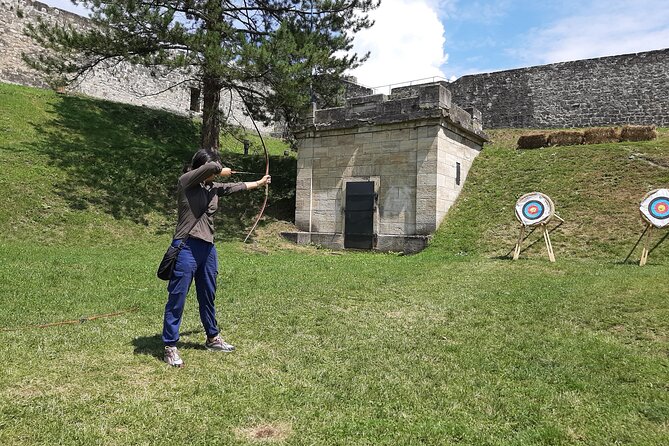
After the waterfall, the route reaches Mlincici, a group of small wooden watermills near the Pliva Lakes. The huts sit on narrow supports above moving water. Rather than relying on one large wheel, the system used many small mills to make use of the spread-out current.
Most of the mills date from the Austro-Hungarian period, roughly 1867 to 1918. They once ground local farmers’ wheat into flour. Today, their importance is less about working industry and more about showing how communities used the river with simple, practical technology.
This is a pleasant change of scale after the fortress and waterfall. You can see the water close up, examine the tiny structures, and picture the mills as part of daily farm life rather than as museum objects. Admission is free, and about 20 minutes is allotted.
Do not expect a large museum or a long guided demonstration. The appeal is the setting and the design of the mill cluster. If you enjoy small historic details, this may be one of the most satisfying stops of the day.
Pliva Lakes: a quiet finish before the long drive
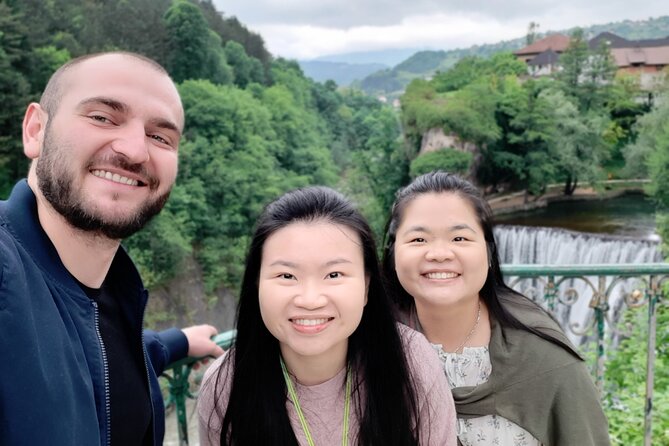
The Pliva Lakes are formed where the river widens into one large lake, Veliko Plivsko, and one smaller lake, Malo Plivsko. The water provides a calmer final stop after the stone fortifications and rushing waterfall.
You have about 30 minutes for a walk and views. The lakes have hosted World and European Cup events in kayaking and fishing, so this is not only a pretty place for a stroll. It also has a serious sporting connection.
The lakes are best treated as a pause rather than a full outdoor activity. The tour does not include a kayaking session or fishing. Instead, you get time to walk beside the water and take in the change from fast river to broad lake.
This is also where the timing becomes important. The ride back to Sarajevo takes 2.5 to 3 hours. After a 10 to 11 hour day, you may be tired, especially if you have spent the afternoon walking over old stone surfaces. The reward is that the return drive follows a day packed with very different sights, not repeated stops in similar towns.
What the $88 price includes
At $88 per person, the tour sits in a reasonable range for a full-day private-feeling excursion, provided you use the included services. The fee covers:
- Pickup and return to the meeting point
- A licensed guide
- Parking fees
- Motorway fees
- Travnik Old Town Fortress admission
- Jajce Fortress admission
- Jajce Catacomb admission
You pay separately for lunch and the Pliva Waterfall entrance, which costs 4 euros in high season or 2 euros in the off season. That is not a major hidden expense, but you should know about it before setting out.
The strongest value comes from the route itself. Travnik and Jajce are far enough from Sarajevo that arranging transport between them can take planning. This tour puts the driving, parking, road fees, and historical explanation into one day.
The trade-off is limited free time. Independent visitors could spend much longer at Travnik Fortress, the waterfall, or the lakes. You are paying for access to several places and a guide’s connecting story, not for an unhurried stay in one town.
Who should book this experience
I would choose this tour if you are staying in Sarajevo and want to see more of Bosnia without changing hotels. It suits first-time visitors who want a clear introduction to Ottoman, medieval, Austro-Hungarian, and Yugoslav-era context in one day.
It also works well for solo visitors and couples who prefer a small group. The eight-person limit should make conversation easier, and the experience may still run with only one booked person, based on the way the operator handled a previous booking.
You should think twice if you dislike long drives or prefer slow travel. The road back alone can take up to three hours, and the whole day runs from 8:00 a.m. for roughly 10 to 11 hours. Travelers who need a relaxed lunch or long photo stops may find the schedule tight.
Wear practical shoes for fortresses and old-town walking. Plan for lunch money, the waterfall ticket, and a full day away from Sarajevo. Service animals are allowed, the tour is near public transportation, and most people can participate, but the historic sites may still include uneven surfaces and stairs.
Free cancellation is available if you cancel at least 24 hours before the local start time. Changes or cancellations inside that window are not accepted for a refund, so check your plans before the deadline.
Should you book the Travnik and Jajce tour?
Book it if you want the broadest history lesson and the most scenery you can fit into one day from Sarajevo. The combination of Travnik’s Ottoman character, Jajce’s royal fortress, underground catacombs, central waterfall, old mills, and lakes is unusually varied.
I would be especially inclined to book with a short Sarajevo stay, since the tour reaches places that are not easy to connect by public transport in one day. Damir’s patient guiding style, when he leads the outing, is another reason to value the small-group format.
Skip it if your priority is a slow pace, a long meal, or several hours at the lakes. This is a road-heavy day, but it is a worthwhile one for anyone who wants Bosnia’s history told through real towns, working rivers, fortifications, religious buildings, and local food.
FAQ
How long is the Travnik and Jajce tour?
The tour lasts approximately 10 to 11 hours. It starts at 8:00 a.m., and the return journey from Jajce to Sarajevo takes about 2.5 to 3 hours.
What is the price of the tour?
The listed price is $88 per person.
Is pickup offered?
Yes. Pickup is offered, and the activity ends back at the meeting point.
Is lunch included?
No. Lunch is not included. You should plan to pay separately for food in Travnik or during the day.
Is the Pliva Waterfall entrance included?
No. The waterfall ticket costs 4 euros in high season and 2 euros in the off season.
Which entrance fees are included?
Admission to Travnik Old Town Fortress, Jajce Fortress, and Jajce Catacombs is included. Parking and motorway fees are also covered.
How many people can join the tour?
The group has a maximum of eight people. Confirmation is subject to availability and is sent within 48 hours of booking.
Just added around Sarajevo
- Strbacki Buk and Una Waterfalls: Day Trip from Sarajevo★ 5.0 · 3 reviews
- Bosnian Kingdom Capitals: Travnik & Jajce Tour from Sarajevo★ 5.0 · 3 reviews
- Walking Tour in Sarajevo★ 5.0 · 3 reviews
- MTB Bjelasnica – Lukomir★ 5.0 · 3 reviews
- Sarajevo Under Siege: A City’s Struggle & Survival Tour★ 5.0 · 3 reviews
- Herzegovina Tour from Sarajevo: Mostar, Počitelj, Blagaj, Kravice★ 5.0 · 3 reviews
- Tour of Herzegovina – From Sarajevo★ 5.0 · 3 reviews
- The Siege of Sarajevo Tour★ 5.0 · 3 reviews
Jajce & Travnik Day Trips, compared.
Jajce, Travnik and Pliva watermills – Day Tour from Sarajevo
Read our review →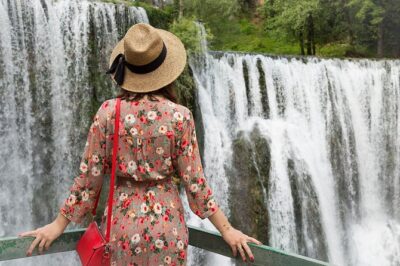
Travnik, Jajce & Pliva Lakes Day Tour From Sarajevo (fees Incl.)
Read our review →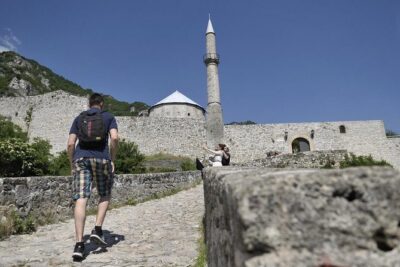
CENTRAL BOSNIA | A medieval tour (Jajce + Travnik + Pliva lakes)
Read our review →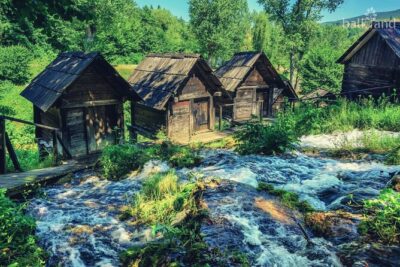
Bosnian Kingdom Capitals: Travnik & Jajce Tour from Sarajevo
Read our review →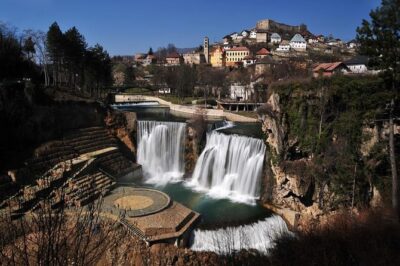
Sarajevo to Zagreb: One-Way Tour via Jajce, Travnik, Pliva Lake and Watermills
Read our review →Browse the lists this tour appears in